

In 1925 the African American and Harlem Renaissance poet Countee Cullen posed the following significant question, what is Africa to me? Cullen was attempting to deal with the image of Africa in the diaspora among African Americans which was distorted by Euro-American historiography for centuries to this day. African Americans had internalised a racist image of Africa and were ignorant about African culture and civilization. Black history month and Afrocentricity were some of the intellectual projects aimed at addressing this persistent problem. What if today we reverse the sequence of the question? What is Haiti to us as Africans? Given the ignorant arrogance that comes with white settler colonialism in “South Africa” in the form of “South Africa exceptionalism” one cannot expect much from many Africans regarding this question. In any event many of the so-called black South Africans do not know much about other African countries. The identity South African is foundationally white and distorts the consciousness of many Africans in “South Africa”. “South Africa” was invented in 1910 by white settlers to be a “Whiteman’s country”. The ANC’s assimilation of Africans into white South Africa in 1994 to become “black South Africans” worsened the level of ignorant arrogance of “black South Africans”.
The Azanian political tradition of the PAC under Robert Sobukwe was adamant about the need for the reintegration of Azania into the African continent as a whole. Post-conquest Azania unlike “post-Apartheid South Africa” must regard itself as part of Africa. So, the “debate” about the name Azania and “South Africa” between the PAC and the ANC was not just about names. It is about history, culture, and consciousness. What is Haiti to me as a “black South African”? Probably nothing much. But what is Haiti to me as an Azanian? Haiti evokes memories of Pan-Africanism, the brave struggle against Euro-American slavery and racial domination. And most importantly the first successful slave revolt in the history of the so-called modern world. As an Azanian who lives in a white settler colony called “South Africa”, Haiti to me is a symbol of the possibility to defeat global white supremacy and create a Black Republic for “Africans those at home and abroad”. But in terms of current affairs Haiti to me means the unforgiving brutality of global white supremacy in the form of Euro-American imperialism. Haiti today is in shambles due to Euro-American imperialistic invasion since the establishment of the Black Republic in 1804. Shortly after Africans bravely defeated the French army, France compelled Haiti to pay “reparations” for defeating European colonialism and slavery.
America occupied Haiti in 1915 and continues to destabilise it to this day. America seeks to undermine the democratic sovereign power of the people of Haiti to advance its superpower interest in the world. Uncle Sam is so cruel in this imperialistic campaign that he is willing to use any means necessary such as supporting dictators, assassinations, and coups to destroy the sovereignty of Haiti. The kidnapping of the popular Jean-Bertrand Aristide who landed in South Africa at some point, the imposition of the unelected regime of Ariel Henry and the arming of some people of Haiti is a classic American strategy that was used in South American countries such as Venezuela and Chile. Euro-American imperialism is punishing the people of Haiti for rejecting “the position of the unthought”. Europeans around the 1700s and 1800s never imagined the possibility of Africans defeating the most powerful armies of Europe under the Spanish, French and British. The successful Haitian revolution from 1791 to 1804 undermined global white supremacy and to this day whites are not willing to forgive and forget the collective humiliation.
Whites under the system of white supremacy are vicious to Africans who are brave enough to confront them and win. Zimbabwe under US sanctions for restoring the land is another example of what happens to Africans who want to confront and defeat white supremacy. So, what should Haiti be to Africans in conquered Azania? The first thing is that they must study the real “glorious revolution” of Haiti to learn about its strengths and weaknesses. This is because Haiti attempted to resolve the land and national question through a revolution since 1791 and created a new constitution in 1804 which banned whites from owning the land in Haiti. Africans in “South Africa” who are determined about the restoration of the land in the name of Black power must heed the lessons of the Haitian war of independence. They must comprehend the brutal nature and tactics of Euro-American imperialism. Africans must support the people of Haiti in their struggle against this Euro-American imperialism.
What is Haiti to me? In the context of “post-Apartheid South Africa”, Haiti to me is the unwavering desire to restore the Azanian land and sovereignty. The ardent quest for a post-conquest Azanian civilization solely for “Africans those at home and abroad” as opposed to a “New Republic of South Africa” for all who live in it, black and white. The creation of an indigenous constitution which will affirm African culture and thought and prohibit whites from owning land just like Jean-Jacques Dessalines did in Haiti in 1804. This is how I celebrate the “spirit of Boukman” which inaugurated the Haitian revolution in 1791. This is Haiti to me.
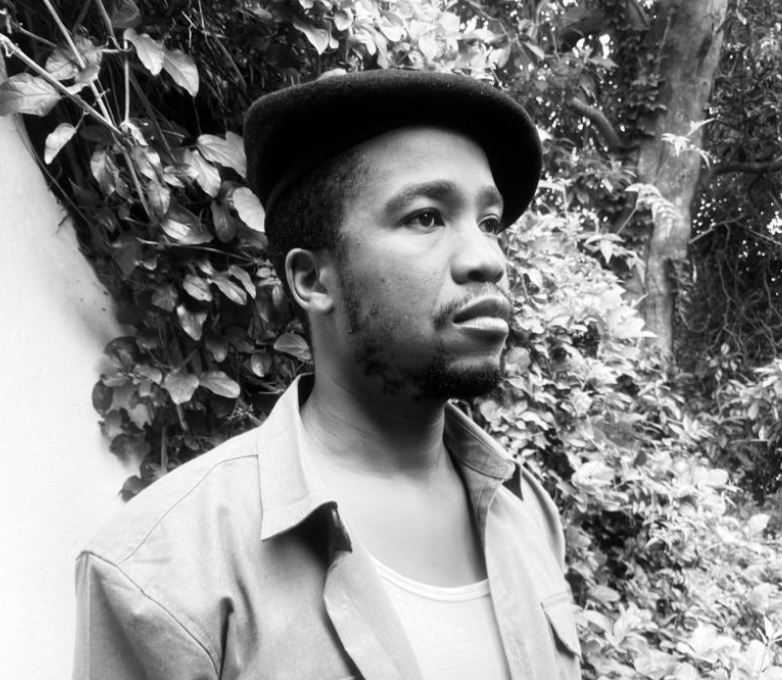
Masilo Lepuru is a philosophy lecturer and works as a Research Fellow at the Institute for Pan-
African Thought and Conversation at the University of Johannesburg. He is also a researcher and
founding director of the Institute for Kemetic and Marcus Garvey Studies (IKMGS).His research
interests are broad and include African philosophy, Jurisprudence, the Black Radical Tradition,
African history, literature, South African history, and politics.
ZNetwork is funded solely through the generosity of its readers.
Donate