
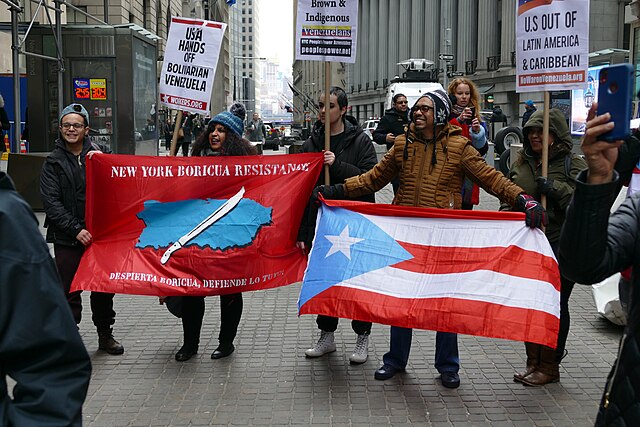
Donald Trump’s Venezuela gambit signals far more than an isolated intervention. It followed the newly drafted National Security Strategy, 2025, which explicitly calls on the United States to reassert and reinforce the nineteenth-century Monroe Doctrine—once again treating Latin America as an unparalleled and uncontested US geopolitical sphere of influence and restoring American preeminence in the Western Hemisphere.
The shocking event that unfolded on 3rd January ignited a rare and intense debate at the UN Security Council. Both from the camp of allies and adversaries alike decried what many termed a violation of sovereignty and international law. And yet, in the face of such naked aggression, one might therefore have expected BRICS to step forward—not merely as a rhetorical critic of Western hegemony, but as a voice of genuine multipolarity and a collective representative of the Global South as it claims to be. Yet, it revealed a far more restrained reality.
BRICS+’ Expanding Footprint in Latin America
Over the years, BRICS—now BRICS+—has carefully cultivated Latin America as a crucial extension of its global South-South cooperation and multilateral agenda. Historically, Brazil has functioned as the bloc’s sole Latin American anchor. In recent years, Countries’ such as Bolivia, and Cuba have been accepted as BRICS’ partner countries, participated in meetings, and dialogues without voting rights. Meanwhile, Colombia, Chile, and Mexico have expressed growing interest, with Colombia and Mexico already participating in discussions, and Uruguay invited as an observer state.
This evolving engagement reflects the growing aspiration among certain Latin American nations to align with a grouping that increasingly positions itself as a challenger to the Western, predominantly U.S.-led world order. The challenge is articulated through efforts including questioning dollar dominance in financial transactions and trade settlements, advancing local-currency payment settlement mechanisms, advocating structural reforms in global governance architectures, and deepening South-South cooperation in digital and climate governance. Initiatives such as the BRICS-Pay financial settlement platform to streamline transactions among member countries using their native currencies, the Contingency Reserve Arrangement, the New Development Bank’s growing use of local-currency lending mechanisms, and repeated calls for UN, Security Council, and WTO reforms reflect this ambition. The underlying objective is explicit—to reduce the systematic dependence on the dollar-based financial system, to explore alternative payment and settlement mechanisms, and to advance a Global South-centered agenda.
For Latin American countries—which are historically wary of U.S. sanction regimes, persistent economic struggles and the long-standing biases of the U.S.-dominated global institutions—these BRICS-led efforts resonate strongly. For many Latin American governments, the bloc is increasingly perceived as a useful partner and a strategic hedge against the US.
A Fragmented and Symbolic Response
Despite this backdrop, BRICS+’ response to the U.S. action in Venezuela was notably muted and fragmented. While members of the bloc did denounce Washington’s action towards an independent Latin American nation, the response seems symbolic.
Taking the case of Russia, President Vladimir Putin’s initial three-day silence—followed by a restrained condemnation of U.S. actions as “neo-colonial threats”—reflected Moscow’s cautious recalibration amid its war in Ukraine as seeks to avoid antagonizing United States at a moment, when Washington is shifting its role from Kyiv’s principal backer to a key mediator.
Beijing joined other critics in stressing the need for respect for international norms— a deliberately cautious stance that analysts attribute to Beijing’s limited and declining economic interests in Venezuela, where years of economic collapse have forced Beijing to repeatedly renegotiate debt repayments and oil-for-loan arrangements, shifting its focus toward managing only downside risk rather than confronting the United States.
And India too, for instance, chose a muted diplomatic posture that reflected concerns over ties with Washington as much as principle.
There was no unified and coordinated diplomatic call from BRICS nations, nor any compelling and united BRICS strategy to counterbalance the U.S.’s bold intervention. Instead, governments responded in line with their own strategic interests and constraints. This revealed a critical asymmetry within the group: while the BRICS group can offer economic alternatives and diplomatic engagements, it is not a geopolitical bloc in the traditional per say. Unlike NATO or the G7, the bloc lacks political cohesion, binding security commitments, shared defense doctrines, and joint crisis response mechanisms required to shield and protect its partners and aspiring nations from US coercive pressure and strategic threats.
Venezuela and the Structural Limits of BRICS
Venezuela’s own trajectory underscores the BRICS+ structural limitations further. For years, under President Nicolas Maduro, Venezuela sought to situate itself firmly within the orbit of BRICS—partly to diversify its trade partners and partly as a hedge against sustained U.S. pressure. Caracas has been experimenting with non-dollar oil trade and currency diversification, conducting trade settlements in Chinese yuan and also favoring other non-dollar currencies such as Russian rubles and Indian rupees.
However, when it sought membership in the bloc, it faced internal resistance, particularly from Brazil, which has been wary of elevating Caracas in ways that might strain regional diplomacy. This reflects deeper fractures within BRICS+, where member countries and their own strategic interests diverge sharply. New Delhi’s strategic priorities in Asia, Africa, and Latin America differ fundamentally from Beijing’s Belt and Road ambitions or Moscow’s military calculus in Eastern Europe and the Middle East.
However, there should be no doubt that BRICS hasn’t grown in influence. The sheer economic weight of the bloc—nearly 44% share of global GDP and 56% of the world’s population—are numbers that matter significantly. Its efforts to create alternatives to Western financial mechanisms and calls to reform global governance structures are real and ongoing. But the pursuit of their endeavors is long-term and extremely cautious—far removed from the immediacy of geopolitical crises. A group that can agree on development bank loans and currency swap lines continues to struggle to act as a unified actor capable of defending its members or partners in the face of coercive U.S. actions.
In an age where power is often measured by dramatic gestures on the world stage—not just by the promises of equitable trade, alternative finance mechanisms, and South-South cooperation—BRICS remains, for now, a coalition of convenience rather than an effective counterweight in global affairs.
ZNetwork is funded solely through the generosity of its readers.
Donate