
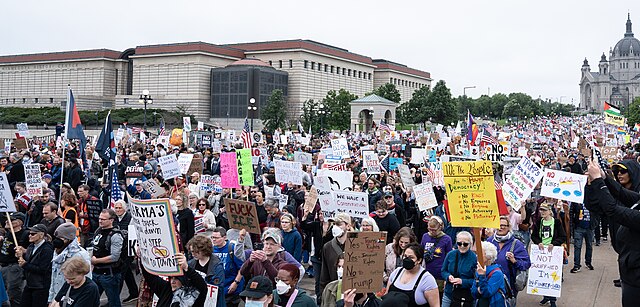
Civil resistance movements around the world are remarkably good at one thing: disruption. We know how to mobilize millions, how to make authoritarian regimes ungovernable, and how to generate the kind of sustained crisis of governance that topples strongmen. What we are terrible at – catastrophically, repeatedly terrible at – is what comes next.
This is the gap where movements die. Egypt’s revolutionaries toppled Mubarak in 2011 but lacked an actionable plan for governance; the military filled the vacuum that lack created and now rules even more anti-democratically than before. Tunisia’s uprising produced the Arab Spring’s only democracy. But that lasted only a decade before a populist strongman exploited public frustration to seize power. Even South Africa’s celebrated transition, negotiated over years, and backed by Nelson Mandela, one of the twentieth century’s great moral leaders, produced political freedom but failed to institute economic reforms that could address the extreme economic inequality created under apartheid. Now the democracy it built is visibly eroding.
The pattern is consistent enough to be a law: Victory in the streets leads to chaos in governance leads to new forms of authoritarianism. The authoritarian falls, the power vacuum opens, and whoever has organizational capacity, weapons, money, or foreign backing fills it. If the vacuum isn’t filled by the movement, it will be filled by someone else.
For those of us organizing against authoritarian consolidation in the United States, this is not an academic problem. It is perhaps the most urgent strategic question we are not asking.
The Frameworks We’re Missing
Traditional progressive power analysis assumes that institutions are persuadable, that democracy is stable, that power is national, and that the state is capturable through electoral and legislative means. Authoritarian consolidation is precisely the process of destroying those conditions. You cannot “pressure” institutions that are being captured. You cannot win elections when democracy itself is the target. You cannot successfully organize nationally when power operates transnationally.
Getting to adequate strategy requires synthesizing across frameworks that most organizations treat as separate specialties: authoritarian consolidation theory, civil resistance scholarship, comparative democratization, network theory, and, critically, the practical question of post-collapse reconstruction. The movement needs strategists who can hold all of these simultaneously, asking: Which pillars of authoritarian support can we pull? How do we reach sustained participation at critical mass? And what do we build when the old order falls?
What South Africa and Tunisia Teach Us
The two most instructive modern cases – South Africa and Tunisia – succeeded in ways that should inspire us and failed in ways that should serve as warnings.
South Africa’s negotiated transition avoided civil war, produced one of the world’s most progressive constitutions, and established a Truth and Reconciliation Commission that became a global model. The process, including creating a Government of National Unity that brought former adversaries into shared governance, built genuine legitimacy. Mandela’s moral authority and strategic vision were irreplaceable.
But the ANC accepted an economic framework to secure white buy-in for political transition that protected the extreme economic inequality produced by the white supremacist apartheid government. Thus, property rights were protected; land was not redistributed. The result: political apartheid ended, but economic apartheid persisted. Today South Africa is one of the most unequal countries on earth, with unemployment above thirty percent, endemic corruption, and a democracy whose institutions survive but whose substance is hollowing out. The political house was built; the economic foundation for it was never laid.
Tunisia’s story is both more hopeful and more devastating. Its constitutional process was a masterwork of deliberative democracy resulting from three years of debate, civil society mediation through the Nobel Prize–winning National Dialogue Quartet, and genuine compromise between secular and Islamist factions. The resulting constitution was the most democratic in the Arab world.
However, Tunisia never addressed the economic crisis that had fueled the revolution in the first place. Unemployment remained brutal, especially for young people. IMF austerity undermined the new government’s capacity to deliver. The security sector was never reformed. By 2021, a populist law professor named Kais Saied had exploited public frustration to suspend parliament, dismiss the prime minister, and rule by decree. Tunisia is now authoritarian again. A decade of democratic institution-building has been erased.
The common lesson is stark: political reforms without reforms aimed at building greater economic democracy produces fragile democracies that either erode slowly or collapse suddenly. Both countries succeeded in building democratic forms. Both failed to transform the underlying power structures – economic, security, institutional – that had enabled authoritarianism in the first place.
The Hard Work Movements Avoid
The experts tell us that post-collapse democratic reconstruction requires planning across at least eight dimensions simultaneously: transitional governance, security sector transformation, constitutional process, transitional justice, economic restructuring, service delivery, democratic culture-building, and international engagement. Most movements address one or two of these, usually the most visible ones like elections and constitutions, while neglecting the rest.
Economic transformation is the most critical and most neglected. Movements focus on political transition because it is urgent and visible. They accept international economic orthodoxy because they fear capital flight. They lack economic expertise because their organizations were built for advocacy, not governance. And they pay for these failures when the public, having won political freedom but seeing no material improvement in their lives, concludes that democracy doesn’t work.
Security sector reform is the second most dangerous gap. Leave authoritarian police and military structures intact, and you leave in place the infrastructure for the next coup. South Africa’s unreformed police massacred striking miners at Marikana in 2012. Tunisia’s unreformed security apparatus enabled Saied’s power grab. The pattern is clear: security forces that serve authoritarians will not automatically serve democracy.
Transitional justice, meaning the question of how to balance accountability for past crimes against the stability of the new order, requires a sophistication that movements rarely develop before they need it. Prosecute too aggressively, and you risk a military coup. Prosecute too little, and you undermine the legitimacy of the new system. The evidence suggests a layered approach: prosecution of top leaders for the worst crimes, truth commissions for broader documentation, conditional amnesty for lower-level participants who cooperate, and reparations for victims. But this balance must be planned in advance, not improvised under pressure.
What This Means for the United States
If authoritarian consolidation in the United States is reversed, whether through electoral defeat, institutional resistance, mass mobilization, or some combination, the day after will present challenges that dwarf anything the pro-democracy movement is currently preparing for. Who governs during the transition? What do you do with federal agencies whose leadership was complicit? How do you address the tens of millions of Americans who supported authoritarianism? How do you reform a constitutional system that enabled it? How do you break the economic power of the oligarchs who funded it?
These are not hypothetical questions. They are the questions that were determinative of whether South Africa built a lasting democracy or a failing one, and whether Tunisia’s revolution produced freedom or a new dictatorship. And they are questions that the American pro-democracy movement, focused overwhelmingly on the immediate crisis of resistance, has barely begun to ask.
The work that must begin now, today, in parallel with resistance. It must include drafting constitutional reforms, planning economic transformation, building governance capacity, preparing frameworks for transitional justice, mapping which security forces will accept democratic transition and which will not, and creating strategies for including former authoritarians in a democratic system without compromising democratic principles.
This is unglamorous work. It lacks the moral clarity of protest and the urgency of crisis response. It requires expertise in governance, economics, law, and administration that most movement organizations were not built to develop. But it is the difference between Egypt and South Africa; between a revolution that produces a worse dictatorship and one that produces an imperfect but surviving democracy.
You can topple authoritarianism and still fail to build democracy. The movement that hasn’t planned for reconstruction will watch someone else fill the vacuum. Build the capacity to govern before you win. The work starts now.
ZNetwork is funded solely through the generosity of its readers.
Donate