
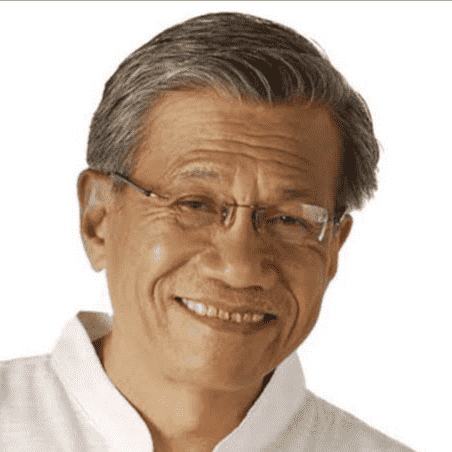

Walden Bello is a leading figure in the alter-globalization movement. Here he is in conversation with Ulrich Brand and Christa Wichterich.
Ulrich Brand: In your new book, you start with a very intense reflection, why it’s not the best idea to write memories or a biography. I quote, “why dispense advice to the young when your generation lost his struggle?” And you say that generation R, the revolutionary generation of the 1960s and 1970s failed concerning the emancipatory project in the Philippines and the really existing socialism. So why did you write the book at the end? What is the main message of the book?
Walden Bello: There were several attempts to push me to write the book. One of them was Eric Olin Wright, who brought me to the University of Wisconsin, to write my experience as a public intellectual. But I spent my time there writing about other things than being a public intellectual. As I said, the sense that there was a failure of both the National Democratic Revolution in the Philippines, in which I participated in as a member of the Communist Party, and also the socialist vision that collapsed in 1989. That made me very hesitant to write, because I’m an activist, and while individually I might have had some achievements, my main identity was being an activist. So that’s why I sort of felt that I had failed. But I wrote and began to discover that writing a memoir is just like writing a poem or an essay in which you basically just want to express something, and it’s up to the audience to decide whether you’re expressing something valuable or not. So, it’s a great risk. People can say, “Oh, this is trash.” Or some people might say that, “Oh, there’s something valuable here.” It really depends on the audience.
Christa Wichterich: I was pretty touched when I read about the failure, because this reflects very much a feeling in our generation, namely that the impressive movements in which we were activists at the time were ultimately unable to fully utilize their strength. They were unable to transform themselves into a driving force that would have changed the situation or secured our successes in the long term. If we want to learn from past failures and movements, we need to reflect on and analyze them. Would you say that there were wrong assumptions in the movements or false concepts, or how do you explain this failure or fading out?
Bello: So, when I was talking about failure, I was mainly referring to the revolutionary movement in the Philippines, and also, the bigger socialist project of the last 150 years. Whether we like it or not, the collapse of the governments in Eastern Europe and in the Soviet Union, did impact the whole socialist, even the social democratic project. But when I began to write, I began to realize that, hey, we did achieve something in more recent times. One is that we discredited the globalization efforts. We showed up neoliberalism to be a false project in terms of bringing about a greater good for the people and the planet. But we also stopped the United States in the Middle East, 20 years of intervention in the Middle East. We built an anti-war movement though it was the people in the Middle East that played the central role. So, I think that our movement did play a role. The New York Times called it “a second global power” after the United States when we went to push against the war in Iraq. That’s the first clarification that I would like to make.
The second is that it was an incomplete victory because we were not able to follow up that movement against neoliberalism with a movement that would, in fact, create new structures as an alternative to what neoliberalism was pushing. And, also, the anti-war movement failed to institutionalize itself. These were incomplete victories. I’m still trying to understand why we cannot, in fact, create movements that institutionalize themselves, create permanent institutions. And that’s what I’ve been trying to explore. It´s difficult formulating an alternative. And also, how do you institutionalize an organization that will keep alive that alternative? That’s what I’m wrestling with.
Brand: But couldn’t you say that the Chavez government in Venezuela, the Morales government in Bolivia, or even a bit Lula in Brazil were kind of such institutionalization? Did you have the hope that they institutionalized the demands, or did you think in other dimensions?
Bello: Well, I did have hope in that pink tide, particularly in the Chavez government, and to some extent, in Lula. And also, a couple of years back, when Boric came to power in Chile, it was still part of that sort of progressive tide. So, if Chavez had lived, I think that things would have taken a much more positive direction in Venezuela. Although he was a populist, he was quite intensely democratic. Lula and the Workers’ Party were too cautious, they just became satisfied with the Bolsa de Familia, the cash transfers to the poor. That was very important in terms of reducing poverty, but they were not willing to push a bolder program than that. So that afterwards, many of the people who benefited from the cash transfers did not think it really came from the government. Those were some of the problems that hobbled the pink tide, but from which we can learn many lessons.
Wichterich: You are saying multilateralism is dead. Is it now a question of building a more democratic form of multilateralism? Or what is the outlook for multilateral institutions such as the World Health Organization, which has been and continues to be very important for the Global South? Do we need a replacement? What is the perspective or future of internationalism with regard to institutions?
Bello: I think there are institutions or forces of denying multilateralism that are best left to die like the World Bank, the IMF, and the WTO. But with Trump, practically withdrawing the United States from that and many other problems, that system seems to die anyway. There are some institutions that are in trouble, but we need to salvage them because they provide a forum whereby, we can disseminate ideas as well as take some effective action, like the United Nations and the World Health Organization. And then new institutions that must come into being, like a World Environmental Organization that would focus on climate change. This is where we’re at right now. A multilateralism of the future would be a mix of initiatives. And how that gets institutionalized will depend on the play of global forces. But my sense is that we’re entering a period of flux where there will be an interaction between the old and the new institutions. And hopefully the mix that will come up will be more positive than negative.
Brand: What do you expect from the BRICS countries and their development in the last 15 years? What is their role in the renewal of multilateralism?
Bello: First of all, I would like to say that the BRICS countries are almost automatically considered a possible alternative to the multilateral system. Initially there was no intention of trying to supplant the Western dominated multilateral system. Many countries, particularly those in the Global South, are looking for new models or new sources of assistance. And not just assistance in terms of material terms, but more assistance in terms of having a development space. But, as I said, the BRICS themselves, the original members, have been very hesitant about projecting themselves as a new multilateral system. The institutions remain quite underdeveloped. There are efforts to bring in some rich countries, like the UAE and Saudi Arabia, and about 54 countries are now knocking at the doors of the BRICS.
It might take some time before some sort of more institutionalized BRICS will emerge. Because first of all, the BRICS are very diversified. Basically, the priorities of the different countries are not exactly the same. However, they, particularly China, will continue to be a source of aid for the Global South and a model of successful state-led development. It provides resources and development space for developing countries in terms of being able to access resources, aid, and diplomatic support. Especially since we’re entering a very difficult period with the possibilities of geopolitical conflicts, the BRICS will be very important in terms of being a voice for stability and peace that the Global South can resort to.
Wichterich: But at the same time, you are criticizing BRICS because of its elite, and because of its embeddedness in or its hopes in a capitalist development. So, we don’t really have alternative models there.
Bello: Indeed, I have raised that, although the BRICS have contributed to the balance of global economic power towards the South, at the same time, in terms of domestic governance, they’re not really exactly models in terms of democratic participation. Regimes whether they’re authoritarian or formally democratic, are influenced greatly by their class systems. There cannot be a new democratic multilateral order that is not influenced by the class system that they have. Can we expect that now that there’s no alternative out there to capitalism, that whether it’s market-led, developmental, or state-led capitalism, the dynamics are essentially still the same? Can you really have a new democratic multilateral order that exists within a global capitalist system? I raise that more as a question rather than saying it’s impossible. We really need to be talking more about constraints on the direction of the development of institutions instead of being dogmatically deterministic and a priori ruling out possibilities for change in a positive direction.
Wichterich: Decolonization is an important strategic perspective in a number of countries. How can this be reconciled with multilateralism based on the Universal Declaration of Human Rights? Nowadays, “universal” human rights are blamed to be Western and imperialistic in the Global South.
Bello: This year is the seventieth anniversary of the iconic Bandung Conference. The Global South has travelled a long way in terms of decolonization and in coming close to a tipping point in the global balance of power vis-à-vis the Global North. But the Bandung Declaration was not just a document promoting political and economic decolonization. Indeed, the very first of the 10 points of the Declaration was “respect for fundamental human rights and for the purposes and principles of the charter of the United Nations.”
It is true that that “human rights” have been weaponized by the West in its effort to preserve its hegemony. But that should not derail us from the fact that from the very beginning of the decolonization era, people in the Global South have seen human rights as a universal value. We must simultaneously denounce the weaponization of human rights by western elites and not allow our elites to use this weaponization as an excuse to disregard them.
Brand: Can you give us an idea, how China is perceived among ordinary people? Among the progressive forces in Southeast Asia? Is it kind of attractive as development model, despite its authoritarian tendencies?
Bello: China is perceived quite differently by different countries. For instance, as an economic model, Vietnam emulates China, and to some extent, Cambodia and Laos, too. At the same time, however, Vietnam criticizes China for its plan to own the whole of the South China Sea. In terms of the other countries like Thailand, Malaysia, Indonesia, I think they have accommodated themselves to the fact that China will be the main regional economic power.
And then there is the Philippines, which has been long associated with the United States, and which is threatened by the Chinese pushing to dominate the South China Sea. But overall, I would say that it’s not being perceived, except maybe in the Philippines, as an imperialist power in the same way that the United States and the West have been perceived.
Now, if you go beyond Southeast Asia, and you include Latin America and Africa, I think the positive perception outweighs the negative. Although people are aware that China’s aid has its own problems, generally there is a sense that to equate China as an imperial power isn’t quite convincing. One important point is that China became a global power that is now maybe number one or number two—depending on what measure you use, whether it’s dollars or PPP, purchasing power parity. But we have to realize that, basically, it won its markets without violence. As opposed to the 500-year history of the West, whereby markets were won with violence. I think that’s a very big difference. China does not go around encouraging coups, even when it has diplomatic differences with countries. On the other hand, China encourages countries to go into a debt trap, like Sri Lanka. So, for me, China has its positive points. It also has its flaws, but to then say that this is an imperialist power, like the United States or the countries in Europe, is really a distortion of reality.
ZNetwork is funded solely through the generosity of its readers.
Donate