
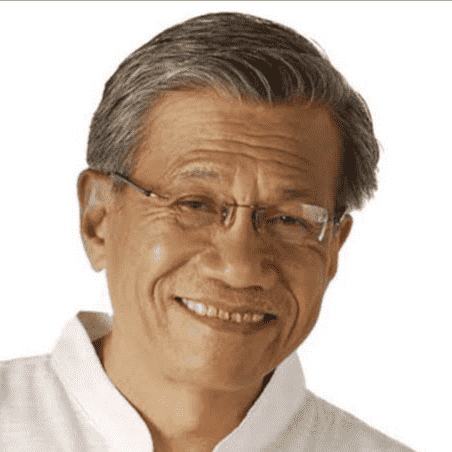

Walden Bello is a leading figure in the alter-globalization movement and a frequent contributor to Foreign Policy In Focus. This is the second part of his conversation with Ulrich Brand and Christa Wichterich.
Christa Wichterich: I would like to get back to your concept of deglobalization which has been very influential 25 years back. What would it mean today? Some people talk about fragmented globalization. Can the new nationalisms, protectionism, and the war in Ukraine be described as a trend toward deglobalization from the right? How can we use this concept today?
Walden Bello: First of all, I think that although we do exist within a global capitalist system, it does seem like the world is fragmented into states as economic actors that are competitive in the global economy. We do have capitalist relations of production but, on the other hand, there is very strong competition. And we see that the old rules are gone in terms of free trade and all that, we are now entering a period of geo-economic institutions where the state plays a major role. So, in that sense, there is deglobalization taking place as a reality.
But that deglobalization is not exactly what I had in mind before. I thought that the deglobalization that I was pushing really was more an ethical, economic perspective in which we would have more of the operation of the principle of subsidiarity and democracy in the world, in which we would have economic governance that would be situated primarily locally but not cutting itself off from the world. It would be integrated regionally and also globally, but with a great deal of national autonomy. That was the sort of perspective that we were advancing that was greatly influenced by the strong forces pushing for autonomy at the local and regional level over the last 25 years. That’s at the economic level.
At the political and military level, you do have deglobalization taking place, too, in terms of the emergence of spheres of influence. The United States is retreating from being the global hegemon to becoming more of a regional hegemon, building a fortress America, like Europe is building a fortress Europa, and Russia being the main influence over Eastern Europe and China in the Asian Pacific. So, you do have this sort of geopolitical and geo-economic competition that is replacing the globalized world of Western-dominated institutions and multilateral rules and free trade. That’s my sense of where we’re at this point in time.
Ulrich Brand: What would an update of emancipatory deglobalization today look like? For instance, you refer quite affirmatively to “development” and “development space”. We have here in Europe strong debates on degrowth, on socio-ecological transformations, in other world regions on post-development. How do you see this? Is this contributing to an update of your idea of deglobalization, or is it something different? And how to integrate the ecological question into your considerations?
Bello: I think that the degrowth debate makes very much sense for the societies which we characterize as over-industrialized and over-consumption societies. We’re talking about a per capita income, a per capita consumption, that is so many more times than what the people in the Global South enjoy. The idea of degrowth, finding one’s values and what satisfies one, including psychic pressure away from material things to more non-material enjoyment, that is more congenial to the environment, too. That is something that is quite important in the United States, Europe, and Japan, and including other countries like South Korea at this point.
But for the Global South, for many of us, it doesn’t make that much sense. Let me put it this way, it’s a bit more difficult for us to espouse a degrowth model, in the sense that the standards of living are so low, and we do need some processes of industrialization that will allow us to be able to have higher standards of living and higher standards of consumption. And that might mean that we might have to tolerate some industrial processes that will probably have some negative impact on the environment, though as soon as feasible, we’ll need to phase them out. The climate debate has certainly shown that the reduction of those sorts of environmentally disturbing and climate-disturbing activities should take place mainly in the Global North. I think this is why the environmental and the climate question must really be viewed in global terms.
Brand: How do you see the post-development debates which criticize the idea of development in old terms, industrialization at any cost, the West as a model etc.? How is it discussed in the Philippines or in Southeast Asia? In Latin America it’s a very strong debate to say we need, of course, material well-being, but not in the Northern way.
Bello: Many civil society organizations feel the same way, that the Western model of development, which stresses growth at any cost, is in fact outdated and obsolescent. And I think what people are working for is how do you have some growth that would, in fact, benefit most of the people, raise living standards without at the same time being the kind of environmentally and socially destructive growth in the sense that it also creates not just planetary damage but social damage in terms of inequality. I think people are sensitive to those issues, but have they come up with breakthroughs? I don’t think we have. But neither have they in the rest of the Global South nor in the Global North. I mean, these are matters of debate at this point in time.
All I can say is that hopefully the kind of thinking that is animating civil society throughout the world will have a cross-fertilization effect. And that’s why I think that we cannot have sort of compartmentalized thinking. For instance, people in the Global North say that the problems of the Global South are not their own because there are a different kind of structures. And we in the Global South cannot separate ourselves from the thinking that is going on about degrowth, because it has many positive aspects that we can learn ourselves. But the point is that we will always have this uneven kind of development globally. To expect that we can have a largely harmonious effort to resolve these major issues at the global level would be idealistic.
Wichterich: Can you give us some reference points for what you call a post-capitalist system? And how to get there?
Bello: Of course, this is extremely difficult. Because on the one hand, imagining a world without capitalism in many ways has become more difficult than it was 70 years ago, during the Bandung Conference in 1955. Back then, we had a very diversified global political economy. We had the Soviet bloc, we had China, we had the non-aligned states. And there was hope then that there would not just be one dominant kind of pattern of global economic path. But now, after so many years of neoliberalism, most countries are integrated into the global capitalist economy. At the same time, it’s very hard to say that we will be able to curb planetary damage or to reduce inequality while the dominant system locally and globally is capital. Because the dynamics of capitalism really are surplus extraction growth and the creation of social classes. So, post-capitalism for me is a necessity. But how we get there from the current global capital system, it’s really the big problem.
We need to really look at the primacy given to the market. Now there is a sense in the Global South and the Global North that the state has to take a bigger role in terms of curbing the riches of the elite and curbing excesses in wealth and taking a role in terms of directing where the economic system should be going. I think that’s a positive thing that we need to look at. The second point is there’s a very great awareness now that the world cannot stand this billionaire-dominated society. It’s that awareness that is very important, that if you do not create more effective taxation systems, if you do not curb all the different loopholes in legislation, that you will continue to have a more and more unequal society. At the same time, you have experiments in terms of taxing the rich and the sense that the state now has to take predominance over the market. All these things are coming together even in authoritarian systems. In many ways, I think there are some positive developments that we really need to monitor very closely because they might be the elements of a new emerging post-capitalist system. In all of these areas, it’s uneven development. There will be setbacks, there will be sudden moves forward and so this is the sort of jagged movement or zig-zag that we need to expect over the coming period.
Brand: In Europe, there is a prominent concept in debates about socio-ecological transformations known as “provisioning system” i.e., the mobility system, the food system, the housing system, or the care of people. It is important to consider how and where these services are provided, what role capital, the public sector, and labor play, what infrastructures and consumption habits prevail, how they are linked to people’s desires, etc. In these specific areas, such as mobility or food, we see many very concrete alternatives. Do you see any starting points for debates and initiatives in countries of the Global South?
Bello: I think this is a very important debate that we can really learn from, as how do we get into a situation whereby people become convinced that they should value things other than their ability to consume. This is where different aspects of the debate are apparent. For the Global South, the sense is that this is an important debate going on in the North. We have some lessons to hear from it, but the great consciousness is still: why does the Global North not respond to the needs of the Global South when it comes to the climate, or when it comes to providing resources for development.
To a great extent, the big demand is still, the Global North has its responsibilities, especially with respect to the climate, and yet it is not fulfilling it. And secondly, now it even wants to forget all about the difference between development and climate finance, and people feel that there’s even less and less of a sensitivity to the needs of the Global South. A lot of the thinking among progressive groups in the Global South is that we have to make the Global North really conscious of its responsibilities. Unless people link their situation in the North to that of the Global South, then this is seen as some sort of a hypocritical debate.
At the same time, there’s also a realization that this whole liberal internationalist paradigm, in which Europe and the United States have existed for the last 80 years, where debates like degrowth are possible, is shrinking. The alternative being posed by fascist or proto-fascist or neo-fascist regimes that might come to power would shrink this consciousness about their responsibility to the South even more. So that’s the great worry, that the liberal space for the discussion of degrowth and other alternatives in the North, while much of the discussion is seen as a bit hypocritical when it comes to the South, even that space might go. And within the Global South itself, I think we are in a situation whereby the liberal democratic regimes themselves are in trouble in many countries, like Brazil under Bolsonaro, and India, which have regimes or movements that are closer in thinking to the fascist thinking in the North.
Wichterich: Instead of developing greater sensitivity and responsibility toward the Global South, the Global North is trying to manage its crises at the expense of the Global South, for example by using so-called global care chains to get the crisis of social reproduction under control. Care workers from the Philippines are in high demand and are being recruited, but this means that there is a shortage of healthcare professionals in their own country. How do you view such global care chains, which I refer to as “care extractivism” analogous to resource extractivism from the Global South?
Bello: When I was in parliament, I was the head of the Committee on Overseas Workers’ Affairs, and these were the issues that we were tackling, what you call care extractivism. The demand was, on the one hand, for nurses here in Europe and the United States, and doctors, and on the other hand, for domestics in the Middle East. So, we are suppliers of unskilled, middle-skilled, and high-skilled labor. The problem that we faced was that all the resources that went into training these people were domestically mobilized, but then they were being utilized in other countries.
In our country this very sensitive topic because a lot of lower-class and middle-class people in the Philippines who are not finding opportunities within the country, basically want to migrate, and want to participate in this process. We also need to be very careful because we don’t want people to perceive policies as negatively affecting them.
Let me give you an example. I wanted to ban domestics from going to Saudi Arabia. Because I said, you’re just sending them to be raped. Saudi Arabia has a very strong slave-holding mentality still. We put the request of a ban in an official government document. At the same time, we felt that it was going to be something that a lot of our workers would oppose: Banning domestics from going to Saudi Arabia. So, my sense is, we have to be very sensitive to the fact that many people do want to participate in this process. The big fear at this point is that there has been a big backlash, whether in the United States or in Europe, to migration. I think there’s just this sense that migrants, whether they’re skilled or unskilled or semi-skilled, are no longer that welcome. These are sort of the concerns we need to balance at this point in time.
But for me, as a progressive this is again rooted in the fact that we do not have a society that can provide for its citizens. Because it’s very much integrated into the global system. What we really need to do is to modify our links to the outside world, and create a more autonomous society, in which we can provide the resources and the opportunities for our people. We need to integrate that vision towards short-term and medium-term policies, that do not radically disrupt the supply chain, but ultimately lead to its elimination gradually. Even as we are developing our local economies we should be to some extent disconnected from this global supply chain demand. So, it’s a bit of a complex problem, but ultimately, we really need to be able to develop, in a multi-dimensional fashion, our local economies.
Brand: To sum up this conversation, we would like to talk a bit about your experiences. In your book you express several times that you can look back to a very well-lived life. What did motivate you most in the last six decades to be active, politically active, as a scholar, as an intellectual, as an activist, as a politician? What were the two, three strongest motivations behind it if you look back.
Bello: Good question. I think, to a great extent, things are accidental. If I did not pass by as an onlooker a demonstration happening at Princeton University to close down a defense contractor when Nixon invaded Cambodia in 1970 where I suddenly joined the sit-in and then I was arrested—I would probably have been at the level of being a progressive intellectual, I mean a public scholar, but not an activist. That sort of action transformed my life.
Secondly, a very important transformation that happened to me was becoming a member of the Communist Party for 15 years. That was my life. I mean the Party assigned me to do something and I obeyed. There were also some not very good aspects of that because there were purges that happened in the Philippine left at that time that saw people being executed by their comrades on suspicion of being government agent. What would I have done if I had been one of the people who was judging your comrades because you thought that they were government agents? I don’t know, and I can only be thankful I was never placed in the situation. Nevertheless, my membership in a Marxist-Leninist party was also important.
And then thirdly is my realization of the limitations of that kind of engagement. The lesson I learned was that you have to be critical. A number of events including the big mistake of 1986 where the left boycotted the elections and then the purge that was happening internally had a big impact on me and made me a more critical in terms of my membership in a progressive organization. That was a very important dialectical development for me. And finally, I would say that my participation in the anti-globalization movement and also in the movement against the war impacted me. These were outside my original commitments as a Marxist and as a communist activist but nevertheless instinctively I knew that I had to participate in this. Sometimes you have to follow what your guts tell you even if your mind is going in the opposite direction. This is what I learned. This is one of the problems within the left because oftentimes we’re too theoretical. Sometimes we let our reason overdetermine our relation to reality and sometimes we really need to listen to our inner voices when it tells you that this is wrong or not the way to go even if theoretically it seems the right way. I’ve become much more sensitive to that.
Wichterich: And more conscious that there’s a strong emotional component in politics as well.
Bello: Indeed, that emotional and affective dimension is what we in the left whether in the North or the South have to develop. The right is very good at it in a very wrong way. But we can’t afford to leave the affective dimension in politics to them. Otherwise, we’re going to be eaten up. But how we, on the left, in fact begin to develop that affective dimension is a big challenge still and not to assume that it’s easy.
Brand: Let´s turn to another dimension, that of your intellectual practices. How were you organized if you think back in your very dense everyday life as public intellectual, politician, activist, and scholar. Just give us some ideas of the everyday practice. Did you have kind of staff members around you who organized you? Was this by your own?
Bello: Well, at different phases of my life I was of course dependent very much on others. When I was an activist in the Communist Party, I was part of a big whole. I don’t want to say I was a cog in a machine, but I was part of an organization that gave you meaning. I think that you have to establish some critical distance from the organization while still depending on others within an organization. To a great extent you have to do a lot of thinking on your own and oftentimes even the theoretical basis that you had, including Marxism, showed itself not to be adequate. I would say that up to now I’m a Marxist. But a lot of what I did had to be thought about beyond Marxist terms.
Of course, when I was a parliamentarian, I did have my staff. I think that one of the crucial things is that you really have to be able to reach out to people where they are and not assume that you have a vision that they’ll easily relate to. I think that made me much more receptive and sensitive to people.
Wichterich: And more approachable to them.
Bello: Yes, and not trying to impose a view but more articulating what they need and to respect their contradictions. I have this contradiction as well. Ever since Chile, I’ve been on the one hand intellectually and academically fascinated by the far right. At the same time, I hate them and consider them to be a real danger. But it’s been a creative contradiction because as a sociologist it was very important for me to understand why people get mobilized and not to react just in an automatic fashion that these people are bad. These people are our political enemies but it has always been my fascination to study the right-wing movement because I think knowing the mass base of this movement gives me a sense of where we need to go, how we’re going to win them over and what are the kind of politics that we need to offer people so that they do not move to the right.
I just like to end with this concretely in the Philippines. The Duterte mass base supports him and his daughter and they’re not willing to listen to reason. You can’t go and say to them that: “Hey this guy deserves to be in The Hague because he killed an estimated 27,000 people.” That sort of reasoning doesn’t apply with these people. There’s just this convoluted sense that they feel oppressed like he is oppressed. He is a victim and therefore we as his followers are also victims. That’s why I want to get a sense of this victimhood and why that is animating so many people and how can we, in fact, get people out of that sense where they, against all reason, support a mass murderer. And of course, that’s not just something specific to the Philippines or our times but you know very well in Germany back in the 1930s, 1940s.
Brand: If you step back and look at all your experiences, what is the role of public intellectuals today, as a collective or as individuals? What is important?
Bello: One is we must continue to speak the truth to power. But I think we also are now in that stage where we must not just be critical, but we also need to find ways to get together on issues that can unite us even when we have differences. I think globally the left has been in a phase of fragmentation because of differences. This is not to say that those differences are not important. But my sense is that both locally in the Philippines and globally we’ve gone too far at the level of accentuating our differences. Now we’ve got the pendulum swing back to finding ways to cooperate without being in agreement on so many issues. And that’s a frame of mind that is going to be necessary for us to be able to reconstitute the left as an important local and progressive and global reproductive force. As a public intellectual at this point, I try to search for unity beyond differences and then see how working on these unities can eventually bring about more principled compromises, more tolerance.
Brand: I will finish with the last question. In November you turn 80. You appear very vivid, very interested, open-minded. What are your plans for the next years?
Bello: Well, let me just put it this way. It’s very important to yield leadership to the younger generation and I also expressed this in the memoirs that each generation has its paradigm and that paradigm filters reality and makes sense to it but in a way that may not make sense to the younger generation. Therefore, I believe that I should not take on a leadership position, but rather let younger people do so, even if they have to make a lot of mistakes in the process. From my life I learned a lot from making mistakes and I also learned that the older generation did not provide me with the tools to understand politics that probably made sense to them but not so much to me. It was my generation, the generation of the Vietnam War, we spoke across borders a common language, a common sense of the future and that’s what the generations now of young people need to have. That sense that the future is open and it’s up to them to form it. So, I’d much rather have them move and make mistakes rather than stay there as a sort of a leader.
ZNetwork is funded solely through the generosity of its readers.
Donate