
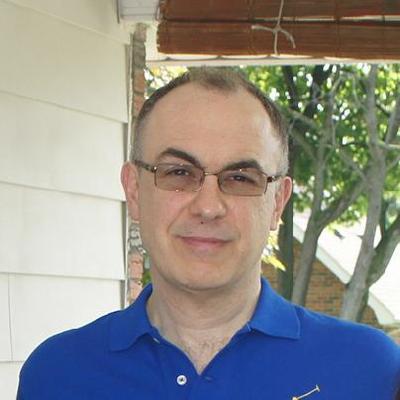
An opposition victory in Venezuela’s legislative elections on December 6 could pose a very grave risk to democracy. One expects to hear that from government supporters, but this was said by long-time government critic Francisco Rodriguez on November 13 during a discussion (in Spanish) with two other government opponents.
Rodriguez is a senior economist for the Bank of America Merrill Lynch. He fears that the opposition could win a super majority in the National Assembly and use it use it attempt to reverse everything done by Chavismo – the political movement that has dominated Venezuelan politics since the late Hugo Chavez was first elected in 1998.
Rodriguez does not believe that the majority of Venezuelan voters have turned against Chavismo. He thinks that many are so angry about economic problems under the current president, Nicolas Maduro, who was elected after Chavez died in 2013, that the opposition is poised to capitalize on a huge protest vote.
Rodriguez said that if the opposition tries to use a super majority won under these conditions to erase Chavismo it would be “one of the worst mistakes in Venezuelan history” and bring the country “back to April 12, 2002” – the day Pedro Carmona’s dictatorship ruled Venezuela after a coup briefly ousted Hugo Chavez. The coup was defeated by loyalist sectors of the military and a huge uprising by the poor where the staunchest Chavistas are found. Rodriguez based his analysis on data provided by his fellow participant in the discussion, Luis Vicente Leon, who runs the Venezuelan polling firm Datanalisis which found that 57 percent of voters still think highly of Hugo Chavez.
Luis Vicente Leon could be called a “moderate” opponent of the government in highly polarized Venezuela – something the international press invariably fails to point out when citing Datanalisis. He writes op-eds twice a month for the newspaper El Universal which has been falsely depicted as a government mouthpiece since an ownership change in 2014.
Luis Vicente Leon disagreed with Rodriguez about the likelihood of the opposition winning a super majority. He thinks a simple majority is more likely but added the caveat that there could be drastic swings in voting intention in the last days before the election. Leon said (at about the 26:00 – 28:00 point) that these elections are the first ones since 1998 in which the opposition goes into them with a “real” rather than a “fictitious” majority. In previous elections, he said, many in the opposition wrongly believed that they were the majority. I would add that many people in Venezuela and abroad dishonestly spread such claims.
For example, Jose Cardenas, a former USAID official during the Bush administration, just wrote in Foreign Policy magazine that “President Hugo Chávez, and today his loyal, but hapless, successor Nicolás Maduro, have developed a habit of turning sure electoral defeats into ‘surprising’ victories.” Cardenas then cites Datanalisis without mentioning that Luis Vicente Leon totally rejects what Cardenas said about those past “surprising” Chavista victories. Mind you, the track record of Datanalisis is very far from spotless. In 2004, Datanalisis claimed the opposition had a 15 point lead only two months before a recall referendum against Hugo Chavez lost by 17 points.
To his credit, during the discussion, Leon explained why Venezuela’s voting system is very secure from fraud. He pointed out that in 2013 Henrique Capriles – an important opposition leader and two time presidential candidate – won an election for Miranda state governor by a razor thin margin. A loss by Capriles in that election would probably have finished him politically and greatly exacerbated divisions within the opposition.
The faction of the Venezuelan opposition that the international press panders to is precisely the one that Francisco Rodriguez fears – the one that insists they are living under a “dictatorship” and that reflexively claims any election they lose has been “stolen.” It is the faction the Obama administration unconditionally supports just as the Bush Administration did. Like Rodriguez, Leon also fears that the radical opponents will not be restrained by moderates if a supermajority is won through a protest vote.
Leon and Rodriguez – being government opponents after all – claim that Venezuelan elections are slanted in the government’s’ favor through the use of state media and other resources. This totally ignores the wealth and business connections of the opposition – to say nothing of support from the U.S. government. Very recently, U.S. prosecutors have forced their way into Venezuela’s news cycle on the opposition’s behalf. Nobody familiar with the U.S.-perpetrated coup in Haiti in 2004 will be surprised. U.S. prosecutors – as well as OAS bureaucrats – helped bring about that coup. The OAS bureaucracy is presently helping the U.S. oversee a fraudulent election in Haiti.
Unsurprisingly, the current OAS chief issued a statement that may as well have been written by the most radical faction of Venezuela’s opposition. Fortunately, U.S. influence over OAS member states – if not the bureaucracy – has greatly diminished in recent years. The opposition’s money and connections have won it such completely lopsided coverage abroad that one cannot help but be shocked to hear moderates like Leon and Rodriguez dismiss false claims that have been spread outside Venezuela.
The vilification of Venezuelan democracy by international media often relies on implicit and invalid assumptions about the supposed paragons of democracy. A Christian Science Monitor article by Jim Wyss reported on November 16 that “maneuvers” go on in Venezuela “that would raise eyebrows in more robust democracies.” Would the United States be one of the unnamed “robust democracies“ Wyss has in mind? It is now in the midst of a billionaire-dominated marathon presidential campaign where the top GOP candidate – thanks largely to corporate media cowardice and complicity as Glenn Greenwald explained – “is speaking openly of forcing Muslims to register in databases, closing mosques, and requiring Muslims to carry special ID cards”.
As for the opposition’s chances on December 6, there is no excuse for being in denial about the possibility that it could win. Through the years it has always had a chance to win because Venezuela is a democracy and because the opposition has never been starved for money, media access, and connections. While Hugo Chavez was alive and during periods of strong economic growth, the opposition acquired 37 percent (2006) and 44 percent (2012) of the vote in past presidential elections. They were beaten decisively but their share of the vote was still significant.
A huge and sustained fall in oil prices has helped Maduro’s opponents tremendously, and that is not his administration’s fault. However, a year before oil prices fell his government balked at abandoning an exchange rate system that was already causing serious problems. Various economists have urged Maduro to give up that system –Francisco Rodriguez, Mark Weisbrot and even Ecuadorian President Rafael Correa. Regardless of the outcome on December 6, the long term prospects of Chavismo will depend on whether or not Maduro takes bold action and heeds their advice. That will actually be even more important than the price of oil.
ZNetwork is funded solely through the generosity of its readers.
Donate