

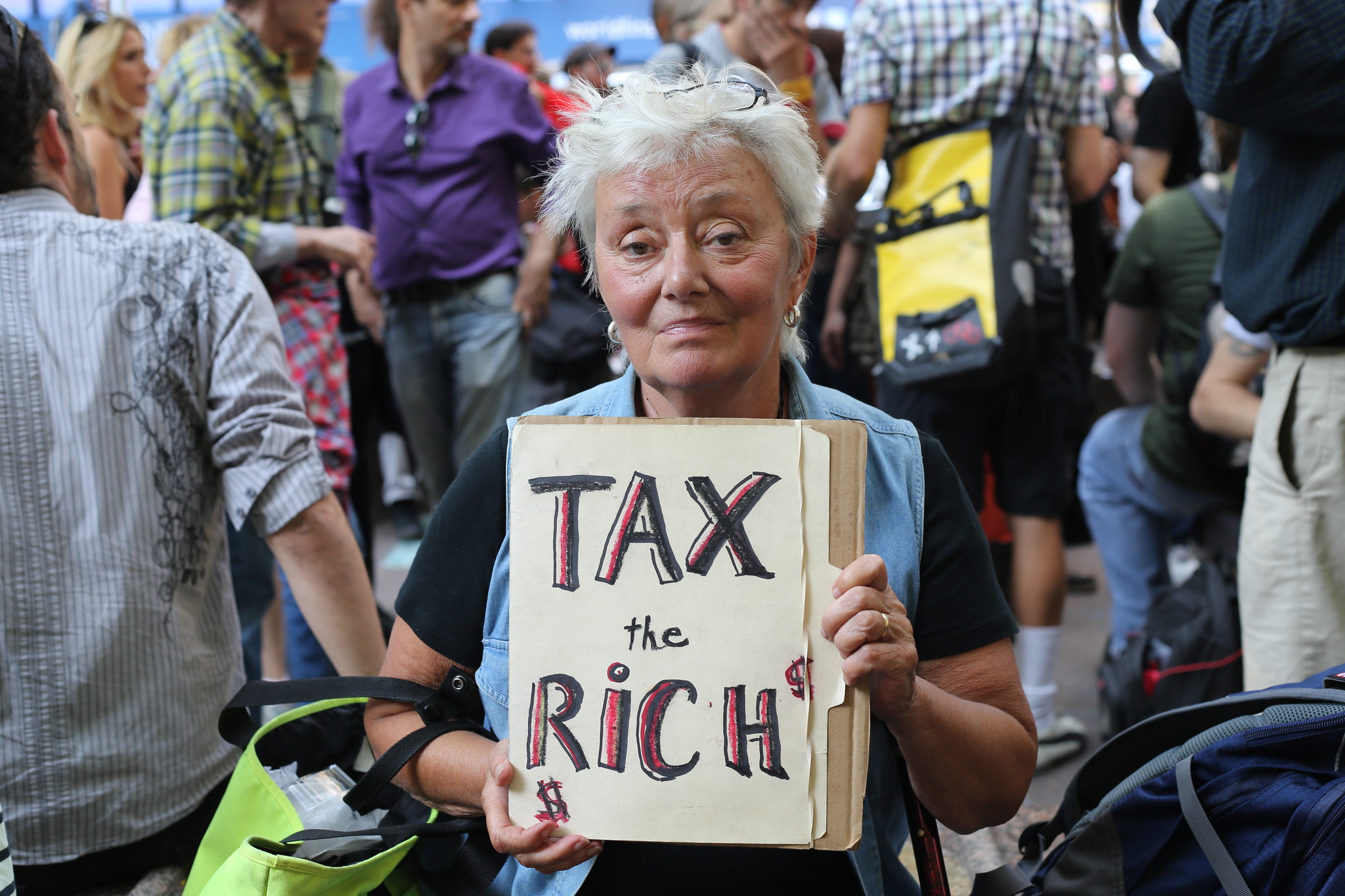
Never let your opponents define the terms of a debate. All too often, Labour has allowed the Conservatives and the billionaire press to demonise the notion of “tax and spend”. It went to great lengths before the election to assure voters it had no such intention. Now it drives home the message: instead, our needs will be met by “growth, growth, growth”. But tax and spend is the foundation of a civilised society.
Few of the changes this country requires can be achieved while adhering to the “tough spending rules” the new government has imposed on itself. We urgently need massive public investment in the NHS, social care, schools, environmental protection, social housing, local authorities, water, railways, the justice system and virtually all functions of government. We need a genuine levelling up, across regions and across classes. The austerity inflicted on us by the Conservatives was unnecessary and self-defeating and Labour has no good reason to sustain it.
The new government insists it is ending austerity. It isn’t. As the Institute for Fiscal Studies (IFS) pointed out in June, Labour’s plans mean that public services are “likely to be seriously squeezed, facing real-terms cuts”. Similarly, the Resolution Foundation has warned that, with current spending projections, the government will need to make £19bn of annual cuts by 2028-29. However you dress it up, this is austerity.
We are constantly told: “There’s no money.” But there is plenty of money. It’s just not in the hands of the government. The wealth of billionaires in the UK has risen by 1,000% since 1990. The richest 1% possess more wealth than the poorest 70%. Why do they have so much? Because the state does not; they have not been sufficiently taxed.
There are two reasons for taxing the rich and taxing them hard. The first is to generate revenue: this is the one everyone thinks about. But the second is even more important: to break the spiral of patrimonial wealth accumulation. Unless you stop the very rich from becoming even richer, it’s not just their economic power that continues to rise, but also their political power. Democracy gives way to oligarchy, and oligarchy is intensely hostile to everything Labour governments seek to achieve, including robust public services and a strong economic safety net. When oligarchs dominate, you can kiss goodbye any notion of the public good.
Last year, I tried to estimate how much it would cost to restore a viable, safe and inclusive public realm after 14 years of Tory vandalism. While my effort was very rough, the sum came to between £65bn and £100bn of extra spending a year: between seven and 10 times more than Labour’s total. It’s a lot, although it’s dwarfed by the money the previous government spent on the pandemic: between £310bn and £410bn over two years.
While these sums are ambitious, and would require expanded borrowing (which Labour has foolishly ruled out) as well as taxation, there are plenty of opportunities to raise taxes on the rich. The government could, for example, replace inheritance tax with a lifetime gifts tax kicking in at £150,000, a level that would affect only wealthy people. This would increase revenue while ending a major form of tax avoidance. The government should raise capital gains taxes: it’s perverse that unearned income is taxed at a lower rate than earned income. It should close the carried-interest loophole, which ensures that private equity bosses pay less tax than their cleaners: a pledge on which it already seems to be backtracking.
The government could also levy a wealth tax, a luxury goods tax and a tax on second homes and holiday homes. It could make the windfall tax on fossil fuel revenues permanent. It could replace business rates with land value taxation, and council tax with a progressive property tax based on contemporary property values: both shifts would be fairer and would raise more money. But the only extra taxes the government propose are, as the IFS remarks, “trivial”.
By seeking to raise revenue through economic growth rather than redistribution, Labour avoids the necessary confrontation with economic power. Not only is the strategy uncertain of success (economic growth here is subject to global forces); not only does growth load even more pressure on the living planet; but this approach also fails to break the grip of the ultra-rich. Isn’t this the whole damn point of a change of government, after 14 years of Tory appeasement? Unless you seek to change the structures of power and redistribute wealth, the rich will continue to harvest the lion’s share of growth while using some of their money to buy the politics that expands and fortifies their dominion.
Labour’s fiscal policy is mirrored by its housing policy. Instead of addressing the deep problems with this dysfunctional sector, it will expand the dysfunction by deregulating the planning system. But, as an analysis by the previous government showed, even if housebuilding rose to the planned 300,000 homes a year, after 20 years (across which 6m homes would be built), prices would be reduced by only 6%. In other words, good housing would remain unaffordable to most.
To make homes more accessible, you need to change the structure and incentives of the market. In our report for the Labour party in 2019, Land for the Many, a team of us showed how it could be done. While building is still required, everyone can be well housed without the need for such a massive programme. Among other measures, the government should use the tax and planning system to discourage under-occupancy, set up public development corporations to assemble land and harvest most of the uplift in its value when planning permission is granted.
But this too means confronting powerful interests. As the Tories (heavily funded by property developers) and Reform (chaired until last week by a property developer) have found, it’s much easier to deflect blame from the massive failures of the property industry on to immigrants. Unless the new government defies this predatory sector, it leaves the door open to the extreme right.
The government’s approach to raising revenue and building housing and infrastructure while keeping the structures of injustice intact might seem like a shortcut to the change it seeks. But it strengthens the hand of Labour’s opponents.
Some of the most effective movements in history – campaigns for both the male franchise and the female franchise, workers’ rights, civil rights, gay rights – have sapped the rhetorical power of their opponents by adopting the labels thrown at them. The government should wear the “tax and spend” badge proudly. It must know, as we all do, that it is the only way out of this mess.
ZNetwork is funded solely through the generosity of its readers.
Donate