


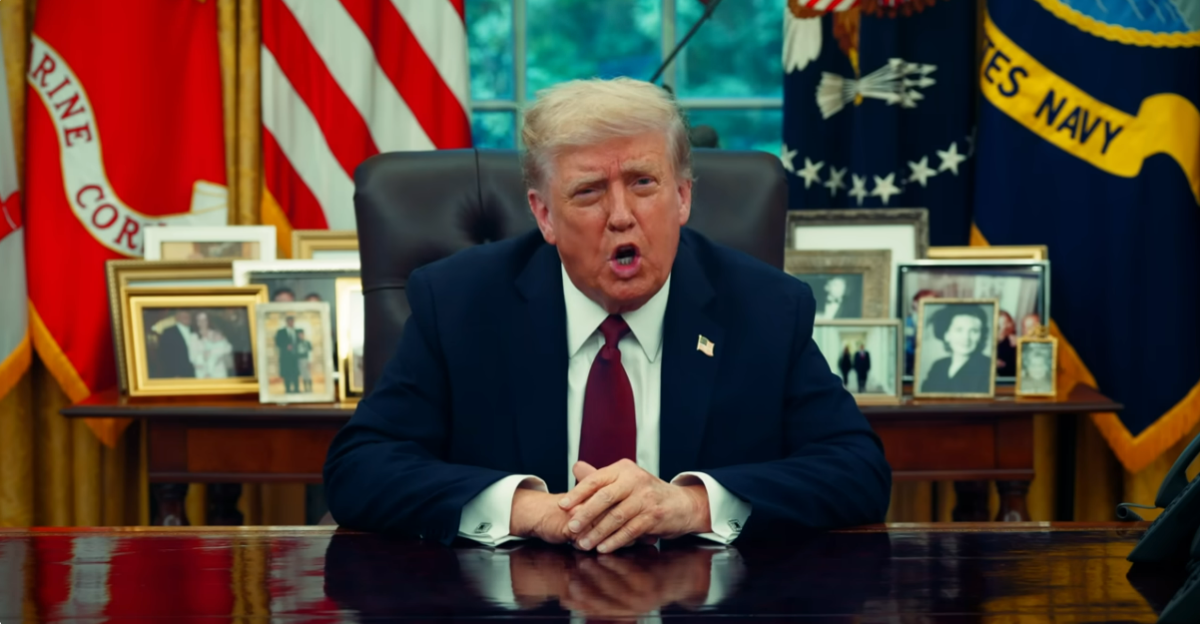
The Trump-Vance administration says it got the message loud and clear from its drubbing last Tuesday: it needs to do better on alleviating the country’s cost-of-living crisis.
“We had an interesting evening, and we learned a lot, and we’re going to talk about that,” Donald Trump said after the results came in — perhaps closer to an indication of self-reflection than we will ever hear from the president.
“Why did Zohran Mamdani do so well last night? He relentlessly focused on affordability,” top White House advisor James Blair told Politico. He’s one of a number of White House officials who say they’re desperate to pivot to the issue of affordability.
“We’re going to keep on working to make a decent life affordable in this country, and that’s the metric by which we’ll ultimately be judged in 2026 and beyond,” Vice President J. D. Vance tweeted.
Even some Republicans outside the White House seem eager to take it up. “Our side needs to focus on affordability,” near-billionaire and former presidential candidate Vivek Ramaswamy said in a video. “Make the American dream affordable. Bring down costs, electric costs, grocery costs, health care costs, and housing costs.”
The only problem is, almost nothing that Trump, Vance, and the rest of the GOP have done since suggests they will actually address affordability concerns.
Take the deal they just struck to end the current government shutdown. The fundamental sticking point in those negotiations was the refusal of Trump’s GOP to agree to extend health insurance subsidies for the Affordable Care Act (ACA), whose expiry will make people’s premiums more than double on average, sometimes even more than quadruple. You don’t need to know that health care is already most Americans’ number-one financial stressor to realize that having to go from paying $888 to paying $1,904 annually for health insurance premiums is going to make your life less affordable.
Just yesterday, Senate Republicans once more showed the seriousness of their newfound commitment to affordability, when Sen. Tammy Baldwin forced a standalone vote to extend ACA subsidies for a year. Every single GOP senator voted against it.
Or look at the saga over Trump’s refusal to pay out Supplemental Nutrition Assistance Program (SNAP) benefits, better known as food stamps, a benefit all about making sure low-income households can afford increasingly pricey groceries, which is relied on by many of his own voters. Trump’s decision — bafflingly made just as voters were preparing to go to the polls — plunged families into hunger and crisis and necessitated several lawsuits to force him to use the emergency funds that had been set aside for that purpose.
Yet even after being punished by voters last week, the Trump-Vance administration has continued obstinately to try to wriggle out of paying out the SNAP benefits, despite being explicitly ordered to do so by a judge. That Thursday, the administration’s lawyers argued deceitfully that the problem was state governments hadn’t distributed the money, only for the judge to determine the White House had done “nothing to ensure” the benefits would get paid out.
When that didn’t work, now, just this past Monday, the Trump-Vance administration made clear that it would be seeking a stay on the original order. That came after this past weekend, when it threatened states that had already started paying SNAP benefits out to “undo” the payments or face a penalty.
Trump may be saved from himself here by the deal ending the government shutdown, meaning benefits will, in theory, soon start being paid out again — though since the deal only funds the government until early next year, it’s very likely the cycle starts again come January 30. Either way, it’s pretty extraordinary: Trump’s administration is literally being forced to spend public funds to make people’s lives more affordable, and it has been trying everything it can to make sure Americans don’t get those funds.
Then there’s the president himself. Even as Trump has acknowledged that they had “learned” from the election and lamented that Republicans “don’t talk about the word ‘affordability,’” he has also repeatedly waved away the issue. In various public statements, Trump has called it a “con job,” said the real problem is that Republicans don’t talk about the “great job” they’ve done on affordability, and invented a spate of made-up facts and figures about how prices for various items have gone way down since he took office, which they obviously haven’t.
“So I don’t want to hear about the affordability,” he concluded after one of these monologues.
To be fair, the Trump-Vance administration has done some things on affordability. Shortly after the trouncing it took last Tuesday, it announced a deal to lower prices for weight-loss drugs like Ozempic — good news for many people who want to use these drugs, no doubt, but which hardly seems like the top priority when medication for staving off the ravages of blood cancer costs $1,000 per pill.
The president’s latest idea is a fifty-year mortgage, which, as many commentators quickly pointed out, would mean paying far, far more in interest payments and would make the mortgage much more expensive by the time you were done paying it, if you ever were. It would be great for the banks and terrible for the actual homeowner.
These are the kinds of comically out-of-touch, monocle-adjusting ideas for tackling affordability that neoliberal Democrats usually get savaged for putting forward.
What we’ve seen these past two weeks looks less like an administration and political party that have learnt some hard lessons, and more like a preview of what Trump, Vance, and the Republicans’ actual approach to affordability will be going into the 2026 midterms: to say the word “affordability” a lot and pretend that prices have gone down, while doing little to nothing to make life in the United States cheaper — or even actively making it much more expensive.
The Trump of 2020, who responded to an election-year economic crisis by eating Democrats’ lunch and throwing money at people and expanding the welfare state, may have realized the kind of political peril he’s currently in. But that Trump and those he surrounds himself with have long been fully co-opted by the neoliberal establishment they once pretended to rail against. As a result, it’s not clear they’d even know how to turn this around, even if they wanted to.


Branko Marcetic is a staff writer at Jacobin magazine and a 2019-2020 Leonard C. Goodman Institute for Investigative Reporting fellow. He is the author of Yesterday’s Man: The Case Against Joe Biden.
ZNetwork is funded solely through the generosity of its readers.
Donate




