
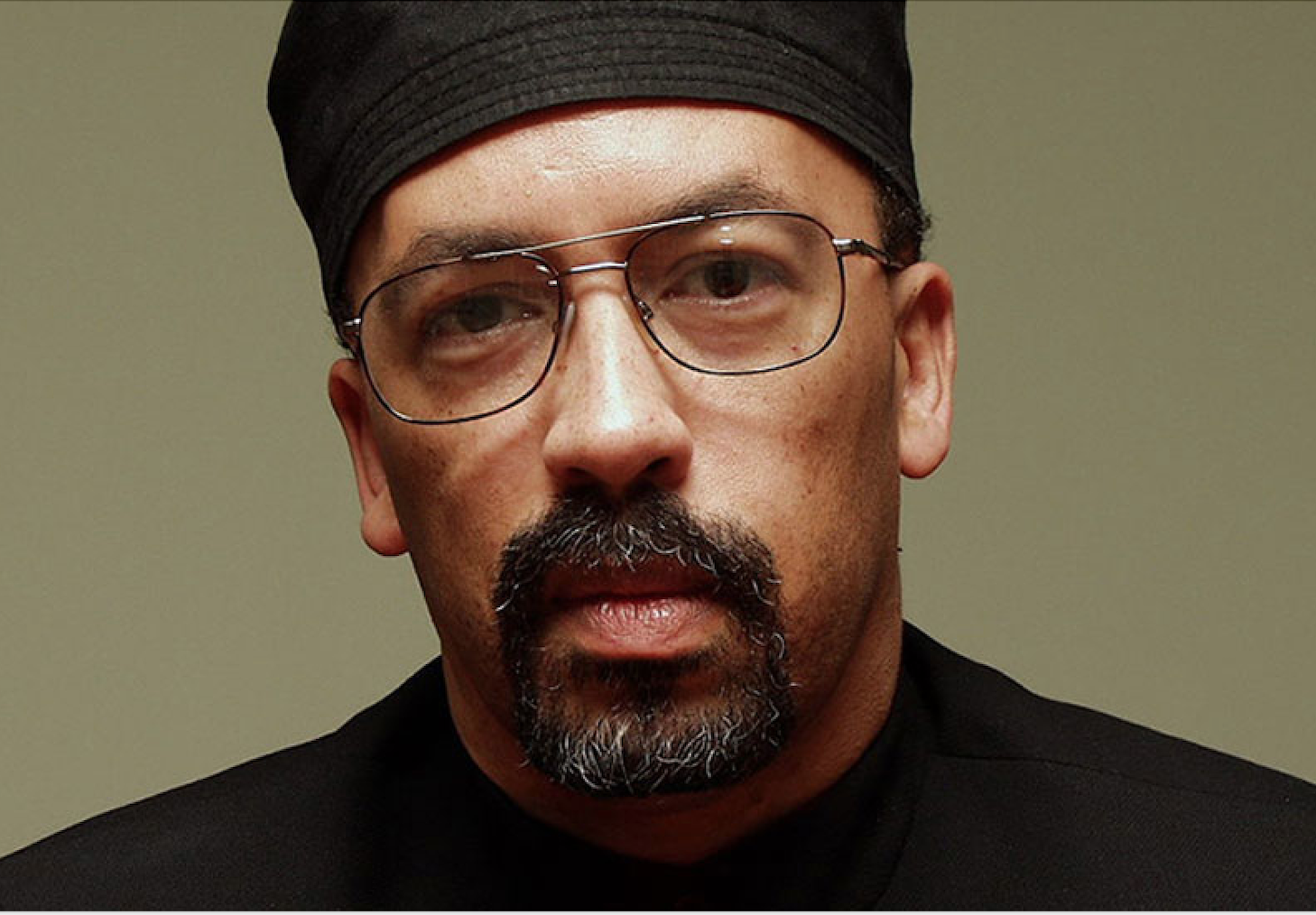

Icould not read Max Elbaum’s excellent piece without thinking about the late Jack O’Dell and his proposed Democracy Charter. But we shall get back to that in a minute.
I could not agree more with what Elbaum presents. That said, I wish to note two points of difference; one area worth exploring; an addition; and a note on the Third Reconstruction.
Reckoning with voter suppression
Elbaum falls prey to a problem that many on the Left and among progressives repeat when it comes to the 2024 election. Specifically, the failure to mention, let alone address, the question of voter suppression. As many as 3.5 million voters were disenfranchised, according to investigative journalist Greg Palast. Most of them were Latine and African American; enough lived in the swing states of Wisconsin, Michigan, Pennsylvania, and Georgia to have shifted the election. In other words, we could have quite conceivably been engaging in a very different discussion right now.
In several Left and progressive settings, I and others have raised this matter of voter suppression and have either been ignored altogether or met with a grudging acceptance that, yes, that might have been a problem. Been a problem? The offensive of the so-called Redeemer [white supremacist] movement of the 19th century that overthrew Reconstruction and introduced Jim Crow is being replayed in the 21st century before our very eyes! The mid-decade redistricting perpetrated by Texas and under consideration in other states make this all the more blatant.
Therefore, to put it bluntly, there will be no progressive victories without a voting rights movement that actively and aggressively challenges voter suppression. This means that organizing such a movement cannot rest with litigation. There must be a direct connection made between the attack on voting rights, the attack on democracy, and the destruction of the living standards of the people.
Uniting around more than economics
Toward the end of the piece, Elbaum makes the point that we can’t build an anti-MAGA majority on economics alone, which I agree with—but we need to keep this in mind when assessing Senator Bernie Sanders. With all due respect to the Senator, part of the challenge he faces is his failure to appreciate that economics is not the final answer to all questions. There are other factors that influence people generally, and workers specifically. Millions of people chose to ignore the horror of the Madison Square Garden Trump rally that preceded the election. Let me qualify that. They either chose to ignore it or they actively accepted it.
Consider, for a moment, if you will, a different scenario. Consider if a Black presidential candidate with an appealing economic platform was running against a white woman. Consider if that Black candidate had raised issues regarding the sexual behavior of that white female opponent. Consider, further, if the running mate of that Black candidate had said or implied that the white female was a whore. What do you think the election results would look like? Would the Black candidate’s economic platform have had any relevance under such conditions? The point should be clear, i.e., no Black candidate, indeed, no candidate of color, would have been able to get away with talking about a white woman along the lines that Trump and Vance have. It would not have happened. There would be no excuses accepted, whereas excuses have been repeatedly raised for the misogyny of Trump and Vance. Again, at some point one has to stop and recognize that many people voted for Trump, not just despite his racism and sexism, but precisely because of it.
Yes, we need Sanders, but we need more than Sanders. We need the likes of Alexandria Ocasio-Cortez.
Connecting environmental and social catastrophes
The “addition” is that the struggle against MAGA takes place in the context of the environmental catastrophe and the neoliberal erosion of the social safety net, and these two are interconnected. The right generally, and the Far Right in particular, has no response to environmental catastrophe outside of name-calling and genocide (with eco-fascism being a clear example on the level of genocide). Building a counterattack against the Far Right needs to center the expansion of our base beyond narrow economic issues, and to unite the matter of economic justice with—what I would call— eco-democracy.
Consider the destruction we have witnessed in the last twenty years. From Hurricane Katrina to Hurricane Helene, the West Virginia flooding and Los Angeles wildfires of 2025—these catastrophes have shredded people’s lives, and the government has been unable to suitably respond. With the destruction of the social safety net, people are left on their own. In that context, forms of warlordism can emerge that argue that the government cannot help them and that they must adopt a survivalist approach. Privatization runs rampant in the processes of rebuilding.
Thinking along these lines necessitates developing strategies to demand of the government the renewal of social safety net provisions to help people recover from disasters; mass demands for renewable energy and against fossil fuels; as well as the development of community-based efforts that promote collective care and the repudiation of rightwing warlord efforts.
Building our vision through organizing
Finally, Elbaum summarizes the necessary vision for a progressive future as being the “Third Reconstruction.” The First Reconstruction took place after the Civil War, between 1865 and 1877. The Second Reconstruction is a description often used for the period from 1954 through the mid-1970s. A Third Reconstruction would be a bolt into the future with an active effort at a more comprehensive social transformation that includes, but is not limited to, victories on racial justice. Ultimately it could be summarized as a battle for consistent democracy. I am in total agreement. But such a vision requires an organizational vehicle to anchor the work of developing and popularizing it.
In the early 2000s, the late Jack O’Dell, a former member of the Communist Party, a trade unionist, a central figure in the civil rights movement, and a close aide to the Rev. Jesse Jackson, articulated the need for what he called a “Democracy Charter.” Patterned in many respects on the South African Freedom Charter (1955), the idea was to create a statement or manifesto that summarized some of the most important and unifying features that a progressive movement could advance regarding our vision for the future.
O’Dell drafted points for such a charter, which he began circulating. Though there was significant dissemination of the draft charter, what was largely not factored into the planning toward the advancement of said document was the necessity for an organization to anchor the work of moving the discussion. Thus, a combination of an ultraleft dismissive approach by some towards various structural reform suggestions overlapped with a larger failure to move the discussion of the Democracy Charter within multiple social movements, ultimately resulting in failure.
By contrast, significant organization by the South African Communist Party helped to advance the discussion of the South African Freedom Charter over several months, resulting in a Congress of the People in June 1955. In a short period of time, a consensus was reached across the country on the key elements of a program of struggle and a vision for the future.
I would argue that the Democracy Charter has now come into its own. There is a perceived need across the various social movements to forward a post-neoliberal, progressive vision. Though many people reference this as the need for a Third Reconstruction, what is needed at this moment is the precision of the Democracy Charter; an organization or organizations to advance discussions across the US, and the adaptation of such a charter to today’s conditions. What Jack O’Dell wrote more than 20 years ago would be a starting point rather than a final word. There needs to be broader unity around specific platform points that speak to the needs and desires of the anti-MAGA majority to bring us into a new era, i.e., to bring about a future without fear.
ZNetwork is funded solely through the generosity of its readers.
Donate