



In August, right-wing billionaire Abelardo de la Espriella took office as Colombia’s president and vowed to move an agenda of the far right even though he won by less than a percentage point over the left-wing candidate Iván Cepeda. It is characteristic of the far right of a special type to adopt any mandate and pretend that they have the authority to transform their society into their toxic swamp. Of the twenty states generally thought of as being part of Latin America, eleven now have governments of the far right: Argentina (Javier Milei since 2023), Bolivia (Rodrigo Paz since 2025), Chile (José Antonio Kast since 2026), Colombia (de la Espriella since 2026), Costa Rica (Laura Fernández since 2026), Ecuador (Daniel Noboa since 2023), El Salvador (Nayib Bukele since 2019), Honduras (Nasry Asfura since 2026), Panama (José Raúl Mulino since 2024), Paraguay (Santiago Peña since 2023), and Peru (Keiko Fujimori since 2026).
Most of these leaders are not from the old conservative circle but are part of a new generation (Noboa is the youngest of the group, born in 1987) with an average age of 52. These are men and women who represent the old oligarchies of Latin America, the old families with deep colonial roots and with vast properties, but these leaders do not have an aristocratic sensibility or come from the established conservative political parties. They are libertarian in nature with naked fealties to the United States and its agenda. They fashion themselves as patriots, but patriotism is cast aside for absolute loyalty to Washington and its corporations.
Shoot to Kill
The far right emerges out of a long tradition of the oligarchy’s lawless violence, which dates to the genocide against the indigenous through to the military dictatorships of the Operation Condor era. Impunity for violence has been the hallmark of this class and its political representatives, and so the current far right is nothing if not authentic to its class and its forebearers. Laura Fernández was born in 1986 the year before Costa Rica’s president Óscar Arias won the Nobel Prize for Peace for his work in conflict resolution in Central America (Costa Rica rid itself of its military in its 1949 Constitution). At her inauguration in May 2026 Fernández said that she would have an ‘iron-fist response’ to crime and that her ‘hand will not tremble’. After Gustavo Petro’s attempts to bring peaceful resolutions to conflicts in Colombia, de la Espriella came to office with the view that ‘criminals can take bullets too’, suggesting a return to the state of war.
Nayib Bukele’s tough-guy approach to crime has profoundly influenced Latin America’s far right, turning El Salvador’s mass arrests, military deployments, emergency rule, and meg prisons into a regional political model. Leaders and candidates from Ecuador, Colombia, Costa Rica, Peru, Chile, and elsewhere increasingly present crime as a war requiring exceptional state power rather than conventional policing and social policy. Bukele’s popularity has helped normalise promises of militarised streets, harsher sentences, expanded prisons, and weaker procedural protections. Although critics document arbitrary detention and human rights abuses, admirers portray his methods as proof that decisive, authoritarian leadership can restore order where democratic institutions appear ineffective. Thus far, the far right of a special type has portrayed its illiberal approach to criminality, in fact to the neighbourhoods of the poor, as the only effective solution to the narco-mafias and petty criminals of the barrios.
Reversal of Social Gains
Across Latin America, the Angry Tide is attempting to reverse feminist gains by restricting abortion and contraception, dismantling institutions addressing gender violence, attacking sex education, and portraying feminism as a threat to the traditional family. In Argentina, Javier Milei’s government closed the Ministry of Women, stopped distributing abortion medication nationally, and cut contraceptive and teenage-pregnancy programs, thereby leaving formal rights increasingly inaccessible, particularly to poor and working-class women.
In Chile, far-right legislators have proposed forcing women to hear the foetal heartbeat before obtaining one of the country’s narrowly permitted abortions, while several new bills would punish allegedly ‘false’ accusations involving rape, sexual abuse, and domestic violence. These proposals could allow an accused person to pursue a complainant after a case is dismissed and therefore intimidate survivors; in class terms, this threat falls hardest on working-class, rural, migrant, and Indigenous women who lack lawyers, money, and institutional protection, strengthening patriarchal control while making access to justice more dangerous.
Blindness to Genocide
The far right not only sees lawless violence as its currency today, but it routinely celebrates the history of the conquistadors against the native peoples of the Americas as well as the entire panoply of Western civilisation (as Milei did in his speech at Davos in 2024). Blindness to genocide is the habit of the far right, which is why it has absolutely no compunction about close relations with the United States and its policy to seek the subordination of the entire hemisphere of the Americas to Washington’s interest. When Washington says that the road to close ties with itself must go through Tel Aviv, the governments of the far right hasten to forge close relations with Israel – despite the ongoing genocide of the Palestinians.
In June 2025, Argentina’s Ambassador to Israel, Rabbi Shimon Axel Wahnish, announced something called the Isaac Accords, which are designed to bring Latin American countries into a close relationship with Israel. The announcement came nearly two years into the genocide, although the actual Isaac Accords were formally established in April 2026 in Jerusalem. While Argentina and Israel are the only formal signatories, in May, a conference in Buenos Aires brought together officials from Bolivia, Brazil, Chile, Colombia, Costa Rica, Ecuador, El Salvador, Guatemala, Honduras, Panama, Paraguay, and Uruguay who signed a statement calling for the expansion of the Isaac Accords. Short of that, diplomatic relations with Israel have been restored by Bolivia (2025) and Colombia (2026), with Venezuela (2026) renewing consular services.
Development of Underdevelopment
Within presidential palaces and in legislatures, the governments of the far right have been working on economic agendas worked out by the International Monetary Fund (IMF) and the US Treasury Department. The agenda is simple: ensure that Western-based multinational corporations have easy access to raw materials from Latin America, protect the investments of these corporations, allow the oligarchy to participate in the theft of social wealth, and discipline the wider population through the actuality of immediate austerity and the promise of future wealth.
Most of the countries governed by the far right (Argentina, Chile, Ecuador, El Salvador, Honduras, and Paraguay) are under IMF facilities, with other countries on the radar for future programmes of the IMF. What is key is not the IMF programme per se, but a new push by the IMF to ensure investment-oriented deregulation. Argentina’s Large Investment Incentive Regime (RIGI), passed into law in 2024, provides the framework for laws that are being passed across Latin America – with the IMF loan programme, such as in Bolivia, dependent on the passage of these laws to protect (mostly foreign) investment in the country. RIGI, a long-term bargain, attracts large foreign investments by granting corporations sweeping tax, customs, currency, and regulatory privileges for up to 30 years. It socialises environmental and economic risks while privatising profits, weakening public revenue, and limiting future governments’ ability to regulate capital. Workers receive no equally strong guarantees of stable employment, good wages, local production, or public benefits, while multinational investors gain greater power to extract Argentina’s resources and move profits abroad.
The return of a testosterone leadership will not be able to solve the problems of the people of Latin America; but it has the capacity toxify social relations by turning people against each other and therefore weakening their capacity to build their own society. Their goal is total social transformation, not merely the enactment of this or that legislation. This is a fierce counter-revolution against the gains made by the impact of the Cuban Revolution and by the Bolivarian current. Contradictions will emerge, no doubt, but slowly and cautiously amongst a population divided by precariousness and new forms of social piety.
This article was produced by Globetrotter and No Cold War.

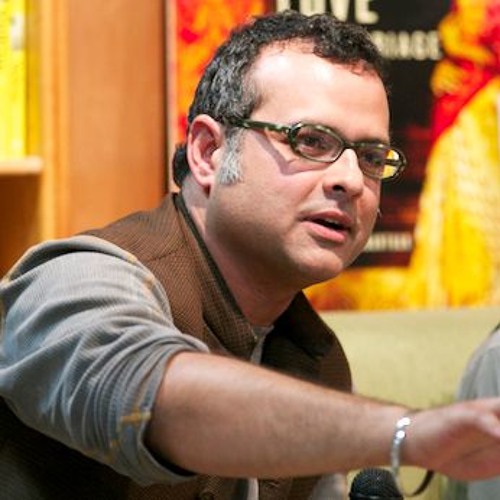
Vijay Prashad is an Indian historian, editor, and journalist. He is a writing fellow and chief correspondent at Globetrotter. He is an editor of LeftWord Books and the director of Tricontinental: Institute for Social Research. He is a senior non-resident fellow at Chongyang Institute for Financial Studies, Renmin University of China. He has written more than 20 books, including The Darker Nations and The Poorer Nations. His latest books are Struggle Makes Us Human: Learning from Movements for Socialism and (with Noam Chomsky) The Withdrawal: Iraq, Libya, Afghanistan, and the Fragility of U.S. Power. Tings Chak is the art director and a researcher at Tricontinental: Institute for Social Research and lead author of the study “Serve the People: The Eradication of Extreme Poverty in China.” She is also a member of Dongsheng, an international collective of researchers interested in Chinese politics and society.
ZNetwork is funded solely through the generosity of its readers.
Donate




