

South America has entered a period in which liberal democracy is becoming more visible, with geopolitical tensions escalating between Venezuela and the US on the one hand, and election processes extending into 2025 on the other. The rise of right-wing populist governments from Argentina to Chile and from Ecuador to Bolivia is often explained solely by economic crises, but it is also the result of the left’s failure to institutionalize democracy in its practice of governing and to produce a social alternative. Progressive experiences that treat power as an area to be managed rather than a transformative tool facilitate the return of the right wing as they fail to produce lasting solutions. This crisis is not unique to the continent; it points to a broader problem that undermines the left’s capacity to be a viable option on a global scale. This crisis deepened in recent days when Venezuelan President Nicolás Maduro and his wife were abducted from their home by the US in a show of force, using mafia-like methods. This incident, in which international law was disregarded, and the United Nations merely stood by and watched, shows the state of democracy today.
The history of colonialism and the interventionist policies of the US, which still regards the continent as its “backyard,” are not enough to explain the current political deadlock. As the current example of Venezuela shows, it has not been possible to create a strong and democratic political base that could counteract US interventions, and the practices begun by Chávez and continued by Maduro have proved insufficient. In Brazil, Lula da Silva, and in Bolivia, Evo Morales, like other left-wing leaders, instead of consolidating democracy on the continent, pursued a policy of power politics that contributed to the rise of right-wing populism. The social achievements of the left in these countries could have formed the basis for a deeper democratic transformation based on indigenous peoples, pluralism, and grassroots participation.
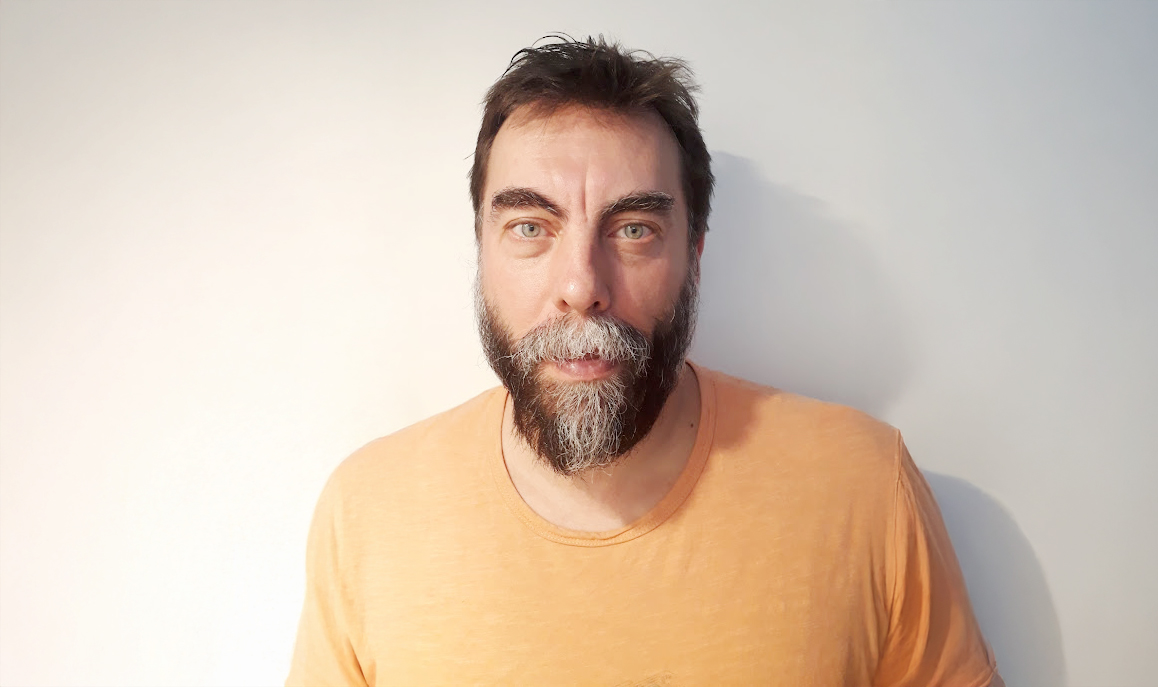
Devriş Çimen interviewed Pedro Perucca, a sociologist, journalist and one of the editors of Jacobin Latin America, for the Kurdish daily newspaper Yeni Özgür Politika. They discussed the current political situation in South America, with a particular focus on Venezuela, Argentina, Chile and Bolivia, as well as the challenges facing democracy in these countries.
Due to the wars in Ukraine and the Middle East, developments in South America have fallen into the background in the media. What has happened there in recent years, or what is currently happening?
After the so-called Latin American Pink Tide (roughly between 1998 and 2012), a conservative counteroffensive took place, through which various right-wing forces returned to power in key countries such as Argentina (in 2015), Brazil (in 2016), and Chile (in 2017). But, as happened with different projects of the new right around the world, including Donald Trump’s first presidency, these governments later failed to secure reelection. This opened the period we are currently in, marked by an alternation between progressive and conservative governments, with neither side able to fully consolidate itself.
The underlying problem with the “second Pink Tide,” inaugurated in 2018 with the victory of Andrés Manuel López Obrador in Mexico (a country that had not been part of the previous progressive wave), is that in some cases these administrations were even less radical than their predecessors, aiming merely to manage the existing order more efficiently, without attempting any structural transformation of power relations. Thus, with the exception of Mexico, which did pursue redistributive policies that significantly raised average wages and lifted millions out of poverty, these progressive governments largely served as an interregnum before a stronger return of the right. The paradigmatic case is Argentina under Alberto Fernández and Cristina Fernández de Kirchner from 2019 onward: a deeply flawed administration, marked by an acute political crisis and runaway inflation, laid the groundwork for the victory of Javier Milei. This is the tragedy of governments that Nancy Fraser defines as “neoliberal progressivisms,” characterized by progressive cultural agendas of multiculturalism, inclusion, diversity, and feminism, combined with economic policies that deepen inequality, precariousness, and social discontent, ultimately feeding the right and blocking paths toward genuinely transformative left-wing projects.
Today, a large part of the continent remains trapped in this alternation, but in an increasingly difficult and rightward-shifting scenario shaped by the growing interference of the United States under the second Trump administration. As part of its hegemonic crisis, and within the context of an ever more acute geopolitical rivalry with China, the United States appears to be gradually abandoning its pretensions as the world’s police force in order to refocus on what the Monroe Doctrine defined as its “backyard,” while also seeking to block the consolidation of the Asian giant’s influence, which in recent years had begun to establish a significant presence. This is bad news for Latin America, as can be clearly seen in the escalation of attacks against Venezuela and in the growing US interference throughout the region.
What does President Milei, who defines himself as an “anarcho-capitalist,” seek to achieve after his neoliberal policies and strict austerity measures have caused economic and political instability in Argentina? Do current developments reflect the chronic political situation that already existed before Argentina’s economic collapse in 2001?
What Javier Milei’s presidency is attempting to do is to bring an end to what some analysts describe as a long-standing “hegemonic stalemate,” in which the Argentine working class, while unable to impose an alternative political-economic project, managed for decades to retain a capacity to block a thorough neoliberal transformation of production relations. The aim now is to impose a strategic defeat in order to relaunch a phase of capitalist accumulation that remains blocked today. This would, of course, come at the cost of losing historic conquests and rights for workers, the destruction of a significant national middle class, and the complete degradation of a welfare state that, in Argentina, still retains a strong presence, guaranteeing free healthcare and education, among many other benefits.
Trade union organizations are also under attack. Despite their steady decline since their historical peak during the so-called “first Peronism,” they continue to play an important role. At present, the spearhead of this offensive is the proposed “labor modernization” bill, an utterly regressive and anti-worker reform.
Despite its crises, Milei’s “libertarian” experiment achieved things that other right-wing projects had not. In order to carry out an unprecedented austerity drive during his two years in office, involving historic losses in wages and rights, he fully exploited the advantages of a novel digital ecosystem—bots, streamers, social networks, and memes—to amplify everyday hatred and consolidate a new pedagogy of individualism and cruelty. In this way, he managed to push his reactionary discourse into popular sectors, especially among young people (particularly young men, with a strong emphasis on a clearly antifeminist ideology), confirming that this is a right-wing force that is here to stay.
Despite the undeniable economic and political crisis facing the country, with record levels of industrial closures, unemployment, and poverty, as well as corruption scandals and official ties to drug trafficking, the government managed to win the midterm elections on October 26. This was due in part to the absence of an organized opposition and to fears that an official defeat would trigger a deeper economic crisis, but above all to direct US government intervention in the elections, through an unprecedented economic bailout to support Milei. Milei’s alignment with Trump, and with the genocidal Netanyahu, is total.
However, this electoral victory does not dispel the prospects of growing political and economic conflict in the short term. While the current moment is not comparable to the situation that led to the popular uprising of 2001, given that social organizations are far weaker and there is a deeper subjective crisis among citizens, Argentina has a long history of politicization, organization, and street-level resistance to reactionary plans, a tradition in which I continue to place my confidence.
The policies pursued by Hugo Chávez since 1999 and continued by Nicolás Maduro since 2013 did not lead Venezuela toward a fully consolidated democracy. The political and economic crisis persists. Juan Guaidó, a previously little-known opposition politician, proclaimed himself “interim president” in 2019. Recently, opposition leader María Corina Machado was awarded the Nobel Peace Prize. What do Guaidó and Machado oppose? What is the current state of democracy in Venezuela?
Venezuela is a very complex case and difficult to summarize, because polarized positions often prevail in its analysis, hindering understanding. On the one hand, a sector of the left continues to defend it uncritically, drawing few distinctions between the Chávez and Maduro administrations and blaming all of the country’s problems on the political, economic, and military offensive of the United States. In recent months this offensive has intensified, including not only attacks by paramilitary forces but also the intervention of US armed forces, which sank several small Venezuelan boats, claiming they were trafficking drugs without providing any evidence, and, just days ago, even the seizure of an Iranian oil tanker off Venezuela’s coast.
On the other hand, right-wing forces and their allied media around the world denounce Venezuela as a criminal “dictatorship,” applying an outrageous double standard when compared to other allied oil-producing countries, whose brutal human rights violations are tolerated without protest.
Of course, Venezuela is neither one thing nor the other. Since Hugo Chávez took office in 1998, immediately branded a “dictator” by his enemies, the so-called Bolivarian Revolution won dozens of elections whose democratic character was beyond question, certified by organizations such as the Carter Center. However, it is also true that after Chávez’s questionable death, continuity under Nicolás Maduro involved a series of setbacks, particularly a loss of popular protagonism, especially regarding the role of the “communes,” which Chávez had defined as the “living heart” of the revolution. There was also a growth in bureaucratic structures and power, especially within the armed forces and the “Bolibourgeoisie,” enriched by the massive profits derived from oil management at PDVSA, as well as increasing doubts about the transparency of recent electoral processes.
US denunciations of a “dictatorship” are, of course, driven by its desire to gain control over Venezuela’s strategic oil resources. This explains its support for figures as mediocre and disreputable as Juan Guaidó and María Corina Machado, both US puppets with no real historical relevance, alongside a brutal economic offensive against the country. But today, while the entire left must unquestionably defend Venezuela against the escalating attacks of imperialism, it is also true that Venezuela is not an example that revolutionary movements can uncritically and proudly uphold.
Colombia, one of the most important countries on the continent, seeks to consolidate democracy and peace. Although efforts have been made to end conflicts through peace processes, instability continues to prevail. What measures are being taken to institutionalize and socialize democracy and peace?
The Colombian case is unique in Latin America because efforts to consolidate democracy and peace are unfolding in a country marked by decades of armed conflict, profound social inequality, and an institutional framework historically captured by conservative elites. In this context, the arrival of Gustavo Petro to power in 2022 represents the first left-wing presidency in the country’s history, or at least the first in nearly 80 years of successive right-wing governments. This marked a political and symbolic turning point, but many of the difficulties facing the administration stem precisely from this unprecedented novelty, as it seeks to transform conservative, racist, and classist logics entrenched over decades, often with the support of the United States, which for years used the hypocritical discourse of the “war on drugs” to subordinate Colombia to its regional objectives.
One of the central pillars of Petro’s government has been the so-called “total peace,” which aims to resume and expand the agreements signed with the FARC in 2016, advance negotiations with other armed actors, and at the same time address the structural causes of the conflict. In this regard, policies have been promoted around agrarian reform, land restitution, the strengthening of peasant economies, and the recognition of Indigenous and Afro-descendant peoples, understood not as subordinate actors but as central subjects of democratization. This has been accompanied by an agenda to expand social participation and create new democratic institutions, with greater state presence in historically abandoned territories and an explicit rhetorical break with the militaristic approach that dominated for decades. For the first time, clearly anti-imperialist statements have also been heard, along with explicit support for the Palestinian struggle and many other topics previously absent from Colombian official discourse.
However, these advances coexist with significant difficulties in consolidation. The government faces strong resistance from business, media, and political sectors that retain control over key institutional levers, as well as constraints stemming from a fragmented political system and a parliament unwilling to support the executive’s proposed structural reforms. Added to this is the persistence of violence in certain regions, where armed groups, illegal economies, and local actors continue to contest territorial control, demonstrating that peace cannot be reduced to formal agreements but requires deep social transformations and long-term planning.
In this context, the institutionalization and socialization of democracy and peace in Colombia remain open and contested processes. Undoubtedly, Petro’s government has made the most serious attempt to address these issues at their roots, placing on the agenda a redefinition of the relationship between state, territory, and society. Its success and continuity will depend on the ability to translate this political orientation into sustained policies, to broaden social consensus, and to resist attempts at blockage and delegitimization. More than a point of arrival, the current experience shows that democracy in Colombia remains a field of struggle, in which peace is fought for both within institutions and in the everyday lives of the social majority.
There has always been a struggle between the left and the right on the continent. For example, in Venezuela there was Chávez, followed by Maduro; in Brazil, Lula da Silva; and in Bolivia, Evo Morales, who emerged as left-wing leaders and implemented policies that, viewed from a distance, in part seem to have “failed to take social diversity into account.” In Brazil, right-wing populists such as Bolsonaro, and in Argentina Milei, were elected with policies that “buy politics with money.” Why has democracy failed to consolidate on the continent? Why has right-wing populism gained so much influence in recent years? What would need to happen for stable and comprehensive policies to be developed that include diversity and Indigenous peoples and institutionalize democracy?
I would not speak of a failure of democratic consolidation, since in most of Latin America the era of military dictatorships ended 40 years ago or more, and electoral processes have proceeded without major challenges. Moreover, the crisis of liberal democracy as a representative system cannot be limited to our region, as it is a phenomenon increasingly visible in Europe and the United States, especially with the growth of new right-wing movements. Rather, the difficulties Latin American democracies face in definitively reversing deeply unequal social structures cannot be explained by a single factor. Weak states, dependent economies, economic structures focused on extractivism or low value-added exports, and difficulties in achieving independent scientific, technical, and industrial development all play a role. Many of these factors reflect explicit and colonial US policies toward the region.
Even the progressive cycles led by figures such as Chávez, Lula, or Evo Morales, which expanded rights and reduced poverty, encountered these limits: a strong dependence on commodities, tensions between economic redistribution and recognition of social and cultural diversity, and difficulties in durably transforming inherited institutions.
In this context, the recent advance of right-wing populism largely reflects the exhaustion of these experiences and the social malaise produced by unresolved economic and social problems. The combination of frustrated expectations, economic precariousness, and distrust in politics, in many cases fueled by neoliberal progressivism, was skillfully exploited by leaders offering simple solutions, appealing to anger, and effectively using money, media, and digital platforms to gain power. Figures such as Bolsonaro or Milei present themselves as outsiders, but in reality they represent concentrated economic interests. They gain legitimacy by displacing socio-economic conflict into a moral or cultural register, waging a so-called “culture war” against progressivism, the left, or “wokeness,” a hallmark of these right-wing movements.
Another key factor is the crisis of representation. Large segments of society, especially youth and urban popular classes, do not feel addressed by traditional parties or political languages they perceive as alien. In this vacuum, anti-political discourse and promises of entrepreneurial efficiency and individual salvation have gained ground, even as they concretely erode rights and weaken democratic institutions without offering meaningful improvements in material living conditions.
Regarding more substantive participation by Indigenous peoples in decision-making, the situation varies widely by country, and a comprehensive mapping exceeds the scope of this text. Bolivia has seen real advances in Indigenous organization and participation, including the adoption of a constitution defining the country as “plurinational,” recognizing multiple Indigenous nations and peoples. In Ecuador, the Confederation of Indigenous Nationalities of Ecuador (CONAIE) has also been a leading political actor. Beyond formal recognition, which remains absent in many countries, the challenge lies in actually enforcing the few existing laws recognizing Indigenous rights, strengthening territorial autonomies, and articulating recognition agendas with effective redistributive policies that improve living conditions. This remains a major pending issue for most of the region.
In 2025, elections in Argentina, Ecuador, Bolivia and, most recently, Chile brought about a change of direction: right-wing parties are now in power at the political level. The right-wing conservative José Antonio Kast, who is of German descent, won the presidential election in Chile – and by an even clearer margin than predicted. How did this come about in Chile? Why is the left weakening?
The collapse of the Left in Chile, made evident by the decisive victory of far-right candidate José Antonio Kast, can be explained largely by the same factors we have already identified in other cases: the growing international rise of the new right-wing movements together with increasing US interference; a moment of widespread rejection of incumbent governments; and, above all, a deep disenchantment with the administration of progressive president Gabriel Boric. The fact is that his government, which was severely weakened after the defeat of its proposed constitutional reform in 2022, failed to fulfill most of its campaign promises, especially those that anticipated structural reforms to Chile’s institutional system, still deeply marked by the legacy of the Pinochet dictatorship, the cradle of global neoliberalism. Boric ultimately abandoned any ambition for substantive reforms after the defeat of his fiscal reform proposal in 2023, and proposals such as the nationalization of pensions and retirement funds currently managed by private companies and a significant increase in their minimum benefits, the construction of a universal public health system, the cancellation of heavy student debt, or the push for a national employment program were left forgotten. And the protest vote of a society battered by the economic crisis was overwhelming.
But what is most serious is that, even under these adverse conditions, the communist candidate Jeannette Jara did not even attempt a genuine left-wing campaign that would pose a frontal confrontation with the emboldened Chilean right; instead, she even tried to adapt to the conservative agenda on highly sensitive issues such as security and migration. This adaptation of progressivism to conservative discourse is both a cause and an effect of the advance of the right. In this new phase, Chile, a profoundly unequal country, will enter a new cycle of destruction, sell-off, and privatization of the public sphere, which will worsen the situation of large sectors of the population. If this moment of retreat is to be as brief as possible, the Left must radically rethink its tactical and strategic approach to governance, returning to a clear class-based discourse aimed above all at changing the economic situation of workers. A progressive, diverse, and identity-focused discourse that does not improve the lives of the vast exploited masses is a foolproof recipe for new triumphs of the right.
What role do Indigenous peoples and women play in the continent’s politics today? Is there potential for a decolonial politics?
Today, Indigenous peoples and the women’s movement occupy a far more visible and active place in Latin American politics than in previous decades, not only as subjects of demands but as actors contesting meanings, territories, and ways of doing politics. The sustained struggles of feminist organizations and Indigenous peoples have challenged the limits of existing state structures, exposing exclusion as a structural component of national states built on colonial, patriarchal, and racist foundations.
For Indigenous peoples, this protagonism is expressed both in governing experiences and in community-based forms of organization that challenge classical liberal logic. Processes such as those in Bolivia, Indigenous uprisings in Ecuador, territorial resistances in Chile, Peru, or Colombia, and demands for autonomy and plurinationality demonstrate that the goal is not merely symbolic inclusion but a redefinition of the relationship between state, territory, and sovereignty. Indigenous movements also play a key role in environmental defense, with the pioneering example of Berta Cáceres, founder of the Civic Council of Popular and Indigenous Organizations of Honduras (COPINH), murdered in 2016 for defending rivers and community lands. Today, this defense of the environment is often expressed through opposition to increasingly voracious extractivist projects, involving both traditional mining and the extraction of lithium or rare earths. Even when many of these initiatives are cloaked in the language of “green extractivism”, Indigenous communities in the so-called “lithium triangle” (in Argentina, Bolivia, and Chile) have been playing a key role in exposing their true nature.
Women and feminist movements, for their part, have become one of the most dynamic political forces in the continent over the past two decades. From Argentina’s Green Wave to movements against gender-based violence in Mexico and Central America, feminism has succeeded in placing its agendas at the center of institutional politics and everyday life, and in securing progressive legislation, such as the right to abortion in Argentina and some other countries. At the same time, these movements have foregrounded the relationship between patriarchy, economic inequality, and coloniality, expanding the democratic horizon beyond formal equality.
At this intersection lies the potential for a decolonial politics, which can be articulated across multiple dimensions in dependent countries such as those in the region, especially as new right-wing forces pursue agendas increasingly subordinated to imperial needs. Its greatest strength lies in its articulation with intersectional politics that seek to incorporate class, race, gender, and other dimensions, aiming to challenge the very foundations of development, property, labor, and representation.
In recent decades, Indigenous peoples and women have expanded the field of the political and redefined what democracy means in Latin America. The possibility of a more disruptive decolonial politics will depend on their capacity to articulate recognition, redistribution, and autonomy, and to build broad, durable alliances that, without abandoning the electoral arena, aim to fundamentally transform the historical structures of domination that continue to shape social life across much of the continent.
Note: The interview was conducted before the abduction of Venezuelan President Nicolás Maduro by the US.
The interview was published in two parts over two days in Yeni Özgür Politika.
Part 1
Part 2
ZNetwork is funded solely through the generosity of its readers.
Donate
