

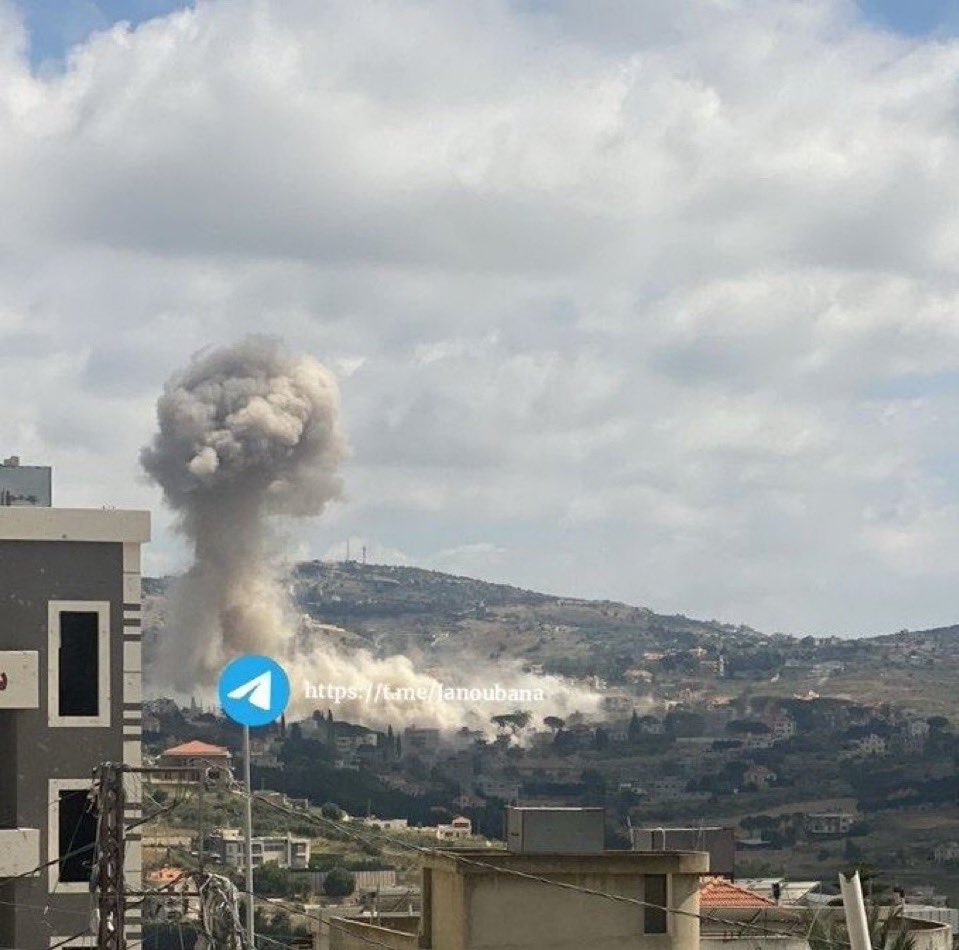
On 14 June, as diplomats edged towards what could have become the most consequential US–Iran understanding in years, a bomb fell on Beirut’s Ghobeiry neighbourhood. Buildings collapsed. Civilians were killed. Families who believed they were living through a fragile ceasefire window suddenly found themselves once again digging through concrete and dust. The strike was not merely another tragic episode in the long history of Middle Eastern violence. It was a geopolitical message delivered through rubble.
The timing matters. In international politics, timing is often more revealing than rhetoric. The strike occurred only hours before expectations were building around the finalisation of a US-backed framework intended to reduce tensions between Washington and Tehran. According to reports cited in Lebanese and regional media, Iran had repeatedly communicated that attacks on Beirut’s southern suburbs represented a red line that could jeopardise negotiations. Yet the strike went ahead.
That reality should alarm policymakers far beyond the Middle East. The question is no longer whether regional diplomacy is fragile. The question is whether any diplomatic architecture can survive when one actor retains both the capability and willingness to undermine negotiations at the very moment they appear most promising.
Israel justified the attack as retaliation for Hezbollah activity and framed it within a familiar doctrine of pre-emptive self-defence. Lebanese authorities reported civilian deaths and injuries in Ghobeiry, while the strike shattered what remained of confidence in ongoing ceasefire efforts. Whatever the military rationale, the broader strategic effect was unmistakable: diplomacy became collateral damage.
For decades, successive Israeli governments have argued that security threats require freedom of action beyond diplomatic constraints. Yet the Ghobeiry strike raises a deeper concern. If military operations are launched during active ceasefire windows and amid delicate negotiations involving multiple states, then the target is not simply a militant network. The target becomes the political process itself.
The implications extend well beyond Lebanon. The modern international system rests on a basic assumption: violence can eventually be restrained by diplomacy. Ceasefires create space for negotiations. Great powers pressure allies to exercise restraint. International law establishes limits on military conduct. None of these mechanisms is perfect, but they form the foundation upon which conflict management depends.
Ghobeiry exposed how fragile those foundations have become. Washington’s position is particularly revealing. American officials have invested enormous diplomatic capital in preventing a broader regional war. The United States has simultaneously sought to deter Iran, reassure Gulf partners, support Israel’s security, and preserve channels for negotiation. Even President Donald Trump reportedly urged Israeli leaders to halt attacks on Beirut, warning that such actions undermined broader objectives. Yet the strike proceeded regardless.
For America’s partners and rivals alike, the signal was difficult to ignore. If Washington cannot restrain its closest regional ally during a sensitive diplomatic moment, then questions naturally arise about the credibility of American influence itself. This is where the Ghobeiry strike transcends the Israel–Lebanon conflict. It becomes a test case for the future of US-led diplomacy.
The lesson is as old as the conflict itself. Bombs can flatten buildings, but they cannot build peace. Missiles can silence a battlefield for a moment, yet they cannot create legitimacy, trust, or a political settlement. Every war in Lebanon has demonstrated the same brutal reality: military force may alter the map, but it rarely changes the underlying politics. A ceasefire without diplomacy is merely a pause between explosions.
History offers uncomfortable parallels. In 1982, military escalation in Lebanon generated consequences far beyond the battlefield. In 2006, a war intended to restore deterrence instead deepened regional polarisation and strengthened long-term instability. Similar dynamics appeared in Iraq, Afghanistan, and Syria. Each conflict demonstrated the same painful truth: tactical success often masks strategic failure when diplomacy is absent.
The Ghobeiry strike risks repeating that pattern. The humanitarian dimensions are equally disturbing. By mid-April, estimates suggested that between 25 and 35 per cent of approximately 3,600 war deaths were civilians. More than 1.2 million Lebanese had already been displaced from their homes. Lebanon’s economy, already devastated by financial collapse and years of political dysfunction, faced further ruin. Entire communities have become trapped in a cycle where each diplomatic setback translates directly into human suffering.
Against that backdrop, Ghobeiry symbolises something larger than a single airstrike. It symbolises the erosion of faith that rules still matter.
International law requires distinction, proportionality and accountability. Human rights organisations continue to document alleged violations by all parties. Yet enforcement mechanisms remain weak, fragmented and deeply politicised. The result is a growing perception across much of the Global South that international norms are applied selectively. Each perceived double standard weakens confidence in the institutions designed to prevent exactly these kinds of crises.
That erosion of trust may ultimately prove more dangerous than any single missile strike. Strategists often speak about deterrence, escalation ladders and balance-of-power calculations. Such concepts remain important. But Ghobeiry reminds the world that diplomacy itself can be a casualty of war. A ceasefire can be shattered in minutes. Months of negotiations can be jeopardised by a single decision. Regional stability can unravel because one actor concludes that peace is more threatening than continued conflict.
The tragedy of Ghobeiry lies not only in the lives lost beneath collapsed buildings. It lies in the possibility that a rare diplomatic opening was deliberately placed under the shadow of violence. If a ceasefire window cannot protect civilians, if US pressure cannot restrain escalation, and if peace negotiations can be endangered at the moment of their birth, then the international community faces a sobering question.
What remains of diplomacy when bombs become more powerful than agreements?
The answer will shape not only the future of Lebanon or Israel. It may determine whether the Middle East moves towards a more stable order—or remains trapped in a cycle where every path to peace can be destroyed by a single strike.
ZNetwork is funded solely through the generosity of its readers.
Donate
