
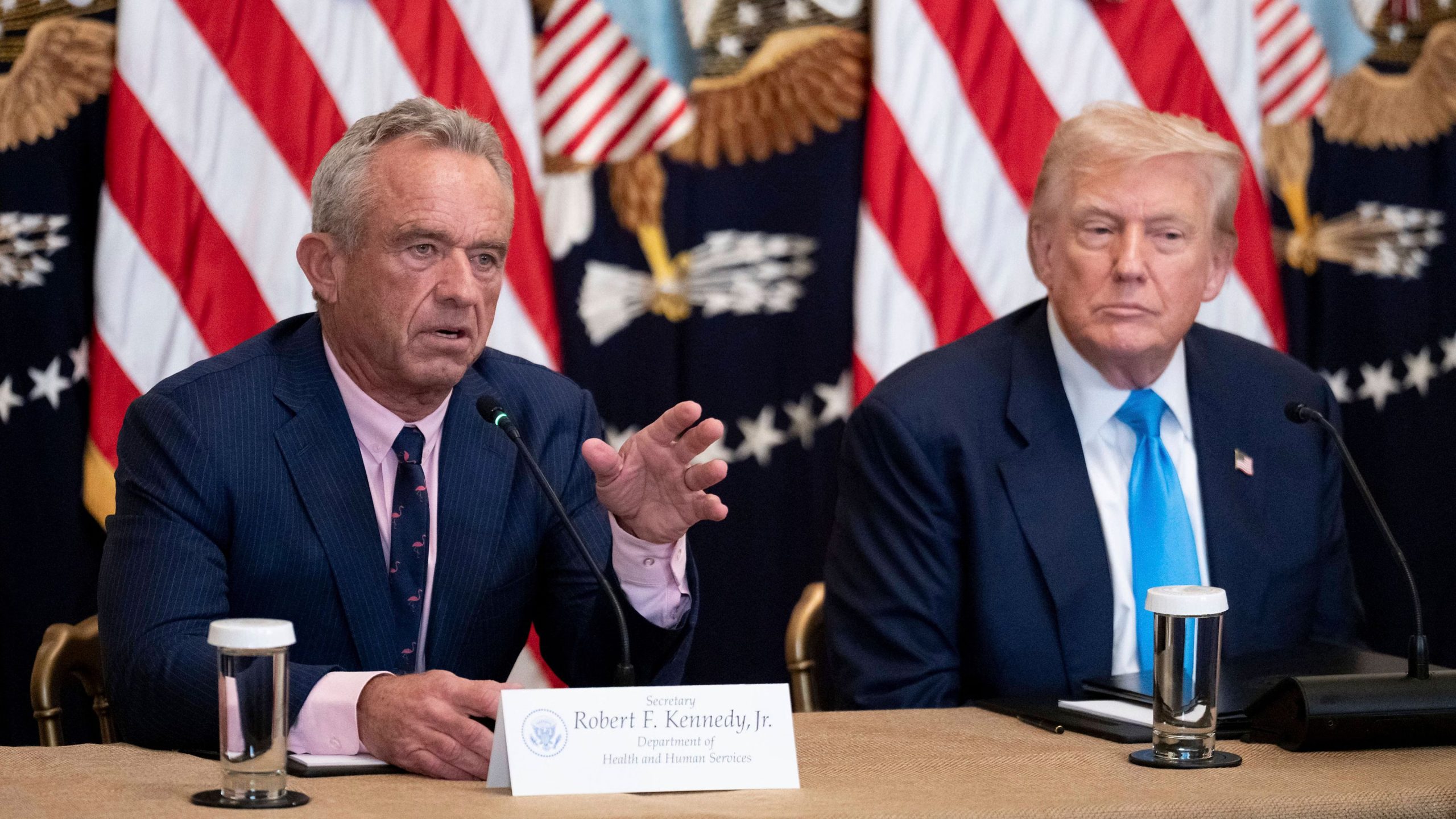
When Donald Trump claimed that mothers taking Tylenol during pregnancy put their children at risk of autism, I didn’t just hear a reckless, unsubstantiated soundbite. I thought about the grandmother who refused her blood pressure pills because she didn’t trust “what the government puts in medicine” or the young mother who told me she’d rather ride out her fever than give her baby “chemicals.”
These momentsare the daily fallout of a long history of broken trust between Black communities and American medicine – a distrust that has cost lives and continues to grow.
When a president and his health secretary lend credibility to fringe conspiracies, they don’t just spread misinformation; they legitimize the fear that the system is rigged against us. And once that fear takes root, it becomes gospel.
We’ve seen this script before: mocking masks, ridiculing vaccines, peddling ivermectin and bleach as miracle cures. This is the deliberate laundering of quackery into mainstream politics. And when a figure of his stature puts medical mistrust on the table, people die.
Within a day of Trump’s suggestion that disinfectant injections might fight coronavirus, poison centers in at least five states saw a surge in calls. Counties that voted for Trump over Biden suffered substantially more deaths than those that voted for Biden over Trump.
Tylenol is the next frontier. It’s one of the most common medicines in American households, often the first line of care when families can’t afford a doctor. Yet we are being told to “fight like hell not to take it”.
Most coverage treats Trump’s remark as just another absurdity. Yet, that misses the real danger: for Black Americans, mistrust of medicine is not a fad, it’s inherited.
We carry the memory of the Tuskegee Study, when Black men were deliberately denied treatment for syphilis so researchers could observe the disease running its course. We live with the history of forced sterilizations, with the daily reality that our pain is dismissed by doctors. That history doesn’t sit in textbooks. It sits at the dinner table, in whispered warnings between parents and children.
During the COVID-19 pandemic, Black Americans died at twice the rate of whites, with vaccine uptake lagging in Black neighborhoods.
In a climate of mistrust, all it takes is one viral lie to push people away from lifesaving care. And it’s not just local lives that are at stake, because once America legitimizes a conspiracy, it travels.
Define yourself as an anti-vaxxer, and you become part of a global community. That is the future the U.S. now flirts with: once medical doubt becomes part of who a person is, not just what they believe, it takes generations to undo.
US-bred medical skepticism is seeping into fragile health systems, undoing trust that took decades to build. Latin American health officials warn that RFK Jr’s anti-vax message is spreading across the Americas, without him ever stepping foot there, and even though shots have saved at last 154 million lives.
This message reaches Black communities in Africa, which still bear the scars of misinformation-fueled tragedies.
Through my nonprofit Health4Peace, I’ve watched young people in Chad and Nigeria refuse routine vaccinations because of myths passed down in families or pushed through social media.
Nigeria’s 2003 polio vaccine boycott set back eradication efforts by decades, leaving the country among just three in the world still battling the virus. Former South African president Thabo Mbeki’s AIDS denialism claimed over 300,000 lives.
African governments and aid agencies now turn to civil society groups like mine to rebuild trust. For example, Amref combats the devastation wreaked by mpox on central and west Africa by tackling misinformation about the virus. By partnering with local leaders and faith figures and equipping health workers to counter rumors, the charity is helping communities move beyond myths and start trusting vaccination.
During the pandemic, the Secretary-General of the Muslim World League (MWL), Dr. Mohammed Al-Issa, championed that approach. Under his leadership, the MWL launched the Imams for Vaccines campaign, working with health ministries and global partners to counter rumors and deliver accurate guidance through sermons and media broadcasts. In Somalia, Tanzania, Malawi and beyond, the MWL has taken that message into its work running anti-blindness campaigns, expanding health clinics, backing UNICEF programs for vulnerable children, and supporting hepatitis prevention – precisely where governments fall short.
This same urgency and approach are needed in the US now. If we shrug off Trump’s Tylenol comments as political theater, the consequences will be brutal. Black families, already more likely to be sick and more likely to be poor, will suffer first and hardest.
The way forward must be different. We must treat medical misinformation as a civil rights fight. We must organize as previous generations did, mobilizing Black doctors, nurses, civic leaders, and faith communities and religious figureheads to deliver trusted information directly into peoples’ lives. It means pressing Washington to treat lies about health with the same urgency it treats lies about elections. And it means forcing tech platforms – who profit off the clicks and chaos – to finally put public health above engagement metrics.
If we don’t, the next epidemic that devastates Black America won’t be caused by a virus at all. It will be caused by disbelief. And that disbelief, made in America, will spread across the world.
ZNetwork is funded solely through the generosity of its readers.
Donate