
Asa Caleb Crane was born over the weekend; he came into the world with a full head of hair, and on first impression an undeniable charisma, a full array of important moral virtues, and a calm but determined approach to the new world in which he found himself.
And I found myself both entirely agog at his general niftiness, and bowled over by the fact that I now know, very intimately, someone who God willing is going to exist in the 22nd century.
I can compass the passage of time; my grandmother, who I knew well, was born in the latter part of the 19th century, and I can imagine most of the changes of her life—feel in some visceral way the increase in mobility, in communication, in opportunity, in ease. My parents were born in the Depression and came of age in the great postwar boom; my daughter was born just as the internet was getting off the ground. It all makes more or less sense to me; but of course the future is harder, and the future now is harder than ever. In fact, there have been a spate of stories this week pointing out that even our greatest climate scientists are having a hard time explaining the rapid rise in global temperature over the last 12 months—and others explaining just how hot it has become. Here’s a compelling Guardian account of the record heat across much of Africa in recent weeks.
Tarly in Ivory Coast explained: “All I can do is open the windows and the door to let the air flow, but even the air doesn’t move.”
He lives with a one-year-old child, who cries at night because he is hot, and his two teenage daughters, who wake up in the middle of the night to shower before returning to bed where they lie in front of the fan. Still, the heat clings; it does not go away.
“At four in the morning, it’s when it’s least hot and you can sleep better, but I have to wake up to go to work,” Tarly said. “When it’s this hot, mixed with humidity, time stands still.”
Of course time in the larger sense, rushes on—and right now the very real-time acceleration of warming scares me more than I want to admit. It also makes me think—as you might guess from the title of this newsletter—that the next few years may be the crucial ones between now and 2100, maybe even between now and 5100. Because if we don’t break the momentum of the warming then it will build unstoppably on itself—and that will foreclose all kinds of options.
It’s keeping those options open that matters to me. I don’t think we can reasonably plan all that far into the future—new technologies, new politics, new attitudes will inevitably shape how things happen 20 or 60 years from now. But I do think we can see the outline of our politics through the end of the decade, and I think it basically involves a single choice: Do we go all-in on the energy transition as the world pledged in December at the last global climate talks, or do we back off, following the advice of, say, the (wildly applauded) Saudi Aramco CEO who said last week at a Houston energy conference that “we should abandon the fantasy of phasing out oil and gas and instead invest in them.”
The first option—going all-in on the energy transition—doesn’t get us where we need to go, and certainly not by 2030. I don’t see any chance that the temperature won’t still be rising then. But done with vigor it keeps possibilities open: Politico this week reported, for instance, on the growing competition among blue-state governors to come up with more renewables and more efficiency, and the remarkable Kingsmill Bond at the Rocky Mountain Institute reported on the growing competition between the superpower blocs for green energy supremacy.
China, Europe, and the United States make up 80%–90% of deployment of key clean technologies.
China dominates the supply chain, but change is happening. China has outspent the United States and Europe 10-fold in the past five years to achieve market share in manufacturing of over 90% in solar and 70% in batteries. But United States and European capital expenditure is set to increase 16-fold by 2025, and opportunities for leadership abound; only 20% of final energy demand has been electrified; and technologies to enhance flexibility are still in the early stages.
Europe leads in solar and wind share of generation. Europe has the largest share of electricity from solar and wind, and all three regions are moving rapidly up the S-curve towards solar and wind dominance.
What I’m trying to say is, we have the chance to move over the next five years to establish a counter-momentum to the rising temperature. If we do, by 2030 we’ll be in a place to weigh the options going forward; if we don’t then nature will be making decisions for us, and we’ll be reacting.
For those like me of a certain age we have no real business telling young people what kind of world to build—that will be their opportunity and their responsibility, and my sense is that they have the savvy to do a good job of it. But our job—everyone’s job these next five years—is to arrest the sudden and sickening lurch upward in temperature, so that there’s somewhere at least a little stable for those young people to stand as they build that new world that must come. The best proxy for that stability is the number of solar panels and wind turbines and batteries we install between now and the end of the decade.
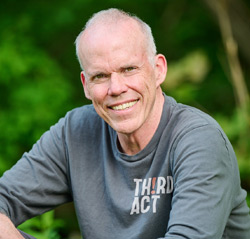
I’ve always thought this to be true; it’s why this newsletter is called what it is, and it’s why I do the work I do at places like Third Act. It’s just that all of a sudden I take it even more personally. Hi Asa!
ZNetwork is funded solely through the generosity of its readers.
Donate