
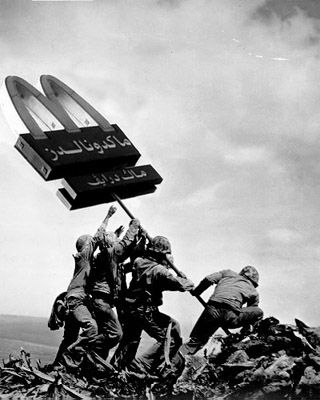
During seemingly civilised bilateral trade talks in Beijing, the Canadian Prime Minister Mark Carney sat across from Chinese president Xi Jinping and stated that ‘the world has changed much since that last visit. I believe the progress that we have made in the partnership sets us up well for the new world order’. Whilst this could be seen as a naïve accommodation of authoritarian power, and China’s ever growing leverage when it comes to raw materials, infrastructure, trade, and finance, this arguably signals adaptation to a new reality.
Arguably, what we are witnessing is not the collapse of a rules-based order in favour of Chinese hegemony, nor a clean transition to a stable multipolar equilibrium. We are watching something messier and more dangerous unfold, namely multipolarization, a world in which power fragments, alignments loosen, trust erodes, and states hedge rather than commit. Fragmented and siloed multilateral bodies endure, but they are used instrumentally by the powerful, and offer limited voice to the weak.Nowhere is this clearer than in the growing gap between how the United States misunderstands global change in its National Security Strategy 2025, and how the rest of the world is responding to it.
Multipolarization, not multipolarity
The 2025 Munich Security Report avoids comforting language about an orderly ‘multipolar world’. Instead, it introduces the sharper concept of multipolarization. Power is not merely spreading across poles, it is becoming volatile, politicised, and contested at multiple levels simultaneously, economic, informational, technological, and institutional.This distinction matters as multipolarity implies adjustment, whereas multipolarization implies strain.
Middle powers are no longer choosing between Washington and Beijing. They are diversifying exposure, building redundancies, and reducing vulnerability to coercion from any single pole. Canada’s renewed engagement with China fits this pattern precisely. It reflects anxiety about dependence on a US that increasingly weaponises tariffs, trade access, and alliance commitments. From Ottawa’s perspective, the risk is not China alone, the risk is unpredictability.
China’s advantage: narrative alignment with systemic change
China has been quick to exploit this environment rhetorically. Beijing now frames its foreign policy as support for an equal and orderly multipolar world, emphasising multilateralism, sovereign equality, and reform of unjust global institutions. Obviously, this ought to be treated with scepticism, recognising that China pursues its interests as ruthlessly as any great power. That said, in a multipolarized and globalised information system, optics and legitimacy matter.
When the United States presents itself as unilateral, coercive, and dismissive of international law, China does not need to be virtuous to appear comparatively restrained. It only needs to look less arbitrary, and this is where US strategy begins to unravel as allies of the United States seek stability and security.
The 2025 National Security Strategy: doubling down on primacy means being undermined by your own logic
The 2025 US National Security Strategy makes little attempt to disguise its worldview. It openly reasserts hemispheric dominance under a revived Monroe Doctrine logic, commits to denying non-hemispheric competitors influence in the Americas, and celebrates tariffs and economic coercion as tools of statecraft.This is not adaptation to multipolarization, it is counter-productive defiance of it.The strategy assumes that US primacy can be preserved through firmer enforcement, sharper pressure, and clearer red lines. It treats alliance friction, destabilisation, and destruction as a price worth paying. It frames international law instrumentally, useful when convenient, disposable when not. In theory, such an approach promises clarity and strength, but in practice, it produces the opposite.
The National Security Strategy 2025: a case study in legal and strategic nihilism
Recent U.S. actions have translated doctrine into behaviour, amplifying its underlying flaws. In Venezuela, the dramatic U.S. operation to seize President Nicolás Maduro reinforced long-standing Global South narratives of American imperialism. The optics were unmistakable, unilateral force deployed without multilateral authorization, deep in Washington’s traditional “backyard,” raising serious questions under international law and carrying clear risks of escalation, internal fragmentation, and wider regional instability.
The U.S, treatment of Greenland has escalated this even further, widening the risks of destabilisation beyond Latin America. Open discussion of seizing territory from a NATO ally, combined with tariff threats against states unwilling to support US claims, shattered a core assumption of the post-war order, namely that allies need not hedge against the United States itself.
Meanwhile, tariffs have increasingly been used not as economic safeguards but as political punishments, imposed on partners who deviate from US preferences and coercive practices, such as threats of force to seize territory. Each of these actions sends the same message, dependence on the United States is risky, and so partners adapt.
Canada’s pivot is a major turning point
Seen through this lens, Canada’s engagement with China is not an outlier. It is a warning sign. Ottawa remains firmly embedded in NATO, the G7, and the transatlantic community. But it is also now explicitly reducing exposure to a partner that treats economic integration as leverage and alliances as transactional, and challenging the premises of the U.S. National Security Strategy. Arguably, this is what multipolarization will look like in practice.States do not defect, they diversify. They do not rebel, they hedge. And the more aggressively Washington insists on loyalty, and pursues various forms of coercion, the faster this process accelerates, with international isolation, and domestic polarization.
Ironically, U.S. efforts to reassert primacy are doing more to expand China’s diplomatic room for manoeuvre and economic leverage than Beijing’s own policies ever could. Threats of force against Greenland and Denmark have prompted European and NATO allies to deploy military assets to defend Danish sovereignty and Arctic security, diverting attention and resources at a moment when European states are already under acute pressure from Russia in the Nordic region and Eastern Europe.
Dragons, snakes, and strategic choices
This is precisely the dynamic David Kilcullen warned about in The Dragons and the Snakes. His core insight is simple but devastating, namely that American adversaries have learned how to fight the United States without fighting it directly. ‘Dragons’, major powers like China and Russia, bypass US military dominance through economic statecraft, malign interference, legal warfare, narrative framing, and proxy influence. ‘Snakes’, insurgents, terrorists, organised criminal networks, and militias exploit political fragmentation and legitimacy gaps.
Faced with this environment, Kilcullen identifies three strategic responses, namely (1) ‘double down’ by denying decline and pursuing primacy through superior force and coercion; (2) ‘embrace the suck’ by accepting relative decline and retrenchment; (3) ‘go byzantine’ by managing decline slowly through diplomacy, guile, alliances, and indirect influence. Kilcullen is explicit in that doubling down is the most dangerous option, yet it is the one that Washington has unfortunately chosen.
Why doubling down fails in a multipolarized world
Doubling down assumes that power remains centralised, deterrence straightforward, and loyalty enforceable. Multipolarization undermines all three assumptions. Firstly, Power is diffuse as economic networks, supply chains, and digital platforms matter as much as military assets. Secondly, deterrence is ambiguous, as leverage and escalation occurs in grey zones, not clear-cut battlefields or performative uses of force. Thirdly, loyalty is conditional as states align where it benefits them, not where foreign policy demands it.
In this environment, coercion does not compel obedience, but rather it incentivises alternatives. Tariffs encourage trade diversification. Security threats encourage hedging. Legal exceptionalism invites normative counter-mobilisation through other multilateral or bilateral arrangements. Doubling down does not halt decline, but rather it accelerates adaptation against the United States.
‘Going Byzantine’
Kilcullen’s ‘Byzantine’ metaphor is often misunderstood as cynicism or weakness, but it is neither. The Eastern Roman Empire survived centuries longer than its Western counterpart not by dominating its environment, but by managing complexity. It bought time through diplomacy, exploited divisions among rivals, used law and soft power to legitimise power, and avoided unnecessary wars. Translated into modern terms, a Byzantine US strategy would mean prioritising alliance cohesion over coercive leverage, competing through institutions, standards, finance, and narratives rather than threats, accepting relative decline without surrendering influence, and treating international law as a strategic asset, not an obstacle. Crucially, it would recognise that time is the scarce resource and that every crisis mishandled, every ally alienated, shortens the window for adaptation.
Avoiding hard choices
The United States is not about to disappear from global leadership. Its economy, military, alliances, and cultural influence remain unparalleled. But leadership in a multipolarized world cannot be enforced; it must be maintained. In that sense, Mark Carney’s invocation of a ‘new world order,’ grounded in new bilateral and multilateral arrangements, is a warning signal, evidence of the strategic failure of the 2025 National Security Strategy and of a U.S. foreign policy increasingly shaped by performative dominance, transactional coercion, and narrow vested interests rather than durable leadership. If the US continues to double down, enforcing spheres, weaponising trade, and sidelining law and multilateralism, it will find itself increasingly isolated in a world it helped create but no longer knows how to manage. Kilcullen’s warning is clear. Multipolarization rewards patience, subtlety, and restraint. The choice is not between dominance and decline. It is between managed adaptation and self-inflicted unravelling, and right now, Washington is choosing the latter.
A new generation draws the line: crisis politics and the resilience of international community and domestic resistance
Taken together, the Venezuela invasion, the Greenland brinkmanship, and coercive tariff diplomacy reveal something deeper than foreign policy overreach. They point to a strategy increasingly shaped by domestic political incentives, where spectacle substitutes for coherence and crisis becomes a tool of deflection in the run-up to electoral accountability in the 2026 US midterm elections. Yet this is precisely where the strategy collapses under its own weight.
In a multipolarized world, foreign crises do not mute scrutiny, they amplify it. They do not consolidate authority, they activate resistance, judicial, institutional, and allied. Attempts to stretch emergency logic beyond genuinely existential threats rarely suspend democratic accountability, but they expose how fragile executive legitimacy has become. Venezuela and Greenland are not rallying causes. They are elective confrontations, and as such they harden opposition rather than dissolve it.
Kilcullen’s warning resonates here. Doubling down, whether through coercive trade, militarised signalling, or crisis-driven politics, does not arrest decline. It accelerates adaptation against American power, abroad and at home. A genuinely ‘Byzantine’ strategy would seek to preserve legitimacy and alliances, rather than undermining and destroying them.
That leaves a final, uncomfortable truth. When executive power becomes insulated from norms but still dependent on economic performance, democratic leverage should shift downward in order to raise the stakes. Historically, the most effective constraints on overreach have not come from spectacular confrontations, but from sustained, non-violent economic and civic pressure, such as strikes, boycotts, labour organisation, and coordinated withdrawal of consent. These are blunt tools, and costly ones, but they operate where spectacle cannot, at the base of political economy.
In that sense, the future of democratic constraint may lie less in dramatic foreign crises than in the quiet refusal of citizens, in the United States and among its allies, to underwrite a politics of permanent emergency and imperial coercion. Empires rarely fall because they are defeated, they fall when the systems that sustain them stop working, and that, ultimately, is a choice made from below, and the enduring hope is that forms of transitional justice await the pirates and emperors of our new times of authoritarian legalism, or in rarer cases, the raw power of malignant narcissism, that tend to eventually collapse under the weight of their own contradictions and inhumanity.
ZNetwork is funded solely through the generosity of its readers.
Donate