
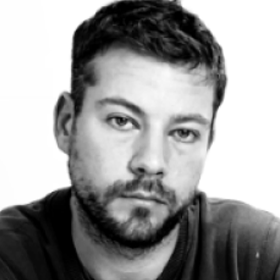

Babar Ahmad recounts his chilling expulsion to the US, shedding light on the stark realities of extradition and the potential fate of Julian Assange.
On 26 March, the UK court ruled that Julian Assange can appeal his extradition unless the US assures that Assange can practise free speech, his trial is not prejudiced with regards to his nationality as an Australian citizen, and the death penalty is not imposed. 20 May has been given as the new date of hearing.
“One day in an American prison is like a year in a high-security prison in Britain. You could do a year in Belmarsh and it wouldn’t match a day in one of those places.”
Babar Ahmad is someone who knows. He was extradited to the US in 2012 on charges of providing material support to terrorism because of two articles published on his website offering support to the Taliban government in Afghanistan. He spent eight years fighting the extradition.
“I feel sorry for anyone going there because I’ve been through it,” he says when I mention Julian Assange, the Australian journalist who has been imprisoned in London for nearly five years.
Assange is approaching the end of his final legal appeal against his own extradition to the US.
“He will get good lawyers in the US because obviously he’s got a lot of support,” Ahmad says. “But it is tough. Very tough. People can get through it, but I don’t know what he’s like as a person, what his resilience is like, what his childhood was like.”
Babar’s extradition to the US had been halted temporarily by the European Court of Human Rights (ECHR) in 2007. But when it green-lighted the extradition five years later, things moved very quickly.
Ahmad was at HMP Long Lartin, a Category A men’s prison in Worcestershire.
When the final hearing was finished “all of a sudden they confined us to our cells”, he says. “They said: you can only come out to use the phone and get your lunch or to shower, and then you have to go back. No association at all.”
Ahmad watched the decision on television. “Literally within, like, a minute a couple of officers opened my cell door,” he says.
Sterile cell
They told him to pack a small bag then gave him clothing to wear. “We called it the banana. It’s like a green and yellow sort of striped prison service uniform top and bottoms.”
Ahmad was then strip searched and put in a sterile cell. “Sterile, basically, meaning it’s empty completely,” he says.
He continues: “So I’m in the cell. I’m just sitting there waiting. A couple of hours go by. It was very heavy rain that day, I remember that. Then about 5:30pm they then came and got me and walked me to the small carpeted room where we used to pray and chill out.”
There was the governor of the prison and lots of officers. They put Ahmad on the “boss chair”: a body orifice security scanner.
“It’s to check if you’ve got, like, a mobile phone secreted in your body somewhere, or a blade or something like that. Normally that’s located in the reception section of the prison. But this one, they had brought it right into our unit. So I sat on the boss chair.”
Police officers then came in from the extradition squad in plain clothes and put handcuffs on him. He was walked through the unit to the back door, through the exercise yard, then into the police van which had come inside the actual prison grounds next to the unit. Ahmad had never seen this before.
The Fate of Assange
When the hearing of the long-running Assange case comes to an end on Wednesday a similar scenario could play out.
But while the UK legal system will then have been exhausted, Assange does have a further chance with the ECHR in Strasbourg.
If the High Court judges rule against Assange then his lawyers can apply to the ECHR for a Rule 39 injunction, which would halt the extradition until the European court had looked at the case.
The decisions are binding on member countries and there is no precedent for the UK not respecting a Rule 39 order on a proposed extradition.
Christophe Marchand is the Belgian lawyer instructed by Assange to coordinate and prepare the possible litigation at the ECHR.
“There is an internet platform for the European Court of Human Rights where you can introduce your Rule 39 application, and a decision can be rendered in a few hours,” Marchand tells me.
“After the decision is taken, the court then makes contact with the state saying that it has taken the decision and that the extradition must be halted.”
Rule 39
On the chances of the ECHR issuing a Rule 39 order if Assange loses this final appeal, Marchand is hopeful. “We are very confident that the court will take it very seriously, because we have many arguments,” he says.
“Remember, the first judge, at the magistrate court, already considered, from prison conditions, there was a risk that he would commit suicide if he goes over there, that he would be put in very restrictive conditions.”
However, the Assange case has been irregular from the start, as Declassifiedhas extensively reported. Some believe the UK could take the unprecedented step of not abiding by the Rule 39 order—or moving Assange out of the jurisdiction before it is issued.
In Belgium, in October 2013, Tunisian terrorist Nizar Trabelsi was extradited to the US extremely quickly before the Rule 39 was issued.
“This person was extradited, the lawyers were not informed, no one was informed,” Marchand says. “It all happened in the dark. The person was brought to a secret place, was drugged, was cuffed, was attached in a seat and was sent by a private plane of the CIA directly to the US where this person was put in solitary confinement.”
If the ECHR does issue an injunction under Rule 39 then the extradition proceedings are suspended, but it is only an interim measure. Assange’s lawyers would then introduce a demand on the merits of the ECHR considering that the UK decisions were wrong.
It takes a minimum of 18 months for the courts to assess this situation. In the case of Babar Ahmad, it took five years.
RAF Mildenhall
When Ahmad left HMP Long Lartin in the police van on that rainy October day he had no idea where he was going.
“When we came out we could see loads of cameramen, photographers, everything, there was even a helicopter overhead”, Ahmad says.
“In my mind, I thought we were being taken to some airport, like a commercial airport, to be handed over to US marshals, because that’s what other people who have been extradited experienced.”
Ahmad remembers the drive was long, around two hours.
“It was cross country and there were no motorways, it was all A roads, which means you’ve got these little roundabouts every couple of minutes. So we’re just going from left to right, left to right, left to right. Heavy rain. And after about 2 hours, we enter this RAF air base. I used to be in cadets when I was younger, so I know what an RAF base looks like.”
The base was Mildenhall in Suffolk, the central US Air Force facility in Britain, where 4,245 American troops are permanently stationed.
Two executive twelve-seater jets sat on the tarmac with their engines and lights on.
“There were floodlights everywhere and they stopped the van outside a brick building close to where the two jets are,” Ahmad says.
The police officers went into the building. “One comes back, he goes, ‘sorry, guys, but you need to put these on before you can go inside’. In his hand was a pair of blacked out ski goggles and ear defenders.”
Ahmad knew this was not right. “I said, ‘boss, you know, you can’t do that in Europe. You know, that’s illegal. You’re not allowed to do that.’ And he sort of shrugged his shoulders.”
Ski mask and ear defenders
The police officer put the blacked out ski mask and ear defenders on Ahmad and he was taken inside the building. They were then removed.
“I’m in this room, inside this one-story building, and this American guy, who is probably in his mid-40s, starts barking orders at the top of his voice, shouting, ‘you’re now in the custody of the United States of America. You will be treated with respect unless you give us cause otherwise. You understand?’”
Ahmad said he did. The American then asked if he had any questions. “I said, how long is the flight? Which was the most relevant question.”
“That question is irrelevant,” the American barked back. “I thought, okay, this guy, he wants to play GI Joe,” Ahmad says. “After that, I just shut my mouth.”
Ahmad said the Met police officer still there had shock drawn across his face.
“I looked at him and we made eye contact together, and it was clear the Americans were in charge there.”
Ahmad was taken into another room and put through a strip search again. He was then put into a jumpsuit with a leather belt attached to shackles.
“So the shackles were put around my ankles. Then there’s some sort of chain that comes from the ankle shackles. It comes up and it attaches to that leather belt, which is around my waist. Then the handcuffs that are on my wrists, they are attached to that belt, right? So basically, I can’t stretch my arms.”
The ski mask and ear defenders were put back on and Ahmad was then walked out onto the tarmac.
“I’m shuffling along in these shackles, and we get to the steps and he shouts, ‘okay, step up’. Then we went inside. So they strapped me into some sort of big seat. After a while they said ‘we’re going to take off your mask now’”.
“And then he took it off and then the ear defenders. And I’m sitting in this private jet on two big leather chairs that are in this walnut ash interior. The chairs are facing each other and I thought, wow, at least I got to go in a private jet.”
But this was just the start of the journey. What Assange can expect in the US is more chilling, according to Ahmad.
ZNetwork is funded solely through the generosity of its readers.
Donate