


There’s no shortcut to freedom.
No, there’s not.
Freedom is a constant struggle.
Yes it is.
But Freedom,
the centuries-long fight
all over the world
for justice and liberation,
is also life and love and hope,
day after day after day.
It’s what we,
what human,
truly human societies
strive for
no matter what
the obstacles, the pain,
and temporary setbacks.
This morning, August 28, 2026,
on a Black-owned bus
full of freedom fighters,
on the way to DC
on the 63rd anniversary
of the historic
freedom march of 1963,
held during a time of
mass, Black-led uprisings
for freedom and equal rights
and a truly new
and truly human society:
We keep hope alive
and rededicate ourselves
to keep at it
until we win.
I wrote this poem about 6 am last Friday on a nearly-full bus going from Newark, NJ to Washington, DC, a bus organized by the Peoples Organization for Progress of which I’m an active member. It was the first time in almost four years that I’ve written a poem.
I’ve been wondering why that’s the case. I’ve been writing at least one or two poems a year since 1970, but checking my personal website, I discovered the last one I posted there was written in October of 2022. Maybe I haven’t written poems because as I age, this is one of things that I “outgrow.” Maybe it’s because things have been pretty rough in the world since then—Gaza, Ukraine, Trump, to name a few depressing things—and I just haven’t been up for “poem-ing.”
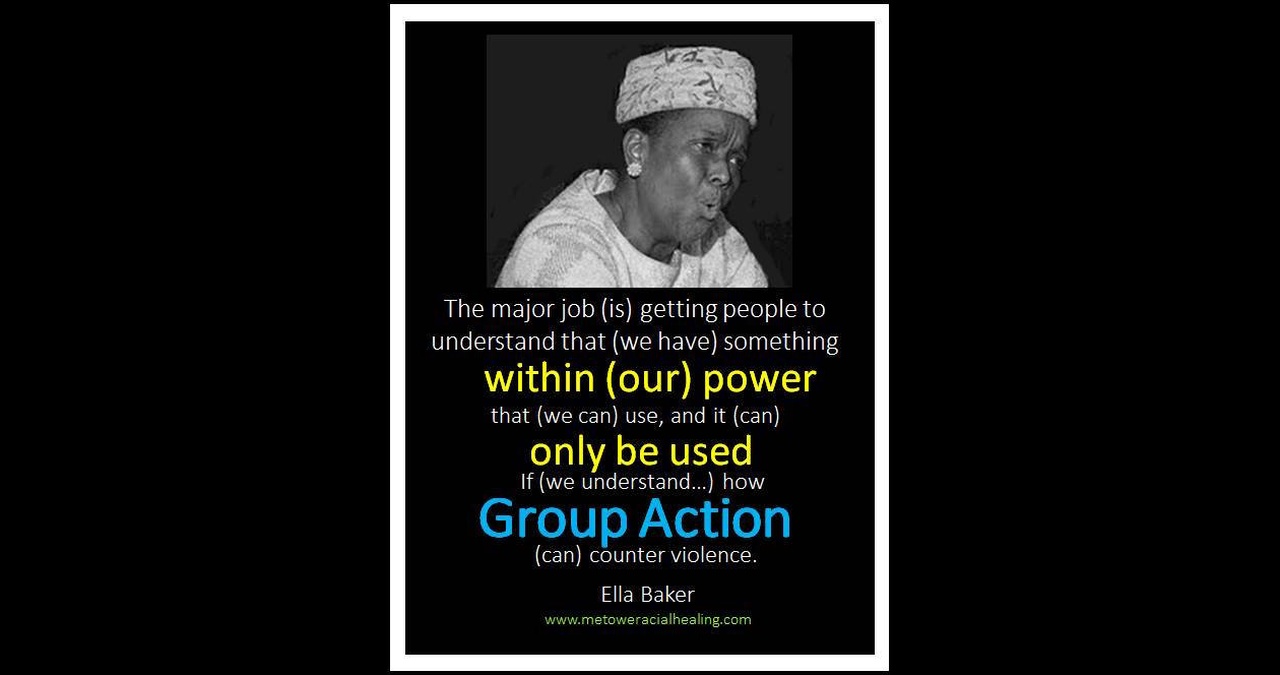
Maybe I wrote this poem because, just a few days before I got on that bus, I finished reading, for a second time, the book, “Ella Baker: Freedom Bound,” by Joanne Grant.
If I had to choose one person whom I have met and worked with who most personified the phrase, “freedom fighter,” it was Ella Baker.
I met and worked with Ms. Baker for several years in the mid- to late-70’s after I moved to New York City. Ms. Baker was part of the leadership for a while of a group I was working with, the Mass Party Organizing Committee, and I have always been so grateful for that privilege. I would like to think that I learned much about how to be an effective organizer from the time spent with her and the things about her that I learned from others.
Dr. Martin Luther King, Jr. and Ella Baker were the two primary leaders of the Southern Christian Leadership Conference in its first couple of years of existence, between 1958 and 1960. King was the heart, soul and speaking voice of SCLC; Baker was the Executive Secretary. Baker was a public speaker too, but she was primarily the behind-the-scenes, get-things-done, relationship-building person. Her vision in doing so was for the emergence of a grassroots-based, mass movement and organization that could take on structural racism and fundamentally transform US society, with Black people at the center of the leadership of that movement.
Ella Baker had been active in the Black civil rights and freedom movement since the late 1920’s. She had traveled throughout the deep South in the 1940’s for the NAACP, actively supporting local organizers and encouraging the building of strong grassroots organizations which operated in a cooperative way. She was a strong advocate for a shared leadership model and an emphasis on empowering the members of the organization and the new people getting involved: a continually-empowering mass movement.
With the emergence of the student desegregation sit-ins at lunch counters in the deep South in 1960 and the creation of the Student Nonviolent Coordinating Committee, Ms. Baker shifted her time and energies to SNCC. She was a major supporter of the organization and took part in the decision-making process, usually in the capacity of an active listener who occasionally asked questions.
Joanne Grant in her book about Ms. Baker explains it this way: “Often, her questions directed the discussions. Her technique was much like that of Nelson Mandela, who had learned it from his mentor, a tribal chieftain. Mandela wrote in his autobiography, Long Walk to Freedom, ‘I have always endeavored to listen to what each and every person in a discussion had to say before venturing my opinion. Oftentimes, my own opinion will simply represent a consensus of what I heard in the discussion.’” (p 136)
Our individual movements and our movement of movements has accomplished much since Donald Trump became President. Today Trump is wildly unpopular, at a 33% approval rating in reputable polls. The political winds are clearly blowing in a progressive direction, evidenced most recently by progressive candidates winning in primary elections, as well as via our determined and often-massive resistance on issue after issue, in the streets, in the courts and elsewhere. The Trumpists are in trouble. But as we do everything we can to bring out a massive number of anti-Trump voters all over the country before and on November 3, we need to never forget, we need to internalize, going forward into 2027, the necessity of consciously utilizing, as much as possible, the group-centered, cooperative, grassroots-empowering, consensus-seeking methods of decision-making. We need to interact with one another and new people in a supportive and strengthening way, following the inspiring example of Ms. Ella Baker.
This article can also be found here Future Hope column

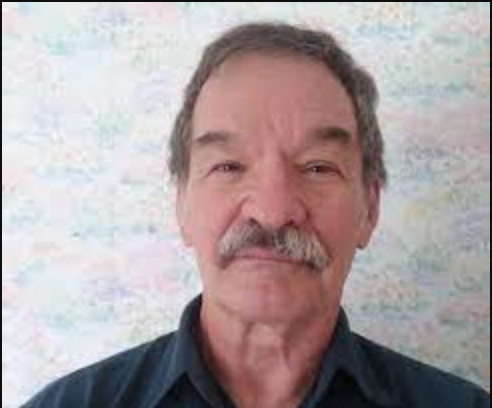
Ted Glick has devoted his life to the progressive social change movement. After a year of student activism as a sophomore at Grinnell College in Iowa, he left college in 1969 to work full time against the Vietnam War. As a Selective Service draft resister, he spent 11 months in prison. In 1973, he co-founded the National Committee to Impeach Nixon and worked as a national coordinator on grassroots street actions around the country, keeping the heat on Nixon until his August 1974 resignation. Since late 2003, Ted has played a national leadership role in the effort to stabilize our climate and for a renewable energy revolution. He was a co-founder in 2004 of the Climate Crisis Coalition and in 2005 coordinated the USA Join the World effort leading up to December actions during the United Nations Climate Change conference in Montreal. In May 2006, he began working with the Chesapeake Climate Action Network and was CCAN National Campaign Coordinator until his retirement in October 2015. He is a co-founder (2014) and one of the leaders of the group Beyond Extreme Energy. He is President of the group 350NJ/Rockland, on the steering committee of the DivestNJ Coalition and on the leadership group of the Climate Reality Check network.
ZNetwork is funded solely through the generosity of its readers.
Donate




