
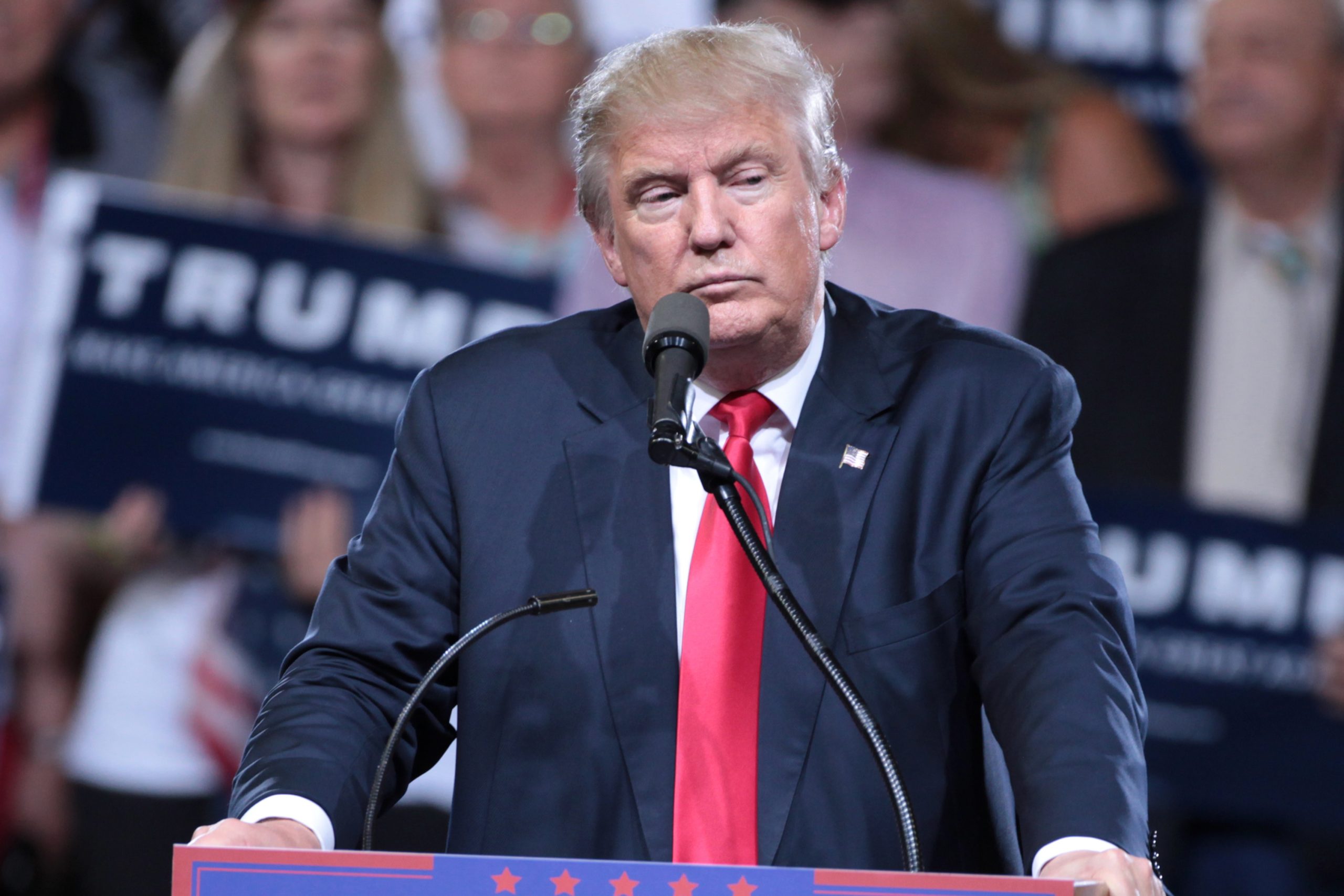
Far-right conservative groups are promoting a sprawling “battle plan” to obstruct and undo the federal government’s efforts to tackle the climate crisis, with hopes of quickly enacting a series of sweeping changes if Donald Trump, or any other Republican, gets elected as president next year.
The 920-page proposal, if implemented, would not only undo any progress the Biden administration has made to reduce emissions and fund clean energy development and other climate-related efforts, but it would make it far more difficult for a future administration to pursue any policy that seeks to address global warming at all, according to a report last week by POLITICO. The plan would even make it challenging for federal agencies to carry out common environmental protections that have been practiced in the country for more than 50 years.
Called Project 2025 and written by more than 350 right-wing hardliners—including former Trump staffers—the plan would block wind and solar power from being added to the electrical grid; gut funding for the Environmental Protection Agency; eliminate the Department of Energy’s renewable energy offices; prohibit states from adopting California’s tailpipe pollution standards, transfer many federal environmental regulatory duties to Republican state officials; and generally prop up the fossil fuel industry.
“Project 2025 is not a white paper. We are not tinkering at the edges. We are writing a battle plan and we are marshaling our forces,” Paul Dans, director of Project 2025 at the Heritage Foundation, which is leading the initiative, told POLITICO. “Never before has the whole conservative movement banded together to systematically prepare to take power day one and deconstruct the administrative state.”
While Republican and Democratic presidents have commonly rolled back policies from rival administrations upon taking office, including reversing executive orders and introducing new federal agency rules, Project 2025 stands out for its aim to implement a systematic conservative takeover of the federal government. For example, the plan compiles a list of as many as 20,000 like-minded conservatives who could serve in the next administration to carry out the kind of deregulatory overhaul that became a hallmark of the Trump administration.
“In 2016, the conservative movement was not prepared to flood the zone with conservative personnel,” Heritage Foundation President Kevin Roberts told the New York Times. “On Jan. 20, 2025, things will be very different. This database will prepare an army of vetted, trained staff to begin dismantling the administrative state from Day 1.”
Andrew Rosenberg, who served as a senior official at the National Oceanic and Atmospheric Administration during the Clinton administration and now works for the University of New Hampshire’s Carsey School of Public Policy, told POLITICO that Project 2025 marks a fundamental shift, where instead of federal agencies obliging their duty to public health and environmental protection, they instead work to help the industries they’ve been tasked with overseeing.
The proposal would be especially damaging for the EPA, the nation’s top environmental and health regulatory agency and one of the most important tools a president has to address climate change. It would eliminate the EPA’s environmental justice and public engagement functions, drastically slash the agency’s budget and terminate new hires in what the plan’s authors refer to as “low-value programs.” The plan would also revive the so-called “secret science” rule, a controversial proposal by the Trump administration that would have severely limited how the EPA can use scientific studies in its policy making.
“What this does is it basically undermines not only society but the economic capacity of the country at the same time as it’s doing gross violence to the environment,” Rosenberg said.
In fact, Project 2025 is part of a larger plan by Trump and his far-right allies to greatly expand the president’s authority over every part of the federal government. Their goals include ending the post-Watergate practice of shielding the Department of Justice from White House political influence; putting independent agencies like the Federal Trade Commission, which enforces antitrust laws and consumer protection rules, under direct presidential control; and reviving the practice of refusing to spend money Congress has appropriated for programs a president doesn’t like—a tactic lawmakers banned under President Richard Nixon.
The plans add to the mounting evidence that signals the Republican party is continuing to shift dramatically to the right—a change that only accelerated during Trump’s time in office. Even as a growing number of GOP lawmakers embrace well established climate science and admit that humans are, in fact, rapidly warming Earth’s atmosphere, Trump’s grip on the party is forcing conservative leaders in Congress to take radical positions on many culture-war topics, including climate change.
It’s a problem that some prominent Republicans say must be addressed going into next year’s presidential election. But many worry that the party has been taken hostage by Trump and similar lawmakers in Congress who have adopted the former president’s bravado and propensity for fear mongering and populist, inflammatory rhetoric.
“As Donald Trump is the near presumptive nominee of our party in 2024, it’s going to be very hard for a party to adopt a climate-sensitive policy,” Sen. Mitt Romney, a Republican from Utah, told CNN. “There are a number of states, like mine, that are concerned about wildfires and water.”
“I think the evidence so far is that the West is getting drier and hotter,” the former Republican-endorsed presidential candidate added. “That means that we’re going to have more difficulty with our crops, we’re going to have a harder time keeping the rivers full of water. The Great Salt Lake is probably going to continue to shrink. And unfortunately, we’re going to see more catastrophic fires. If the trends continue, we need to act.”
ZNetwork is funded solely through the generosity of its readers.
Donate