
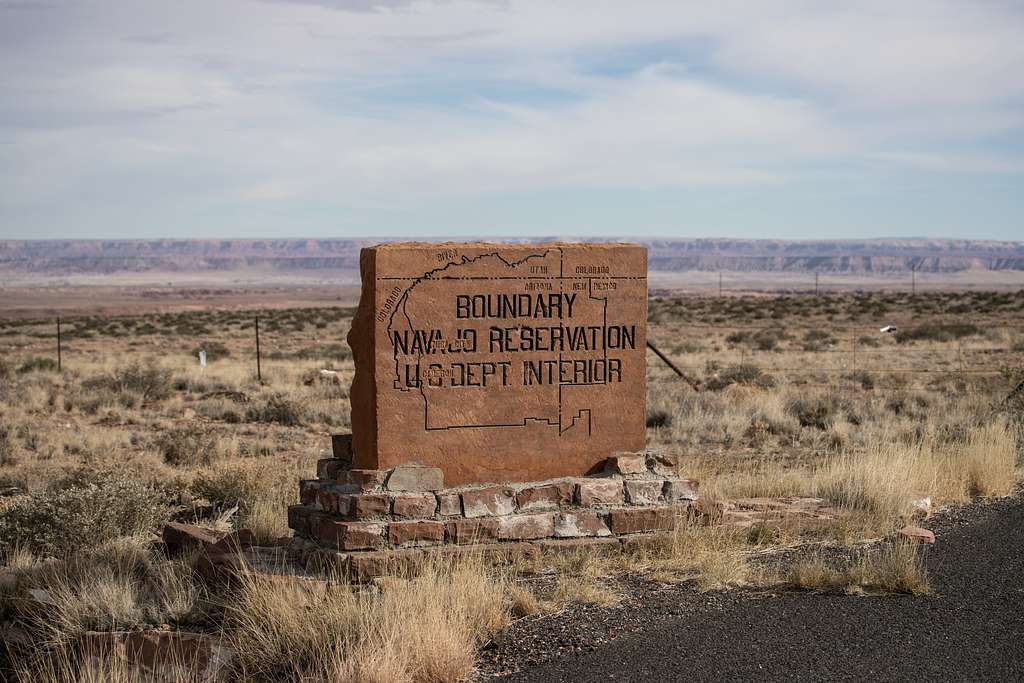
In a major blow to the Navajo Nation, the U.S. Supreme Court on Thursday ruled that the federal government had no obligation to supply water to the tribe.
In a 5-4 vote, the court ruled that water security for the Nation did not fall to the judiciary branch, but rather Congress and the President.
“The burden now is on tribal nations to advocate for themselves and intervene whenever water rights are an issue,” said Morgan Saunders, a staff attorney in the Washington D.C. office of the Native American Rights Fund.
Writing for the majority, Justice Brett Kavanaugh held that the 1868 treaty, which established the Navajo Reservation, reserved water for the tribe, but did not require the government to take active steps to build the infrastructure needed to secure said water – an issue that has become more pressing each year as the Colorado River Basin, a major source of water for the tribe, experiences record-setting heat and some of the driest years ever recorded.
“In short, the 1868 treaty did not impose a duty on the United States to take affirmative steps to secure water for the Tribe – including the steps requested by the Navajos here, such as determining the water needs of the Tribe, providing an accounting, or developing a plan to secure the needed water,” Kavanaugh wrote.
Since 2003, the Navajo Nation has been arguing that the federal government must quantify the amount of water they have access to in the Basin as well as the potential infrastructure they need to access the water. The Nation maintained that the 1868 treaty – which ceded nearly 22-million acres of land to the United States and ended the internment of Navajos at Bosque Redondo – established the reservation as a “permanent home”, meaning that the United States agreed to take affirmative steps to secure water for Navajo citizens. The court rejected that argument.
“My job as the President of the Navajo Nation is to represent and protect the Navajo people, our land, and our future,” wrote Presiden Buu Nygren in a statement. “The only way to do that is with secure, quantified water rights to the Lower Basin of the Colorado River.”
The decision leaves water infrastructure for the Navajo Nation on unsure ground, and could reverberate along the Colorado River Basin where 30 tribal nations rely on the river’s water supply. Of those 30 tribes, 12 of them, including the Navajo Nation still have “unresolved” rights, meaning the extent of their rightful claims to water have not been agreed upon.
In his dissent, Justice Neil Gorsuch, who is an expert in Federal Indian Law, accused the majority of “misreading” the Navajo’s request and “applying the wrong analytical framework,” adding that the Nation was looking for the government to “formulate a plan” for the tribe to access water rather than hold the government responsible for paying for pipelines or other aquifers to do so.
“Where do the Navajo go from here?” Gorsuch asked rhetorically. “The Navajo have waited patiently for someone, anyone, to help them, only to be told (repeatedly) that they have been standing in the wrong line and must try another.”
He said the tribes have done all they could including writing to federal officials, petitioning the Supreme Court and seeking to intervene in ongoing water-related litigation as well as awaiting 20 years on the court’s ruling in this case.
“At each turn, they have received the same answer: ‘Try again,’” Gorsuch wrote.
With over 17 million acres of land and over 300,000 citizens, the Navajo Nation is the largest reservation in the United States. Yet, Navajo citizens, on average, use only seven gallons of water per day for household needs compared to the national average of 82 gallons per person per day due to a lack of infrastructure. It’s estimated up to 40 percent of Navajo households don’t have running water.
ZNetwork is funded solely through the generosity of its readers.
Donate