

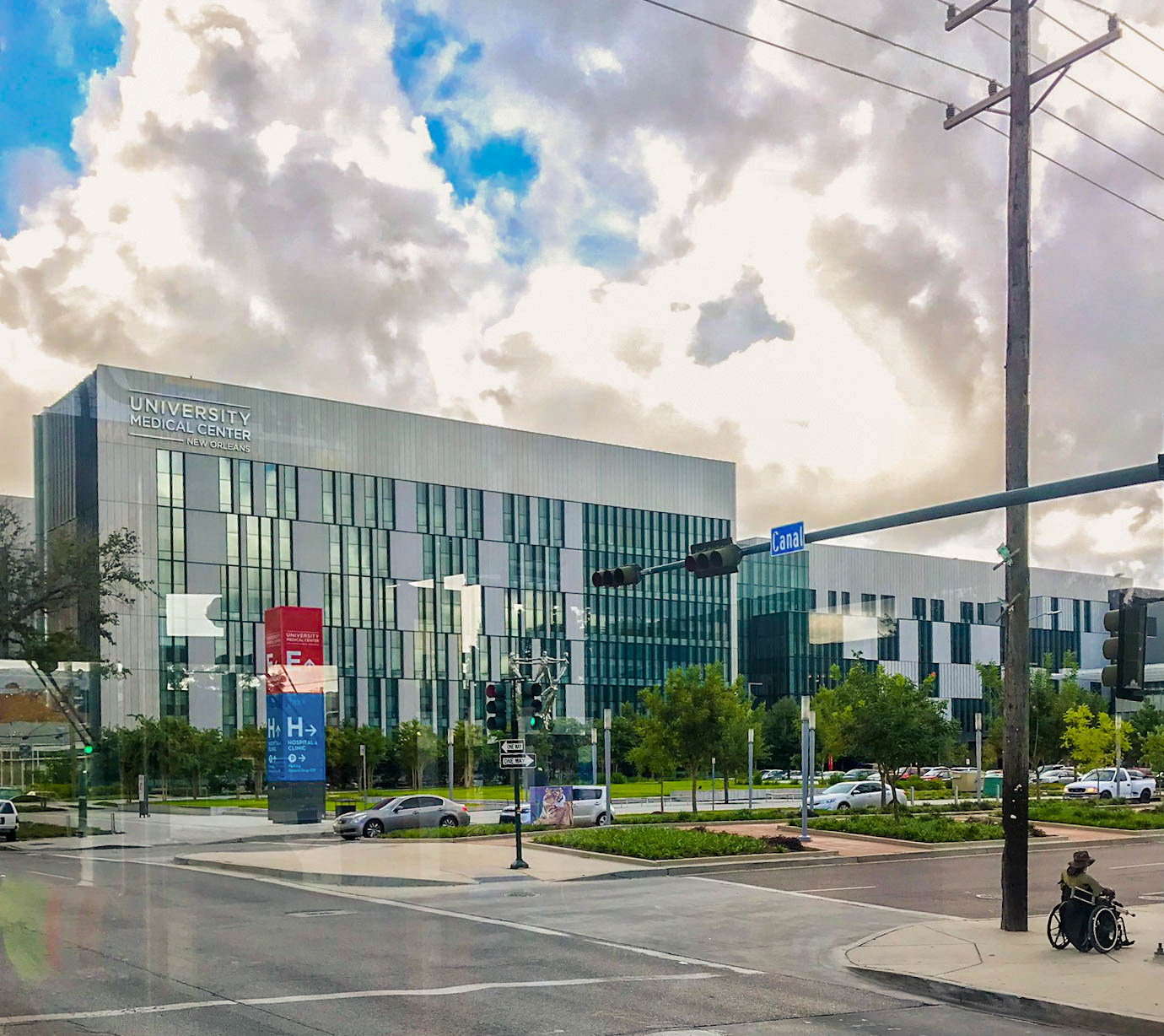
Two years and six strikes into bargaining—after switching law firms, cancelling negotiation sessions, firing union leaders, and allegedly backing a decertification effort—perhaps it’s dawning on University Medical Center in New Orleans that nurses don’t tire out easily.
On May 1 the nurses held their sixth strike—at five days, the longest yet—and their picket lines keep growing. There was dance music blasting, spontaneous line-dancing, boiled crawfish and jambalaya.
“We have first-time strikers out here who are brand new nurses!” said endoscopy nurse Hailey Dupré, a member of the bargaining team. “You understand that you can take your job into your hands and shape the future of it.”
As Heidi Tujague, a registered nurse and member of the bargaining committee, explained, this strike was intentionally longer than any of the previous five strikes. It was planned for five days, much longer than many conducted by their union, National Nurses United, which tends to favor one- or two-day strikes.
“The maximum we’ve done before was a three-day strike” in November 2025, she said. “We wanted to show an escalation from then. But some in our rank and file wanted to go longer!”
Despite the years-long process of contract negotiations, nurses like David Duplachain, who works in the neurology ICU, captured the strikers’ refusal to give up: “We’ll never get tired of fighting on the right side of history, for the future of our profession, for the people of New Orleans.”
FIRST UNION HOSPITAL IN STATE
UMC nurses know they’re preparing the way for a potential wave of organizing. When they voted to unionize in 2023, they made this the only union hospital in hundreds of miles, sending shockwaves through the Gulf South health care industry.
They won their election with 82 percent support in a bargaining unit of 700 workers. It’s Louisiana’s first unionized hospital, and the state’s largest National Labor Relations Board-supervised election in decades.
Contract negotiations with LCMC Health, the corporate nonprofit that runs University Medical Center, began in March 2024. As of the beginning of the strike, negotiations had now lasted more than 765 days.
Nurses on the strike line argued that the employer had engaged in surfacing bargaining, delaying and intimidating nurses every step of the way. Negotiations have stalled at various times over staffing, grievance procedures, and regular pay raises.
Strikers pointed to six cancelled bargaining sessions and the frequent switching out of law firms that handle the company’s negotiations. These are the latest tactics in a long list of delays and intimidation, including a failed decertification campaign and the retaliatory firing of union leaders over minor technicalities.
In July 2025, the nurses launched their fourth strike in response to the firing of Mike Robertshaw, a rank-and-file leader of the organizing effort since 2022. They are still fighting to win his job back.
UMC nurses say they’re fighting for a solid contract with safety and job protections. They want a contract in which discipline will be evenly enforced; separate holiday and PTO banks; a set wage scale; and a raise for per diem nurses, who haven’t had a raise in 10 years.
They’re also fighting for structural changes, like more full-time staff who are committed to the hospital and less reliance on contract nurses. Strikers emphasized how fighting for a strong contract would improve both patient care and the prospects for the nurses who enter the profession after them.
“This strike is not about us,” Duplachain said. “It is about ensuring quality patient care for the citizens of New Orleans and for everyone who uses this hospital across the Southeast. This contract is trying to prioritize patient care and patient outcomes; make sure our city has a Level 1 trauma center that is focused on patient care and not driving profits.”
SPIRIT OF CHARITY
This first-contract struggle has roots in the deeply felt connection between New Orleanians and Charity Hospital, for decades the primary care facility for the city’s working class and poor. After Hurricane Katrina in 2005, instead of reopening Charity, the state closed and privatized it.
UMC replaced Charity as the city’s Level 1 trauma center, and recently launched a “Spirit of Charity” publicity campaign. But the nurses argue their union represents the true “Spirit of Charity.”
Many nurses here previously worked for the Charity system, which was a state-run public hospital system and where nurses, including Tujague, had the benefits and protections of public employees. She pointed to many ways that workers lost protections and patient care has been undermined under corporate hospital management.
Back then, nurses were protected by civil service, regular pay steps, and progressive discipline under the state system, all of which were lost when UMC took over. Even though they were not unionized, they had many benefits that UMC employees want to regain through unionizing.
ZNetwork is funded solely through the generosity of its readers.
Donate




