
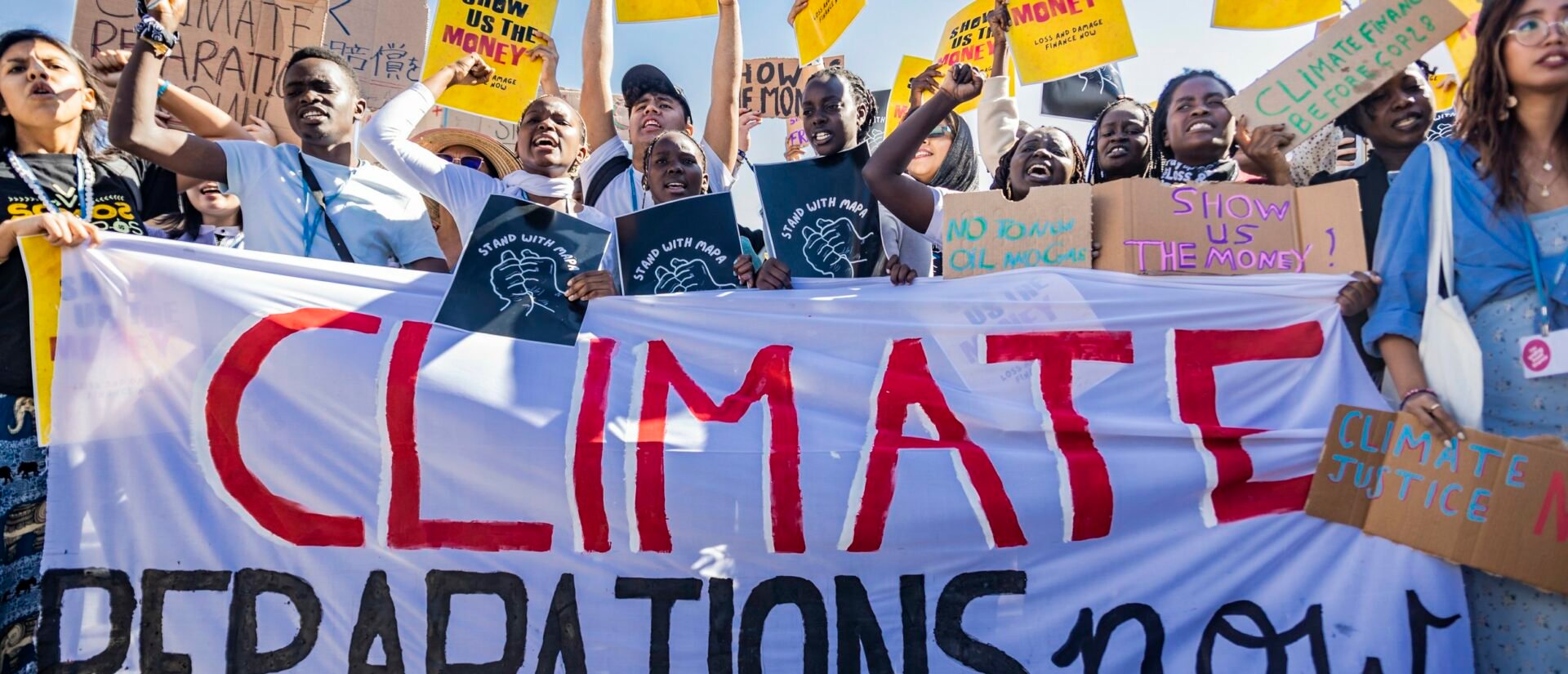
In the Global South, climate summits arrive like monsoons – heavy with promise, quick to pass. We gather each year to count pledges and repeat the same unresolved arithmetic: those who did the least to cause the crisis continue paying the most to survive it. And as the storms grow stronger, the promises grow smaller.
Pakistan decided early that this cycle could not shape our future. Rather than wait for commitments to materialize, we began investing in the systems and infrastructure that would allow us to endure regardless of external support.
This year reinforced this logic. When projects worth $845 million were abruptly frozen in Pakistan– and in many other regions – it underscored a truth we had already accepted: goodwill cannot be our only line of defense.
Now, every local and national government balancing debt, disaster recovery, and inflation are discovering the same hard truth: climate resilience built on uncertain grants was always doomed to fail.
But there is another way.
I see COP30 as the Global South’s chance to start rewriting the aid story. While it will not be an easy path, we should find ways to build our own engines of growth. Partnership still matters, but donations cannot be a substitute for self-determination.
The green transition cannot remain a moral plea; it must become an economic plan.
Across the South, I am seeing exciting hints of this shift. Ghana is building a green-bond market, Indonesia is turning its palm-oil industry into a biofuel engine, and Bangladesh is rolling out climate-sensitive micro-insurance for farmers.
In Pakistan’s Punjab, we too have begun to apply that logic. I share our experience not as a claim of perfection but as evidence that the change we seek is possible. My province – home to more than 120 million people – faces floods, smog, and heat waves that routinely test the limits of governance. We could not wait for the next grant cycle to prepare for the next monsoon.
So, we began with the simplest promise a government can make: a clean, livable environment. Suthra Punjab – literally “Clean Punjab” – is our province-wide effort to modernize sanitation and waste management. It may sound basic, but adaptation often does. When drains are cleared before the rains, neighborhoods stay above water. When waste becomes feedstock for energy, we cut emissions and create jobs. Every ton of garbage diverted from open dumps is methane averted, labor created, and dignity restored. As with any initiative at this scale, gaps remain – but our coverage continues to expand.
From there we built outward. The Climate Resilient Punjab Vision & Action Plan, the largest integrated program of its kind in Pakistan, links flood control, heat-health protection, and climate-smart farming under one framework. It is backed by budget lines, not slogans. And our Water and Sanitation Sector Plan 2025-2035 secures drinking water and wastewater treatment even when the weather turns extreme.
Financing this work required changing mindsets. Pakistan has adopted a sustainable finance framework aligned with global green bond standards, and Punjab is designing its own green-financing strategy to channel capital toward climate infrastructure. The goal is not to replace donors, but to multiply their effect – to use concessional funds to unlock private and diaspora investment. When a village installs solar panels through a local credit union, or when a public hospital shifts to renewable energy to cut costs, that is fiscal autonomy in action.
Our diaspora has a vital role in this shift. Millions of overseas Pakistanis already send back more than remittances; they send back confidence. In October alone, the country received $3.4 billion in remittances – a 17% rise from last year. We have restructured our Overseas Pakistanis Commission to resolve disputes swiftly and uphold contracts, because the simplest form of climate finance is a government that keeps its word.
None of these measures are uniquely ours. Any developing region can adapt them: start where people already feel the loss, fund what keeps daily life running, and measure progress by service uptime rather than dollars pledged. This is what I’ll be talking about at COP30.
So let me offer three practical yardsticks for the summit – and for my own administration – over the next 12 months.First, service uptime – how long schools, clinics, and water systems stay functional when shocks hit. Second, predictable finance – auctions and green bonds that build real markets for resilience and attract long-term capital instead of one-off bailouts. And third, local capacity – investments in sanitation crews, agricultural extension officers, and primary-care workers who are the true first responders in a warming world.
The Global South did not cause this crisis, but we are determined to define its solution. In Punjab, that solution begins with clean streets, safe water, affordable energy, and credible finance – all bound by one idea: the path out of climate despair runs through green prosperity.
Partnership remains essential. We still need fair loss and damage mechanisms and a functioning global finance architecture. But partnership must evolve from rescue to reciprocity. In practice, that means matching southern ambition with predictability: long-term credit lines, co-guaranteed bonds, and climate metrics that measure lives reached, not just dollars disbursed.
Unless the kinds of models I describe are scaled nationally and internationally, the Global South will continue to be wrecked by a crisis it did not cause.
We welcome allies who see us not as victims but as co-builders of the next sustainable economy. Because with or without the next grant cycle, we intend to build anyway.
Maryam Nawaz Sharif is the chief minister of Punjab and the first woman to lead a provincial government in Pakistan. A senior leader of the Pakistan Muslim League (N), her administration has focused on inclusive growth, social welfare, digital transformation, and climate resilience. She has introduced initiatives including the Nawaz Sharif IT City, the Suthra Punjab clean-environment campaign, and the Safe Cities Project. She will represent Pakistan as a senior delegate at the COP30 conference.
ZNetwork is funded solely through the generosity of its readers.
Donate