
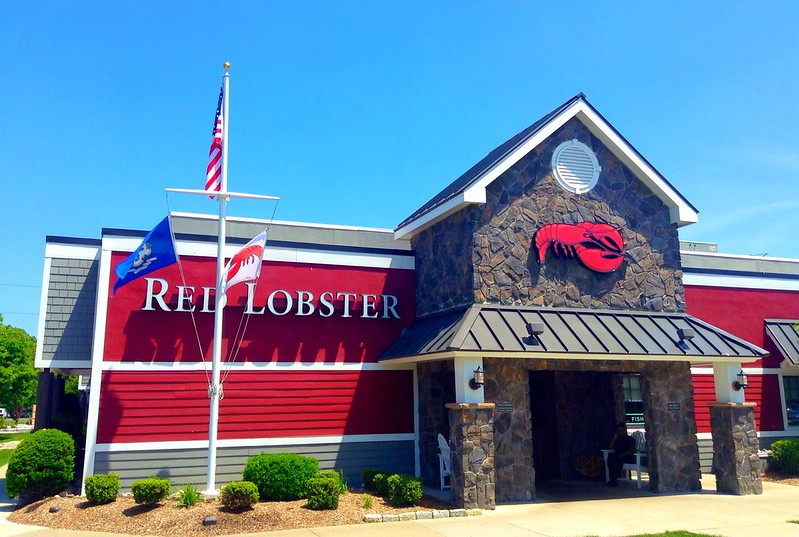
Red Lobster has reached the bottom of the treasure chest and filed for bankruptcy. While some locations will stay open while the lawyers and accountants sort things out, other locations will be shuttered — some already have been — and assets will be sold off as part of its “restructuring.” Us diners are bracing to lose a great, affordable chain.
As the restaurant announced its bankruptcy filing, the mainstream take was “blame the endless shrimp.” That was the hook, anyway. If you read behind the headline, you’d see there’s more to it. The pandemic crushed restaurants, small and large, including Red Lobster. Inflation, exacerbated by the pandemic, further compounded the challenges, as fewer people opted to dine out after the shutdowns. While the chain was already poorly managed and in decline before COVID-19 arrived, all anyone wants to talk about is the endless crustaceans. The story, of course, is more complex.
It’s Not About Endless Shrimp
The endless shrimp line is a convenient and easily digestible reason for Red Lobster’s sinking fate, and it’s sort of true. Behind it, however, lies a much more insidious story. As Cory Doctorow notes, the actual reason for the seafood chain’s woes is private equity and “another hedge-fund, bust-out scam.”
Doctorow argues that “ten years of being bled out on rents and flipped from one hedge fund to another has killed Red Lobster.” He makes a good case for why private equity and deep cynicism are to blame — a plan to tear down an affordable, beloved restaurant to make some cash for wealthy investors.
The means by which the decline came about are somewhat complicated, but the top-line takeaway, as Luke Goldstein argues, is an unholy alliance of private equity and seafood industry monopolies and monopsonies — single-buyers — that concentrated power and allowed the suits to dismantle the chain and sell it for parts.
In one particularly cynical move, Red Lobster’s past private equity owner, Golden Gate Capital, sold off the chain’s real estate and leased it back to the restaurants. As Goldstein points out, that netted the company $1.5 million — most of the $2.1 billion it cost them to buy it in the first place — and left the chain vulnerable to rising lease costs. In short, Red Lobster didn’t die. It was murdered.
Red Lobster was a target because, as Doctorow notes, “the people who patronize them have little power in our society.” It’s a rotten deal for anyone who loved a nice meal at a decent price, and a great bargain for corporate raiders who couldn’t care less about anything or anyone beyond dividends and bonuses.
Concentrated Wealth Is Concentrated Power
Monopoly, monopsony, and behemoth private equity firms are a massive problem. The concentration of wealth in the market is also a concentration of power. And that power stacks. The more heft you have to throw around, the more capital you have access to, the easier it is to direct the market in ways favorable to those who already hold most of the marbles. Once you reach a certain scale, it’s easy to decide which companies live, which ones die, who wins, and who loses. Of course, working-class folks are the ones who tend to lose.
In 2019, Nicole Aschoff made the case for banning private equity. She argued that these corporate raider giants were too big, too willing to buy anything they could abuse for a buck, entrenched, cynical, and predatory beyond belief. As if that weren’t enough, they’re also fond of using worker money by way of pension funds to execute their, well, executions. Aschoff’s case for putting down these beasts is all the more persuasive today.
Even if we entertained the capitalist myth of self-regulating, self-directing, efficient markets that keep operators in check — a belief that’s hard to swallow under any circumstance — we would have to explain how private equity is anomalous to the functioning of capitalism rather than native to it. Of course, the answer is that it’s not anomalous.
Capitalism fosters the pooling of power — the concentration of wealth — and the compound effect has far-reaching consequences. This concentration undermines state capacity, suppresses worker wages, and has adverse effects on working conditions, market prices, and the variety of firms in the marketplace. Whether it’s Walmart or Amazon or Ticketmaster or whomever, the concentration of power under capitalism is the rule, not the exception, as Karl Marx clearly explained more than 150 years ago. Private equity, with its ability to shape and dismantle markets, is merely another manifestation of this fundamental dynamic.
Ban Private Equity
While this issue may seem, at a glance, to be a distant or academic concern — to return to Doctorow’s point about who suffers — it’s very much a real problem for working-class people. They’ll ultimately end up with one fewer option for a decent, affordable restaurant — chain or not — to grab a meal (and delicious biscuits) with family or friends. There’s nothing merely theoretical or academic about that.
Capitalism functions to keep worker wages low, but with private equity at the helm, even the reprieve of a little consumer satisfaction — a nice treat for all that exploitation wage-laborers endure — is off the table. We’re told that sacrificing social welfare and submitting to the ruthlessness of the untethered market is worthwhile for the sake of capitalism’s productive energy and the abundance of choice it supposedly offers. But the trajectory of private equity leads to conditions reminiscent of Soviet-style bread lines, albeit without even the pretense of universal health care, free higher education, subsidized housing, or job guarantees.
As Aschoff argued five years ago, the answer is to ban massive private equity firms who stand in opposition to the interests of workers and the public. These firms exist not to serve businesses or consumers, and certainly not to serve workers, but to make a quick buck for investors who tend to be many times removed from the communities and realities their decisions affect. So, they’ve got to go. In their place, we can bring back endless shrimp.
ZNetwork is funded solely through the generosity of its readers.
Donate