
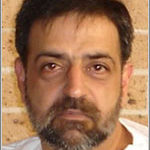
COMRADE Prachanda might have been as surprised as the Dalai Lama to hear George W. Bush’s national security adviser, Stephen Hadley, say last week that his boss wouldn’t dream of skipping the Beijing Games on account of the situation in Nepal.
“The president is going to the Olympics,” he announced on the ABC network’s This Week With George Stephanopoulos. “What he’s doing on
Hadley mentioned
It is perfectly possible, of course, that the host, too, didn’t know any better. It’s easy, after all, to confuse
However, there is at least one possible point of convergence: alarmed by the developments in
That does not appear to be a serious likelihood for the time being. The Communist Party of Nepal (Maoist), whose triumph in this month’s elections came as something of a surprise to most observers, has already offered evidence of a pragmatic approach to politics.
As vote counting continued at the beginning of this week, it still wasn’t clear whether the Maoists would enjoy an absolute majority in the new constituent assembly, although their status as the largest single party was not in doubt, and Pushpa Kamal Dahal – better known by his nom de guerre, Prachanda – has publicly declared that he will be the next prime minister. But, let alone the one-party state that was once a Maoist aim, even a one-party government is no longer on the agenda: the preferred option is a coalition with their defeated rivals such as the Nepali Congress and the Communist Party of Nepal (United Marxist-Leninist), the latter, commonly known as the UML, being a considerably more centrist organization than its nomenclature implies.
In an interview before the elections, Prachanda said he and his followers had come “to the conclusion that multiparty competition is a must for a vibrant society, even a vibrant socialist society”. This did not mean, however, that the status quo would be maintained. “The root cause of our poverty,” he pointed out, “is a feudalistic political system, feudal way of thinking.”
Logically enough, the first step towards meaningful change involves abolishing Nepal’s thoroughly discredited monarchy, and Prachanda’s deputy, Baburam Bhattarai, declared this week that King Gyanendra would be accorded “economic, social and cultural respect as a citizen” if he cooperated with this process. Based on Gyanendra’s past performance, that is by no means guaranteed, even though all sizeable political parties are agreed on transforming the country into a republic. For the monarch and the depleted ranks of monarchists to resist this trend would be thoroughly ill-advised. Perhaps the biggest potential danger lies in the attitude of the Nepalese army’s loyalist hierarchy, which tends to look upon Prachanda and his men as the enemy it failed to defeat during a decade-long insurrection.
It is not entirely surprising that the army has been reluctant to absorb Maoist ex-combatants into its ranks, but a rejectionist attitude towards the conciliatory mood reflected in the election results could prove destabilizing. Or worse. Any effort to resist Gyanendra’s exit from the palace or a subsequent coup attempt would be a monumental folly that could reignite the civil war.
In his aforementioned interview, Prachanda conceded that the national priority is wealth creation, and that this would require “a capitalistic mode of production”. Once upon a time this sort of approach would have elicited accusations of revisionism from the high priests of a more orthodox communist sect, but that’s an unlikely consequence nowadays. Nor does a concession of this nature necessarily imply that the Maoists are inclined to discard their worthier aims, such as wide-ranging land reforms and efforts to empower women, as well as ethnic groups and castes that bore the brunt of the ancien regime’s discriminatory excesses.
The transformation within two years of a fighting force with a reputation for ruthlessness and brutality into a viable, election-winning political party is a remarkable achievement. There are concerns that some of the younger Maoist cadres remain inclined to settle political arguments through violent means, but this appears to be a diminishing trend. Somewhat more disturbing is the charge that Maoists inducted into the government as ministers following the 2006 peace deal proved to be quite as corrupt as their colleagues.
Millions of Nepalese will be sorely disappointed if the Maoists in power turn out to be as covetous and ineffective as representatives of the more established parties. For the moment, though, there’s a heightened sense of expectancy.
It doesn’t necessarily follow that the experiment sanctioned by the majority of Nepalese will be either unexciting or unfruitful. But, come what may – and no matter what the Dalai Lama’s thoughts on the matter might be – Stephen Hadley will be pleased to discover that he wasn’t far off the mark: his boss can indeed travel to Beijing at will, and pretty much do and say as he pleases, without compromising human rights in Nepal.
Email: [email protected]
ZNetwork is funded solely through the generosity of its readers.
Donate