

(The original version of this column was published by Convergence in mid-August; this updated version was prepared for publication in the journal of the Rosa Luxemburg Sifting Foundation – Berlin)
In my previous article, A Path to Pushing MAGA Out of Power, I offered a set of ideas about what is needed to block MAGA in a way that offers more than temporary relief from authoritarian rule. The goal is to put in place a new governing coalition in 2028 that will start on the road toward deep structural reform. To achieve that we need to:
- Build a powerful synergy of mass resistance and electoral work
- scale up public protests, workplace actions, civil disobedience, and organized noncompliance to block MAGA attacks and defend democratic rights, including the right to elections that are at least minimally free and fair; and
- defeat MAGA candidates at all levels in the 2026 and 2028 elections so that an anti-MAGA coalition gains governing power at the federal level and increases its strength in blue, purple and red states.
- Strengthen the progressive wing of the broad anti-MAGA coalition so it can:
- shape the politics of electoral campaigns against MAGA at all levels of government;
- put its stamp on both the domestic and foreign policy of a post-MAGA federal government; and
- play a leading role in state-level governing coalitions in at least a few blue states while increasing progressive political weight in purple and red states.
- If we don’t gain this leverage and end up with a federal government that doesn’t deliver substantial change, MAGA will have an opening to come roaring back.
(A discussion guide for examining these points is available here.)
New initiatives and Mamdani’s big win
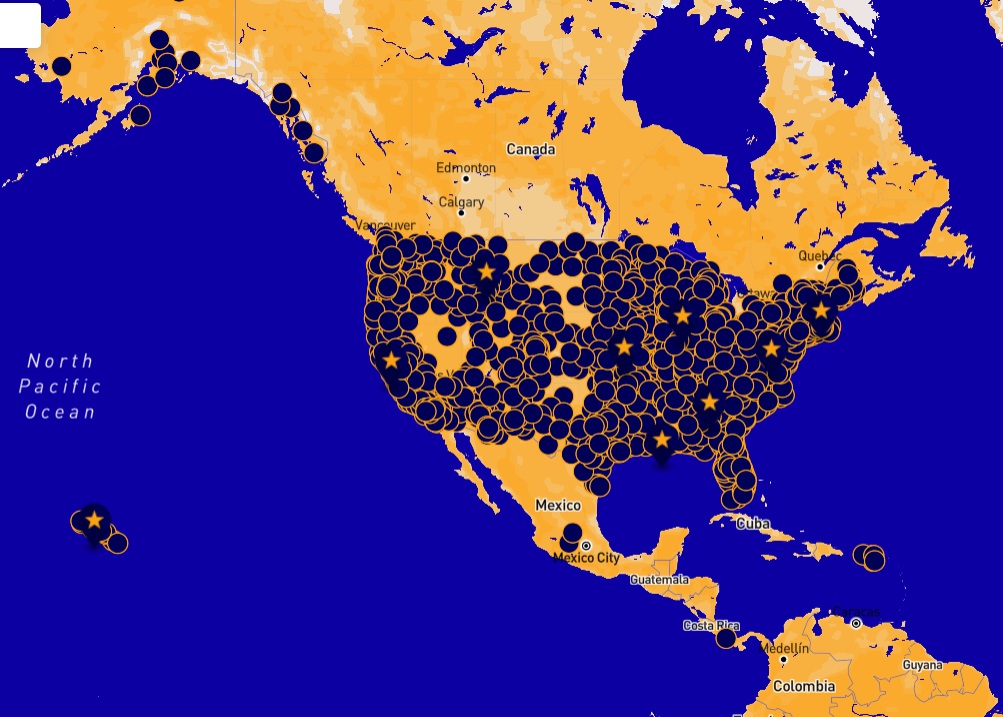
An uptick in opposition to MAGA was already underway at the time A Plan for Pushing MAGA Out of Power was published (June 16). It showed in spontaneous as well as organized local actions against ICE kidnappings; enthusiastic crowds at Anti-Oligarchy events featuring Bernie, AOC and other prominent progressives; protests against US military aid to Israel and repression of the Palestine solidarity activists; organizing by the Federal Unionists Network; the nationwide Hands Off mobilization and then the huge turnout at the No Kings demonstrations June 14.
Since the initial No Kings Day, the Trump administration has accelerated its full-spectrum effort to consolidate authoritarian rule. The Texas GOP’s move to follow Trump’s “advice” and steal five House seats via racist gerrymandering and the federal government taking over the DC police and deploying the National Guard in the nation’s capital were the initial escalations. Since that time, Trump has deployed the National Guard to Portland and Memphis, threatened to send troops to Chicago and other cities, while ICE brutality has intensified.
Resistance momentum has accelerated in both numbers and militancy in response. For example, anti-ICE rapid responses have become larger and more sophisticated and grassroots community mobilizations have taken place against building new ICE detention facilities and agreements between local law enforcement agencies and ICE.
MoveOn added its weight to the campaign to get young progressives to “Run for Something.” Trans rights were a special focus at Pride marches across the country, which generally displayed a “defiant stance” against MAGA efforts to roll back LGBTQ+ rights. Black and other anti-racist formations led the way in the nationwide Good Trouble Lives On actions on July 17, the five-year anniversary of SNCC leader and Congressman John Lewis’ death. A host of national organizing networks launched The Big Betrayal: How We Fight Forward initiative in response to the Big Ugly Bill with a mass call July 30.
In response to the Texas gerrymander, a Fight the Trump Takeover National Day of Action saw protests in dozens of cities. Spontaneous protests by DC residents against the government’s move are continuing and there is ongoing mass protest against the Guard deployment in Portland and the looming deployment in Chicago.
Amid the uptick in resistance, the new Battleground Alliance PAC and One Million Rising initiatives are aiming to scale up coordinated progressive action on both the electoral and non-electoral fronts. Meanwhile Zohran Mamdani’s shellacking of Andrew Cuomo to become the Democratic Party nominee for mayor of New York City has energized (and educated!) progressives nationwide by taking an approach that is both transformative and immensely popular. Mamdani’s win has had an especially important impact on the fight to move Palestinian rights central to the progressive agenda, making a big contribution to what is now a “dam has burst” moment according to key Palestine solidarity fighters Yousef Munayyer and Mouin Rabbani.
Strategic non-cooperation and flipping the House
On July 16, Indivisible held the first mass call in its ambitious new initiative, “One Millon Rising: Strategic Non-Cooperation to Fight Authoritarianism.” Aiming to train one million people in the strategic logic and practice of non-cooperation, this effort draws from the work of the Horizons Project and others on how civil resistance can undermine the pillars of authoritarian rule.
One Million Rising doesn’t intend to compete with or replace the many nonviolent resistance efforts already underway in communities across the country. Rather, organizers hope to tap the energy of the surge of new people being drawn to activism and to increase the scale, sophistication, and coordination of anti-authoritarian actions by orders of magnitude. The second and third mass calls also drew thousands of participants; recordings of each, as well as resources and action toolkits, can be found here.
On the electoral side, on the same day as the first One Million Rising call a labor-backed coalition launched a major working-class effort to flip 35 or more House seats in the 2026 mid-terms. Initiating organizations of the Battleground Alliance PAC include the Service Employees International Union (SEIU), Communication Workers of America (CWA), Working Families Party, Planned Parenthood Votes, Indivisible, MoveOn, American Federation of State, County and Municipal Employees (AFSCME), Peoples Action and Popular Democracy in Action. Main Street Action has since joined the effort.
This $50 million effort will “target their efforts toward mobilizing voters who have been hit the hardest by the Republican agenda… parents who will lose healthcare for their kids, families struggling after [Supplemental Nutrition Assistance Program] cuts, seniors not being able to afford their medication, people struggling with higher utility bills, and workers who’ve watched billionaires get tax breaks while their wages stay flat. They’re not just participating; they’re at the center of leading this effort to take back control and make their voices heard at the ballot box,” according to the PAC’s launch statement.
Numerous other anti-MAGA initiatives have been launched by social justice partisans as well. Fifteen national unions and scores of trade union locals and labor-affiliated organizations have launched Labor for Democracy, ”a network of labor unions committed to defending our fundamental rights to demonstrate and organize collective power in the face of Trump administration attacks on labor rights, unions, working people and democracy itself.” The Medicaid Union, Standing for Democracy, and the Make Billionaires Pay effort sponsored by The Women’s March – Our Feminist Future are adding their organizing work to the fray. Labor Day featured nationwide Workers Over Billionaires protests.
The youth-led Sunrise Movement, which led calls for a Green New Deal, has broadened its focus and going forward will take on the fight against authoritarianism. A main focus will be campus organizing against Trump’s attempts to control their curricula and rules around political dissent. Sunrise will also mobilize rapid responses to the administration’s deployment of troops, its immigration policies to cities, and its crackdown on dissent.
These initiatives demonstrate with on-the-ground activity that progressives are the most combative sector of the anti-MAGA coalition and the most capable of engaging people alienated from mainstream politics. This is a crucial component of expanding the base and influence of progressive politics.
Another crucial component of “block and build” work is direct contention with the centrist and pro-corporate wings of the anti-MAGA coalition whose main political vehicle is the establishment wing of the Democratic Party. On that front, Justice Democrats, a key force in galvanizing support for insurgents challenging mainstream Democrats, has already announced endorsements for three progressives aiming to defeat Democratic incumbents in 2026 primaries – Donavan McKinney (Michigan-13), Angela Gonzales-Torres (California-34), and Justin J. Pearson (Tennessee-09). And we are now in the home stretch of the general election campaign of Zohran Mamdani, whose big win over Andrew Cuomo for the Democratic Party nomination for mayor of New York City constituted the most dramatic breakthrough for the US Left since at least 2020 and models a path with tremendous strategic potential.
Mamdani shows how it’s done
Numerous assessments have been offered of how Mamdani pulled off his earthquake victory, and the lessons for progressives and socialists across the country. Among the best are Waleed Shahid’s piece in The Nation and Eric Blanc’s in Jacobin.
Shahid notes how the ground was prepared for Mamdani’s effort by a decade of organizing starting with Bernie Sanders’ 2016 campaign and continuing with the rise of New York City DSA and the Justice Democrats’ work to elect AOC and Jamaal Bowman. He stresses in this paradigm the rise of “a new kind of Muslim American politics—rooted in solidarity, visible in public, and grounded in power, not just presence.” Many of the details of that development, such as the deep community organizing done by Desis Rising Up and Moving (DRUM), DRUM Beats, and CAAAV-Organizing Asian Communities, are covered by Jasmine Gripper and Lena Pervez Afridi in the June 21 episode of Convergence’s Block & Build podcast, “How Zohran Won.”
Blanc summarizes many of the ingredients that Mamdani wove together into a winning campaign: a commitment to economic populism and laser focus on making New York City affordable; a “tireless ground game of 50,000 volunteers and the New York City Democratic Socialists of America (DSA) and other allied organizations”; a brilliant attention-grabbing social media campaign whose “secret sauce” was not primarily technical but “political: an authentic messenger armed with a compelling platform”; successfully building a left-liberal coalition largely via the cross-endorsement of Brad Lander; and crucial inroads into organized labor (with almost all the unions that endorsed Cuomo switching to Mamdani since the primary). Overall, Blanc argues:
“Despite what his opponents claim, Zohran is not a dogmatic extremist but a radical pragmatist. He could not have gotten this far had he not focused on bread-and-butter economic issues, spoken in a commonsense language, ran as a Democrat, dropped his support for defunding the police, and endorsed Brad Lander. Zohran refused to drop his support for democratic socialism or his opposition to Zionist apartheid, but performative ultraleftism was anathema to this campaign.”
There are few other places where political conditions and the broad Left’s level of development allow for duplicating Mamdani’s achievement. Even in New York City the fight is far from over, with Cuomo now running as an “independent” and all too many establishment Democrats joining Republicans, Wall Street and real estate moguls, and apologists for Israeli genocide in a crusade to defeat Mamdani in the November 4 general election.
But the impact of Mamdani’s breakthrough win in the primary cannot be undone. Progressives and socialists across the country are wrestling with ways to apply the lessons of Mamdani’s experience to the specific conditions (including the level of development of the Left) in their localities. And in the general election fight underway, even with all its dangers, has already seen Mamdani expand his base of support and build cooperation among unions that were on opposite sides in the June primary. The latest polls show Mamdani with a double-digit lead bid even after incumbent Eric Adams dropped out of the race in the wake of pressure from the right wing to unite the “stop Mamdani” forces behind a single candidate.
A tectonic shift in support for Palestine
One thread from Mamdani’s campaign deserves special attention. Cuomo centered antisemitism in his attacks on Mamdani, trying to tar him with that label for terming Israeli actions a genocide and refusing to exempt Israel from his belief that only states in which all citizens have equal rights have a “right to exist.”
That Mamdani overcame this smear in the city with more Jews than any other except Tel Aviv marks a political earthquake. It demonstrates how much attitudes about Israel and Palestine are shifting—and in turn it has spurred them to shift further. Mamdani’s win shows that a pro-Palestine stance is not only morally just but politically forward-looking. A bombshell poll released by the Institute for Middle East Understanding Policy Project July 29 reinforced the point. It showed that Mamdani’s pro-Palestinian rights stance was an important factor in his getting the votes of more than 60% of his supporters, and that among primary voters overall 78% said Israel is committing genocide in Gaza and 79% supported restricting US weapon shipments to Israel. And a poll by Zenith Research and Public Progress Solutions shows Mamdani with a 17-point lead among New York Jewish voters going into the general election.
These results are part of a massive shift underway nationwide. A new Gallup poll shows support for Israeli dropping to unprecedented lows. Only 32% of all those polled support Israel’s military action in Gaza and this only because 71% of Republicans do. Among Independents, support has dropped to 25% and among Democrats the figure is a mere 8%. For the first time, a majority of US people disapprove of Israeli Prime Minister Benjamen Netanyahu.
Especially striking is the breakdown by age. Among all respondents 18-34, only 6% have a favorable view of Netanyahu and 9% approve of Israel’s military actions in Gaza.
This long-overdue tectonic shift has impacted the national discourse and politicians’ votes. Mainstream media coverage in August and September started to use the term genocide without scare quotes and run stories explicitly blaming Israel for the human catastrophe in Gaza and contrasting Zionist values with liberal democratic ones. And a majority of Senate Democrats for the first time voted to support restricting arms sales to Israel.
It’s infuriating that it has taken so long to get to this point. But more importantly, it is a tribute to the work of all those who have participated in the movement for Palestinian rights, which has refused to bow to repression, slander, and racist and Islamophobic demonization. In the wake of last week’s (precarious) ceasefire agreement, which brings at least temporary relief to Gazans who have survived Israel’s killing fields but is designed to foster an “insidious, systematic continuation of genocide in slow motion,” it remains urgent to combine protest and education on a mass scale in the fight for Palestinian liberation. And to make defense of Palestinian human and national rights an integral part of the progressive action agenda, taking that stance into the 2026 and 2028 electoral campaigns, and fighting like hell for it to be a key component of the program of a post-MAGA government.
The second No Kings protest is scheduled for this coming Saturday, October 18. More than 2,500 non-violent actions are planned for cities and towns across the country. Building on the current resistance momentum, and involving activists from every front of the resistance to MAGA, No Kings 2 will be a measure of the strength opposition to authoritarianism has gathered to this point – and a baseline for the militancy and tenacity that will be needed in the bitter fights that lie ahead.
ZNetwork is funded solely through the generosity of its readers.
Donate