
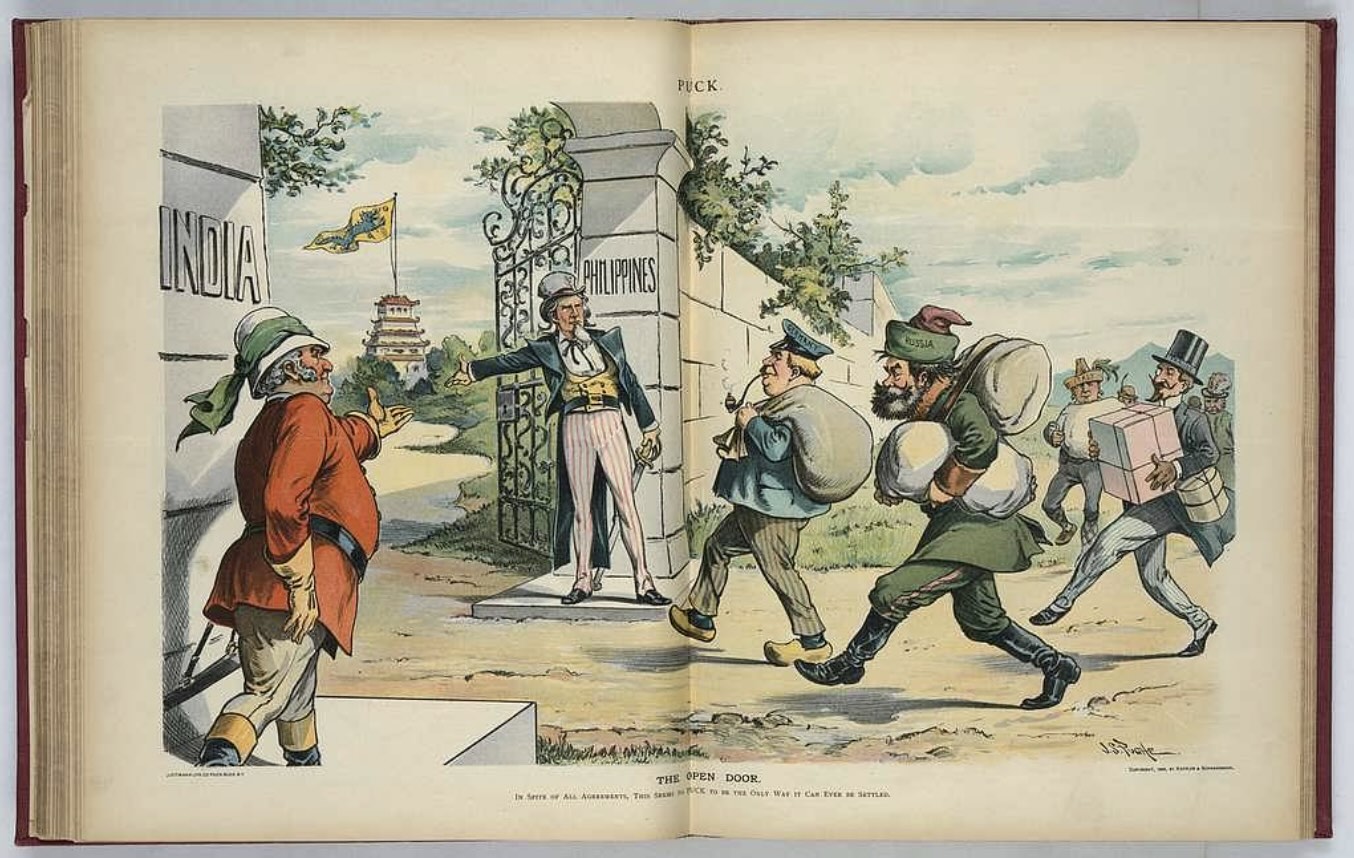
(This is the first in a series of articles on the DDR (Disarmament, Demobilization, and Reintegration) Framework and how it is being used by US imperialism and the reactionary client states as a tool to force the surrender of revolutionary movements
For decades, imperialist powers and their client states have promoted the Disarmament, Demobilization, and Reintegration (DDR) framework as a supposedly “neutral” and “technical” approach to resolving armed conflicts. At present, the DDR framework is presented by the United Nations as a supposedly benevolent process of helping or convincing combatants to “lay down their arms” and reintegrate into society. But far from addressing the root causes of armed struggle, the DDR framework seeks to disarm revolutionary movements, dismantle their organized forces, and force them into surrender.
DDR: definition and brief history
Disarmament is defined as “the collection, documentation, control and disposal of small arms, ammunition, explosives and light and heavy weapons of combatants and often also of the civilian population” (UNDDR, 2005). While Demobilisation is described as “the formal and controlled discharge of active combatants from armed forces or other armed groups” (UNDDR, 2005), involving two stages: containment and reinsertion. Finally, reintegration is “the process by which ex-combatants acquire civilian status and gain sustainable employment and income” (UNDDR, 2005).
Taken at face value, DDR appears to be a “neutral”, technical, threefold process. In reality, it is a standardized formula of surrender: stripping combatants of arms, dissolving revolutionary organizations, and attempting to fold them back into the very exploitative system that gave rise to armed struggle in the first place. While its individual elements of disarmament, demobilization and reintegration have long existed prior to the formalization of DDR as a framework, it began to take shape as a tripartite and structured component of UN peace operations during the United Nations Transition Assistance Group (UNTAG) mission in Namibia in 1989.
Namibia’s struggle for independence waged by the South West Africa People’s Organisation (SWAPO) and its armed wing, the People’s Liberation Army of Namibia (PLAN), was a revolutionary war against apartheid and colonial domination by South Africa. But the UNTAG mission, mandated to assist in Namibia’s transition after the ceasefire following the declaration of independence, prioritized disarmament and demobilization before addressing the deep social and economic scars of the apartheid.
Conversely, UNTAG’s mission represents the first major implementation of a formal DDR program under a UN peacekeeping mandate, albeit in an ad hoc manner. Despite being touted in imperialist circles as one of the “most successful UN peacekeeping operations,” reintegration failed spectacularly: former South West African Territorial Force (SWATF, part of SADF) combatants fell into unemployment and disillusionment as the newly formed SWAPO-led regime lacked comprehensive economic programs.
This pattern repeated in El Salvador between 1991 and 1995. The Chapultepec Peace Accords, under heavy US influence, forced the Farabundo Martí National Liberation Front (FMLN) to surrender arms, demobilize around 9,000 of its combatants, and rebrand itself as a political party. However, like in Namibia, reintegration was crippled due to structural issues such as the lack of land reform and inadequate economic support, leaving many ex-combatants marginalized while the neoliberal order remained intact.
This experience was carried into the 1992 peace negotiations in Mozambique. The Rome General Peace Accords marked the end of a 16-year civil war between the ruling Marxist-Leninist Mozambique Liberation Front (FRELIMO), the anti-communist insurgent forces of the Mozambican National Resistance (RENAMO), and other factions. Like in previous cases, the UN-DDR framework was employed through a General Peace Agreement signed by FRELIMO and RENAMO. The UN oversaw the peace process, including multiparty elections and DDR implementation, with a focus again on disarming and demobilizing RENAMO forces. As in Namibia and El Salvador, reintegration of former combatants fell short.
Several other UN missions followed which incorporated DDR to pacify armed revolutionary struggles, including in Guatemala (1997), Cambodia (1992–1993), Angola (1991–1999), Sierra Leone (1999–2005), and Liberia (2003–2005).
By 2006, the UN codified these practices into the Integrated DDR Standards (IDDRS), later revised in 2020 in response to developments such as the rise of non-state actors, “violent extremism,” urban power dynamics, and increasing DDR programs outside formal peace agreements. This “standardized” framework makes DDR even more dangerous. It grants states the authority to impose DDR unilaterally, even in the absence of peace agreements or ceasefires, while the UN provides legitimacy, the funding and technical assistance. In practice, the standardization further legitimized states in criminalizing and dismantling revolutionary armed movements by branding them as mere “security threats,” or “violent extremists.”
A recent and significant example is the 2016 Final Peace Agreement between the Colombian regime and the Fuerzas Armadas Revolucionarias de Colombia – Ejército del Pueblo (FARC-EP), which waged a revolutionary armed struggle for 52 years.
Although FARC-EP deliberately avoided using the term “DDR” in the agreement, the Colombian regime adopted the IDDRS implicitly but heavily. Disarmament and reintegration were prioritized without securing structural political, cultural, or economic changes to address the roots of armed conflict in the country. Across all these cases, DDR reveals its true character as a mechanism to pacify armed revolutions. It does not resolve the contradictions that fuel armed struggle, rather it erases them from the negotiating table. Reintegration is reduced to token economic programs, while the roots of conflict from landlessness, exploitation, to imperialist plunder, remain intact.
UN DDR framework: GRP’s tool for capitulation
Long before the UN codified DDR in 2006, reactionary Philippine regimes were already applying its core elements—disarmament, demobilization, and reintegration—in their own attempts to undermine peace talks and force the surrender of revolutionary forces. These early experiences reveal that DDR, as later formalized by the UN, was not entirely new to the Philippine context. It was simply a continuation and standardization of the “counterinsurgency” practices already tested by successive post-Marcos regimes.
The first of the post-Marcos regimes, headed by Cory Aquino, initially postured openness toward peace. But Aquino quickly retreated under pressure from coup threats led by Enrile and the Reform the Armed Forces Movement (RAM). Instead of genuine negotiations, she reduced her offer to a mere ceasefire, culminating in the 60-day ceasefire agreement signed on November 26, 1986. The fragile truce was shattered by the Mendiola massacre of January 23, 1987, when peasants marching for land reform were gunned down in front of the presidential palace. Rather than addressing the massacre or disciplining the pro-Marcos elements in her security forces, Aquino chose to abandon the peace process and unleash war against the people on February 7, 1987.
Despite important successes achieved in the peace negotiations during the time of Fidel V. Ramos, he deepened this pattern of subversion by introducing the National Unification Commission (NUC), which he claimed would pave the way for national reconciliation. In reality, the NUC operationalized the early logic of DDR by prioritizing “localized peace negotiations” with so-called “rebel returnees” and renegade factions rather than dealing with the NDFP as the legitimate representative of the revolutionary movement. Ramos promoted “peace talks” as a way to entice defectors, neutralize dissent in a piecemeal manner, and fragment revolutionary forces, anticipating the DDR model of individual demobilization and reintegration, without tackling structural reforms.
In September 2008, impeached president Gloria Macapagal Arroyo declared that DDR must be used as the central framework for all peace negotiations. By applying this blanket policy, the US-Arroyo regime tried to reduce the decades-long armed conflict in the Philippines into a mere issue of “peace and order” in an attempt to erase its legitimate political weight as a revolutionary movement. In 2009, CPP founder Prof. Jose Maria Sison exposed the Arroyo regime’s intention “…to front load the end of hostilities, which is the fourth and last item in the agenda (The Hague Joint Declaration), so that it can actually destroy the peace negotiations as a way of bringing about basic reforms for the benefit of the people.”
Prof. Sison early on pointed out the CPP’s critique of the DDR framework saying that the Arroyo regime was “obsessed with imposing the framework of disarmament, demobilization and reintegration simply to pacify the people and perpetuate the rotten ruling system of oppression and exploitation. By all indications, the Arroyo regime does not want the resumption of formal talks…unless it realizes immediately its malevolent scheme of and attain its malicious objectives against the Filipino people and their struggle for national liberation and democracy.”
After Macapagal-Arroyo, the Aquino administration continued with the application of the UN DDR framework. While it celebrated a “landmark” peace deal with the MILF (Moro Islamic Liberation Front) as the culmination of a four-decade struggle for Moro self-determination, the deal largely framed peace in terms of MILF demilitarization rather than addressing deeper issues of state neglect, autonomy, and historical injustice against the Moros. These unresolved issues continue to manifest in the growing crisis in the Bangsamoro region, including internal divisions within the MILF.
Even as the Arroyo and Aquino administrations moved to align peace processes with the UN’s DDR framework, the NDFP has consistently rejected this surrender agenda. In 2020, NDFP Chief International Representative Luis Jalandoni reiterated the NDFP’s opposition, stating: “All attempts to derail the GRP–NDFP peace negotiations… [including] the DDR framework aiming for the capitulation of the revolutionary movement… have been firmly opposed by the NDFP as a violation of the principles enshrined in The Hague Joint Declaration.”
While Duterte initially reopened peace talks with the NDFP at the start of his presidency, DDR was never part of peace negotiations mainly because he cut the negotiations short before it could even reach substantive discussions. By late 2017, Duterte unilaterally terminated the peace negotiations with the NDFP via Proclamation No. 360 and labelled the CPP–NPA as “terrorist organizations” under Proclamation No. 374.
From that point on, Duterte abandoned negotiations and shifted to a militarized strategy and repackaged DDR under his broader “counterinsurgency” plan. In 2018, through Executive Order (EO) 70, he established the National Task Force to End Local Communist Armed Conflict (NTF-ELCAC). This marked a sharp break from any meaningful negotiations between the NDFP and the GRP. The so-called “Whole-of-Nation Approach”, a militarized, bureaucratized, and surveillance-oriented strategy to peace and security, involves all key government agencies through CORDS (Cabinet Officers for Regional Development and Security), with the president at the helm. Under NTF-ELCAC, DDR was integrated into localized “peace programs”, which serve mainly as cover for militarization, red-tagging, impunity, and systemic corruption.
Currently, Marcos Jr. has continued the NTF-ELCAC and adopted the National Action Plan for Unity, Peace, and Development (NAP-UPD), which aims to end the armed struggle and transform the CPP–NPA–NDFP. As with previous administrations, the Marcos Jr. regime shows no interest in addressing the root causes of armed conflict. Instead, it continues to pursue DDR-framed peace agreements designed to force the capitulation and disarmament of revolutionary forces.
ZNetwork is funded solely through the generosity of its readers.
Donate