
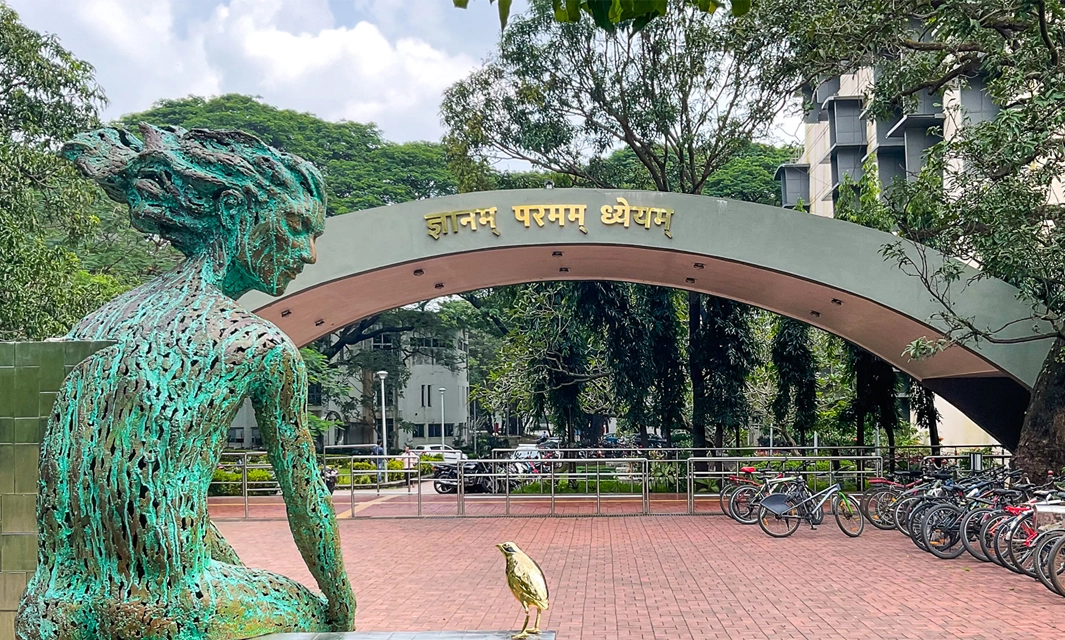
“What is in a name?” The great Shakespeare had Juliet pose this question, suggesting that names might be delicate shells we can discard without consequence. However today, we see an administrative system embroiled in a debate over renaming one of its leading institutions, IIT Bombay, to IIT Mumbai. This demonstrates that Shakespeare was mistaken. Names do matter; they shape our memories, identities, and sense of belonging. They bear the weight of history and the concerns of the present. If names held no significance, borders would not provoke conflicts, religions would not cling to their symbols, and cities would not seek to reclaim their former names from the remnants of colonial rule.
The recent proposal to change the name of IIT Bombay – the establishment dated to 1958, before “Bombay” became “Mumbai” – reopens a philosophical question that India faces repeatedly: What is the relationship between a name and what it represents? Is renaming an act of reclaiming truth or of rewriting it? Can a mere word shift the essence it points to, or is it just a fresh coat of paint?
For centuries, philosophers have debated both perspectives. Plato regarded names as mere shadows of “ideal forms” – close, but not the truth itself. Derrida considered names to be “slippery”, unstable entities that carry histories of power and erasure. Tagore saw names as emotional signatures – “the living touch of the soul upon the world.” A name is not just a word; it is a way people give meaning to things.
That is why the debate over renaming IIT Bombay is not merely a bureaucratic issue; it touches the core of its institutional lineage. IIT “Bombay” is more than a geographic label; it is an archive of memories – from Soviet-assisted laboratories to young scientists in the 1960s working in makeshift spaces, influential lectures, alumni who went on to establish companies, start-ups, launch satellites, found research institutes and even the current “rupee” symbol of the country. Changing the name risks severing the institution’s identity from its historical context. “IIT Bombay” is not simply a product of naming; considered a “brand” that built over sixty-seven years of rigorous intellectual effort which continues to do so even today.
Yet, as Heraclitus reminds us, identity is always in flux. “You cannot step into the same river twice” because both the river and you are constantly changing. Mumbai has also transformed – shedding its colonial name in 1995 to reclaim one that connects to much deeper, indigenous roots with “Mumbadevi” and the “Koli-fisher communities”. Should the institute not evolve to reflect the city’s name? From this perspective, renaming is not about erasing history; it is about restoring a philosophical connection between place and institution.
This tension reveals a unique paradox of contemporary India: we seek to honor our precolonial past even as we safeguard the achievements of the postcolonial era.
Philosopher Kwame Anthony Appiah once observed that identity is woven from “the messy, entangled threads of history.” The IIT Bombay versus IIT Mumbai debate reflects this entanglement. “Bombay” is a colonial name; “IIT Bombay” represents a postcolonial success. Mumbai signifies an indigenous identity and embodies a vibrant, modern city. Which of these threads should take precedence?
For some, keeping “Bombay” is not about clinging to colonialism; it is about respecting the legacy of an institution that has crossed boundaries, achieved global academic recognition, and appeared on CVs and research citations. For others, retaining “Bombay” feels like a reluctance to move on from colonial history. Yet perhaps, as Nietzsche suggests, the question is not whether a name is old or new, foreign or native – but whether it generates life-affirming meaning. Does it uplift? Does it clarify? Does it unite with a community?
However, meaning is not the only factor. There is also an emotional connection to belonging. Alumni have written “IIT Bombay” on exam forms, project reports, applications, PhD theses, and patents. Their degrees are symbols of identity – the name on the certificate carries personal pride, family dedication, and years of hard work. Changing that name would mean asking millions to rewrite their own memories and stories.
However, the counterpoint is also compelling: nations rename places to reclaim their history. Kolkata, Chennai, and Bengaluru – each of these changes aimed to restore linguistic dignity distorted by colonial rule. If citizens adapted to those changes, why can IIT Bombay not do the same?
Perhaps the core issue is that institutions, unlike cities, embody not only culture but also credibility. Globally, “IIT Bombay” represents excellence. A sudden name change could create disruption in that hard-earned representation at a moment when India’s institutions need to strengthen, not destabilized.
We must also acknowledge a subtler reality: renaming involves more than language – it is a political act that redefines who shapes identity. This debate is not merely about Bombay versus Mumbai; it concerns who has the authority to rename a legacy built by countless individuals.
Philosopher Simon Blackburn said names serve as “anchors of reference” – remove the anchor, and the ship may drift. Yet he also argued that names evolve as societies reinterpret themselves. The real challenge is to recognize when renaming strengthens identity and when it weakens it.
Perhaps the answer is to approach this with humility: recognizing that names should neither be changed lightly nor preserved out of stubbornness. They must be examined, debated, and contextualized – not treated as political tug of wars.
Ultimately, whether IIT Bombay becomes IIT Mumbai or remains unchanged, a deeper question persists: Is a name a vessel of history, a badge of identity, or merely a sound we have learned to sanctify? Perhaps, as Shakespeare suggested, the essence lies beyond the name. Or perhaps the name is the essence itself. In wrestling with IIT Bombay’s identity, India is also grappling with its own history, memory, sense of belonging, and the narratives that shape national self-perception.
In this context, the debate is far from trivial – it is deeply philosophical. It compels us to confront how much we believe in the power of words to influence the world.
Mahesh Ganguly is a researcher based at IIT Bombay.
ZNetwork is funded solely through the generosity of its readers.
Donate