
A general strike in Greece on Friday halted trains and ferries, grounded flights and disrupted public services as thousands of workers walked off the job on the second anniversary of Greece’s worst-ever train disaster.
The 24-hour walkout, called by Greece’s two main labor unions, was the latest in a series of public protests over a dragging judicial investigation into the crash, in which 57 people were killed.
There is still lingering anger in the country over the government’s failure to put any of its politicians under scrutiny over the loss of life.
Here is what to know about the strike and the enduring anger over the accident.
What did the strike entail?
Rallies took place in Athens and across Greece, with protesters calling for those at fault in the crash to be punished and for rail safety to be improved.
The strike involved public- and private-sector workers. A police official estimated that the Athens protest attracted at least 180,000 people, the largest demonstration in the Greek capital in years.
All commercial flights to and from Greek airports were grounded, and no ferries or trains were running. Limited public transportation was operating in Athens to allow demonstrators to get to the rally.
Schools and hospitals were affected as teachers and health care workers joined the action. Lawyers and ambulance workers walked out, too, while many shops closed. Several popular artists also canceled planned shows.
At the rally in Athens, many expressed anger and frustration.
“We need to send them a message,” said Nikolas Κatsambanis, 19, a student of music production, referring to Greece’s politicians. “They lie through their teeth,” he said, adding that he no longer travels by train, having known one of the crash survivors. “My best friend’s sister was in the seventh car, and she’s still in shock.”
Niki Antypa, 68, said that she used to take “nice trips” by train but was now also scared to travel, even on public transit. “They have no control of the railways,” she said, accusing the authorities of scrambling to hide evidence about the state of the rail network after the crash.
What happened in the train accident?
On the night of Feb. 28, 2023, a passenger train and a freight train collided head-on near Tempe, in central Greece, on a route linking Athens with the northern port of Thessaloniki. Many of those who died in the crash were young students returning from a holiday weekend.
At the time, the Greek authorities blamed human error, saying that a routing mistake by a station master had put the passenger train onto the same track as an oncoming freight train. But they also admitted to shortfalls in Greece’s railway infrastructure and delays in installing modern safety systems that could have averted the disaster.
The deadly episode set off days of protests as people demanded accountability and greater rail safety.
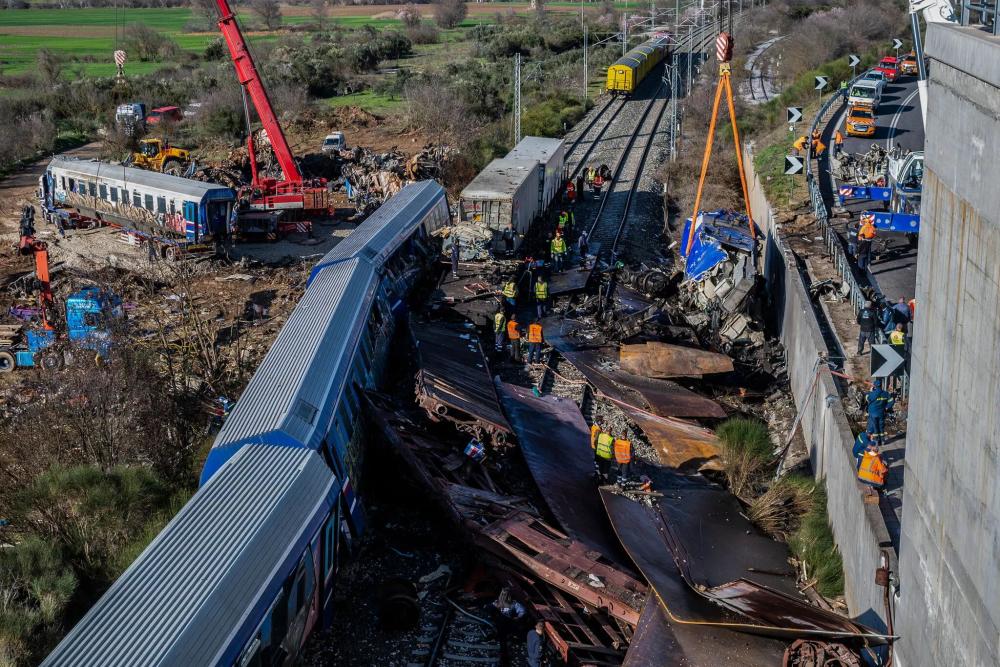
The site of the crash two years ago, after a passenger train collided with a freight train, killing 57 people. Angelos Tzortzinis for The New York Times
Two years later, questions remain about the exact circumstances of the crash.
A report by an independent rail and air investigation authority set up after the tragedy, whose results were made public on Thursday, found that delays in installing electronic signaling and remote surveillance systems played a key role in the collision, as did chronic understaffing and underfunding resulting from cutbacks enforced during Greece’s decade-long financial crisis.
The report also criticized the Greek authorities for flawed mapping of the crash site, a factor that it said had resulted in the loss of “potentially vital information.”
How have the authorities responded?
Greece has made some progress in improving railway safety since the crash. The infrastructure and transportation minister, Christos Staikouras, told Greek television on Thursday that modern signals and remote surveillance systems had been added along the entire Athens-to-Thessaloniki route after the accident.
But a cyclone then damaged the systems, leaving them not fully functional on “a significant part” of that route, Mr. Staikouras said.
He said the damage would be repaired by summer 2026 and that Greece was working on an plan agreed upon with the European Commission to improve training for railway workers.
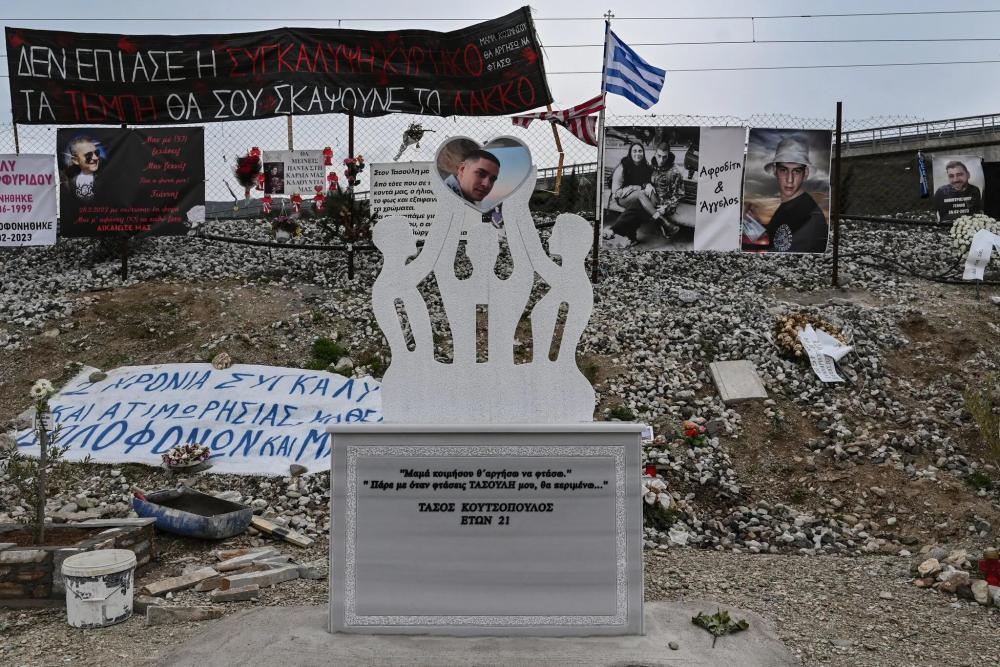
Flowers and banners to remember victims at the 2023 train crash site, near Tempe, Greece, on Thursday.Credit…Sakis Mitrolidis/Agence France-Presse — Getty Images
The authorities have said that a judicial investigation is continuing into who may be responsible for the crash. The dozens under investigation are mostly railway officials.
How did the public respond to the strike?
The demonstration in Athens started peacefully, with families pushing children in strollers and retirees joining students on the streets of the capital, holding banners calling for “justice” and “the guilty to pay.”
Selini Vazeou, 20, who is studying to be a teacher, said she felt compelled to attend the rally even though she feared that nothing would change. “I don’t believe our voice will be heard,” she said. “They always find a way to cover things up and keep their jobs,” she said of the government.
On the fringes of the protest, a group of elementary schoolchildren with their parents and teachers held a banner that read, “Justice now.” They chanted, “We’ll never forget the crime,” and “The new generation will avenge you.”
Violence erupted in the early afternoon after a few hundred hooded youths broke away from the main protest and threw firebombs and chunks of paving stone at police officers, who responded by firing tear gas. The police arrested 41 people.
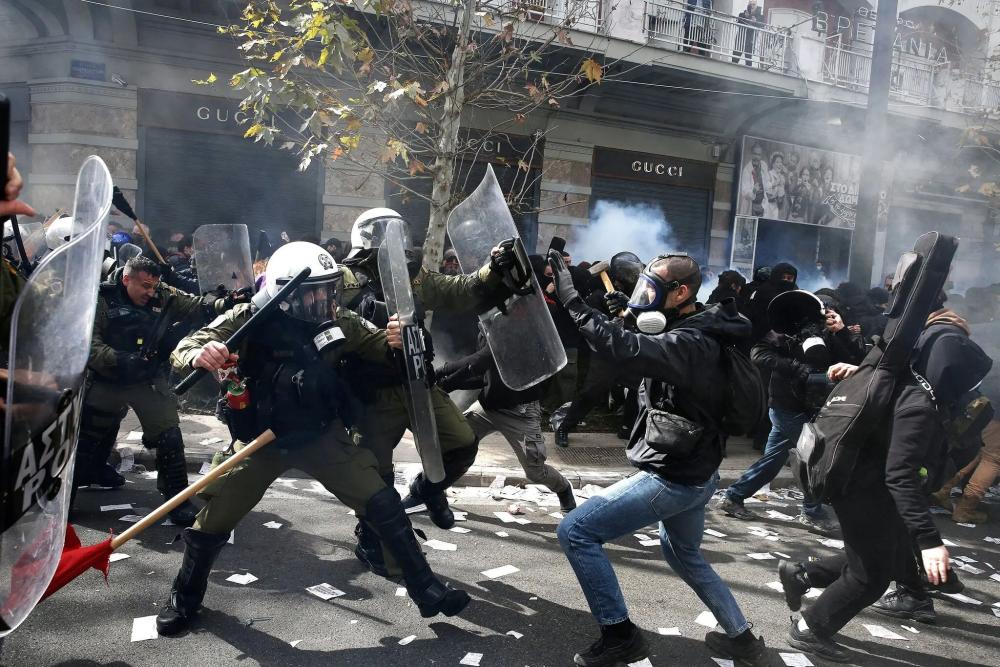
Some who broke away from the main Athens protest clashed with riot police officers who responded with tear gas.Credit…Yannis Kolesidis/EPA, via Shutterstock
As a helicopter circled overhead, people ran through the streets to escape the acrid smoke while emergency workers carried a woman who was struggling to breathe out of the fray.
Protesters chanted “Murderers!” in relation to the Greek authorities, as elite presidential guards were moved from their cubicles into the Parliament building, where some members of the public also took refuge.
Others cried, “I have no oxygen,” the last words one of the train passengers uttered in a call to emergency services that has gone viral on Greek social media in recent days.
Athina Vasiloglou, 20, a photography student, said the Tempe disaster encapsulated all that is wrong with the Greek state — “all the failings, all the dysfunction, wrapped up within one tragic incident.”
Stelios Deligiannis, 23, a sound engineer, said he used to travel on the Athens-Thessaloniki rail route to visit friends in the northern port city.
He said he had little hope of significant change — “the country and the state don’t inspire us to be positive” — but believed that justice will eventually prevail. “The truth can’t be hidden forever,” he said.
Niki Kitsantonis is a freelance correspondent for The New York Times based in Athens. She has been writing about Greece for 20 years, including more than a decade of coverage for The Times of the country’s financial, political and refugee crises, as well as broader social changes. An Oxford graduate, she is a contributor to the BBC World Service and was formerly the managing editor for the Kathimerini newspaper’s English edition.
ZNetwork is funded solely through the generosity of its readers.
Donate