
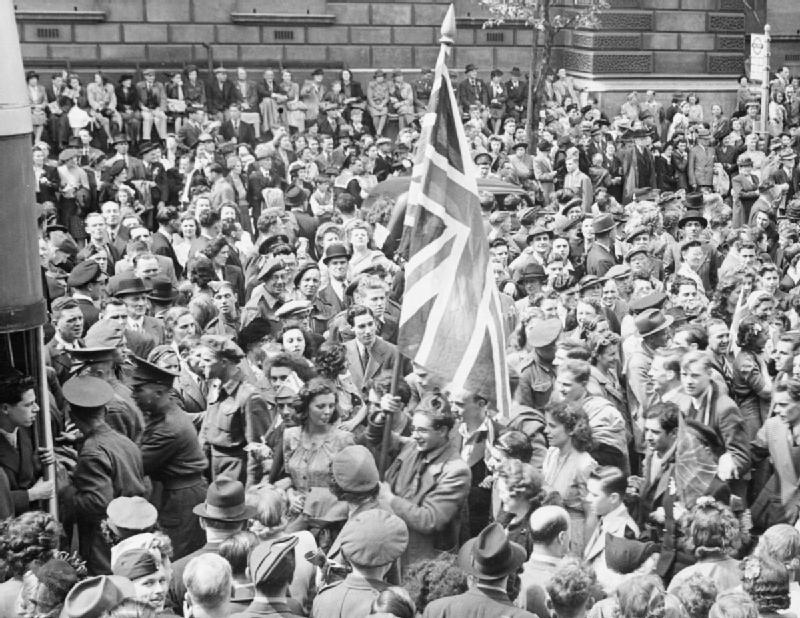
Few people have stopped to ask why a mere flag can be the cause of so much anger. In my opinion the question is a good – and logical – place to begin. After all, a flag, if nothing else, is a symbol of unity; even if that is the primitive unity of the tribe against the other. Thus the simple fact of the current unrest is an indication that all is not right within the English tribe. The reason, as is often the case, is in the definition. There is none.
For a symbol to mean anything we have to provide it with meaning. Certain species of knowledge are perhaps innate, but let’s assume that there are no cognitive structures that imbue a flag with any innate meaning beyond, perhaps, the Platonic reality of two-dimensional shapes. The question is thus, ‘What does the symbol of the English flag mean?’ Only once we know this can we hope to understand the current situation.
Well, a little more throat-clearing is required before we can offer a meaningful response. What is the English flag? Does it mean something different to fly the Union Jack rather than the St George’s cross? Or, more precisely, Is there a difference between the concepts of ‘Britishness’ and ‘Englishness’ that holds any meaning, and is this difference represented by either the Union Jack or the St George’s Cross? Is it true, as it is often held to be by the intellectual class and the mainstream media, that the St George’s cross is merely a symbol of hatred, a sure indicator that its bearer is little more than an uneducated, working-class, far-right, white, van-driving hooligan, removed only in time from the hooligan of the Church and King mobs, the jingoistic supporter of the British Imperialism of the 19th century, and the Falklands enthusiasts of the last century? If so, is this also true of the Union Jack? Or is there any place in the interpretation and definition of flag-wavers for that lover of England as described by Orwell (who, it may be noted, was always ‘English’ and never ‘British’) in his essay The Lion and the Unicorn? That England of ‘solid breakfasts and gloomy Sundays, smoky towns and winding roads, green fields and red pillar-boxes’ which ‘stretches into the future and the past, that persists, as in a living creature.’
Something perhaps surprising to those enlightened few who hold the preconceived conception of working class whites as inherently racist (a generalisation that would perhaps be impermissible in other contexts) might be the sheer number of Union Jacks currently in bloom across Newcastle upon Tyne. They probably just outnumber the St George’s cross, and their distribution seems consistent across the city. It also seems clear from the distribution of all flags – highly concentrated in council estates – that the notion of class, whether consciously or not, is somehow involved.
Presumably, in this context, the two symbols can be taken as representing the same thing; the question of what that thing is we must still strive to answer. And that the two are used synonymously suggests that the meaning of the flag protests is not simply bound up in versions of Little England Toryism or some nostalgic pining for the days of empire when the whites ruled and the brown faces knew their place. For one thing, the working class whites have always known their place in the history of this country. That is, they have always known that ‘only hunger can spur and goad them on to labour’; that while the slave is compelled to work, they have always been free to choose between labour and starvation, between degradation and death. It is therefore essential to determine what England is, before guessing at the root of the torrent of emotion aroused by the flag.
Once again we fall at the first hurdle: definition. Most nations, ancient and modern, have an agreed name. But we do not know whether this nation inhabits England, Britain, the British Isles, Albion or the UK. The only accurate nomenclature is the one that nobody employs – ‘the United Kingdom of Great Britain and Northern Ireland’. Shifting our lens from the macrocosm to the microcosm, it is also true to anyone who spends any time in one of England’s regions that there is often to be found as much ‘national’ feeling as in the national ‘regions’ of the Kingdom itself; as much, perhaps, as in the former city-states of Europe, or the former colonies of the Empire. The people of Newcastle are proudly Geordies before they are English – almost never the other way round – just as the Scottish are Scottish and the Welsh Welsh before they are British (never English), and just as the Romans are Roman before they are Italian.
Much of the issue of definition, then, derives from the essentially mythological and intangible nature of the country itself. Sure, the nations of Europe which were carved from the Habsburg carcass are the result of a variety of mythologies and pseudo-scientific, quasi-historical notions of an ‘indigenous people’ and a ‘national language’, but their formation was a very real historical event. Propaganda and myth-making aside, the Italian, for example, can refer to such material facts as a year of conception, a Garibaldi, a Mazzini, a father of the language, a national poet, a national history, a written constitution; and it is not surprising that a musical artist such as, say, Fabrizio de Andre can compose songs in Neopolitan, Roman, Sardinian, Genoese and yet be considered an authentic chronicler of Italian national life and history. Mussolini knew he needed to create Italians; but he and the Italians knew they belonged to Italy.
To who or what can the average Englishman refer? St George and the mythical Constitution? King Arthur and Robin Hood? Even our real national figures and institutions are raised beyond the realm of reason and critical discourse. The myth of Churchill, the cult of the Windsors, the sickly devotion to ‘Our NHS’ are obvious examples of this national character. Take the demise of our most recent monarch. Her death led to an outpouring of irrationality and stupidity that would befit any banana republic. The days of mourning, the prohibition on laughter and merriment, the overt solemnity and unctuous tones of reverence for a fellow mammal, the banal face shown on every telescreen; yet was any of this acknowledged? Of course not. The unquestioning fealty to national mythology means that the country cannot look its own history in the face.
It is telling that there is no book analogous to Howard Zinn’s A People’s History of the United States in England. Any history of England, or Great Britain, or this green and pleasant land, is a history of monarchy and privilege. The origin of this country is the polite and benevolent ceding of power from one ruling class to another. This, if nothing else, is the result of our own ‘glorious revolution’; or as E.P. Thompson called it: the ‘compromise’ between ‘the oligarchy of landed and commercial property.’ A people’s history of England would deny the essence of the myth. It would be to see the country for what it really is; and that we must never do. Thus Walter Bagehot wrote in his essentially religious study of that mythical beast the English Constitution:
‘As long as the human heart is strong and the human reason weak, royalty will be strong because it appeals to difuse feeling, and Republics weak because they appeal to understanding.
‘A secret prerogative is an anomaly – perhaps the greatest of anomalies. That secrecy is, however, essential to the utility of English royalty as it now is. Above all things our royalty is to be reverenced, and if you begin to poke about you cannot reverence it. When there is a select committee on the Queen, the charm of royalty will be gone. Its mystery is its life. We must not let in daylight upon magic.’
Or as Lady Bracknell phrased it in her recommendation on the beauty of ignorance – ‘Like a delicate exotic fruit; touch it, and the bloom is gone.’ The opprobrium aimed at the uneducated men and women of the council estates – the ‘flag-wavers’ – by the middle classes and the intellectual elite is merely a reaction against rationality. It is the survival mechanism of ignorance. They are saying to the working class: ‘don’t remind us of the exploitation and the torture on which our material comfort rests, on which our entire system is based; let us live in blissful ignorance. Know your place.’
This, after all, is their country. Hence when the flag is used by the right people there is no argument: the Proms, the Olympic ceremony (look no further than this for an example of the banana republic mentality; imagine, say, the Americans glossing over slavery in the same way the British gloss over the exploitation of the labourers, the entire uprooting and dislocation of a culture and society, the child torture, the forced-feeding of the Suffragetes, the Irish famine, the Gordon Riots, etc., and think what the enlightened might say), the Monarchy. All correct and proper displays of British (or English?) patriotism because the right people hold the flagpole. Thus the basis of the entire argument might simply be: whose country is this? The flags, then, are an expression of this schism.
The less obvious objects of veneration are even more telling. Take, for example, the monument to Charles Grey which serves as the nucleus of the city of Newcastle upon Tyne: the noble and progressive hero, the champion of democracy, who fought for the Great Reform Act, which denied the right to vote for the majority of people (including all women) in the city, his city. But this should not surprise anyone acquainted with the true history of this country. ‘In England,’ wrote Karl Polanyi in his critique of capitalist progress, The Great Transformation, ‘the middle-classes have always been strong enough to vindicate their rights alone; not even in their near-revolutionary effort in 1832 did they look to labor for support.’ The formation of modern Britain, exemplified and defined by Bagehot’s mythical ‘constitution’, was the reaction of the middle classes against the nascent class consciousness of the workers. As Polanyi continues: ‘Politically, the British working class was defined by the Parliamentary Reform Act of 1832, which refused them the vote; economically by the Poor Law Reform Act of 1834, which excluded them from relief and distinguished them from the pauper.’
The arrival of universal suffrage itself was no guarantee of universal equality. Rather, universal suffrage was, in every instance, a reactionary consolation offered to appease the revolutionary temper of popular action. Thus A.J.P. Taylor wrote in his biography of the great, though unusual, conservative (and father of universal suffrage), Bismarck, that, ‘to defeat the middle class politicians by universal suffrage turned out to be itself a middle-class idea.’ Or take the American example. The response of the US Government to the black revolt and turmoil of the Civil Rights movement was the Voting Rights Law in 1965 which guaranteed universal suffrage, and which was, as Zinn writes, ‘the federal government trying. . . to channel anger into the traditional cooling mechanism of the ballot box, the polite petition, the officially endorsed quiet gathering. Even this did not stop the protests, the riots, demanding deeper change, and in 1967 in the black ghettos of the country, came ‘the greatest urban riots in American history.’ Or as the anarchist and feminist Emma Goldman said on the subject of women’s suffrage:
‘The history of the political activities of man proves that they have given him absolutely nothing that he could not have achieved in a more direct, less costly, and more lasting manner… every inch of ground he has gained has been through a constant fight, a ceaseless struggle for self-assertion, and not through suf rage. There is no reason to assume that women… will be helped by the ballot.’
If we view the origins of modern Britain soberly and without recourse to ideological comforts, there is, in fact, a book analogous to Zinn’s history of America. It is E.P. Thompson’s The Making of the English Working Class. Just as Zinn inverted the traditional history of the American nation, and raised the average ‘American’ from the role of passive observer of great men to active participant in the progress of history, so Thompson argued that the history of democracy in Britain is the history of protests and riots; or ‘popular direct action’. That is, a people’s history:
‘Too often, since every account must start somewhere, we see only the things which are new. We start at 1789, and English Jacobinism appears as a by-product of the French Revolution. Or we start in 1819 and with Peterloo, and English Radicalism appears to be a spontaneous generation of the Industrial Revolution. Certainly the French Revolution precipitated a new agitation, and certainly this agitation took root among working people, shaped by new experiences, in the growing manufacturing districts. But the question remains – what were the elements precipitated so swiftly by these events? And we find at once the long traditions of the urban artisans and the tradesmen. . .
What the protestors are doing by hoisting the flag is continuing an argument that was never quite concluded to the satisfaction of the working men and women of this country. They are continuing the ‘long traditions’ of the tradesmen and urban artisans that go back at least to the argument between Cromwell’s officers and the Army agitators, exemplified by the revolutionary challenge of the Leveller Colonel Rainborough:
‘For really I think that the poorest he that is in England hath a life to live, as the greatest he; and therefore, truly, sir, I think it’s clear, that every man is to live under a government ought first by his own consent to put himself under that government. . . I should doubt whether he was an Englishman or no, that should doubt these things.’
The average flag-waver today might survey the state of the nation his ancestors fought for, and conclude, as did Rainborough, that he has ‘fought to enslave himself, to give power to the men of riches, men of estates, to make himself a perpetual slave.’ And the benign intellectual, the false-prophet, that arbiter of truth and untruth, right and wrong, might respond along with Ireton and Cromwell (if he is being honest), that, the worker has ‘fought for three things: the limitation of the prerogative of the Crown to infringe on his personal rights and liberty of conscience: the right to be governed by representatives, even though he has no part in choosing them: and the freedom of trading to get money, to get estates by – and of entering upon political rights in this way.’
It is an accepted truth among the poor of England that the politicians do not represent them; that they do what they want; that there is little use in voting; that it does not matter who is in power; that politics only serve the wealthy. How right were Ireton and Cromwell! It is often asked by the poor wretches, who watch in awe the machinations of their capricious masters, just as Odysseus watched the gods play sport with his life, with no control over their own future, ‘Who could come in and change this?’ But this seemingly innocuous question smuggles in some very serious assumptions. It assumes that change can only come about through the traditional channels – the electoral system, party politics, general elections, ‘the cooling mechanism of the ballot box’; it also assumes that chance more than anything is the defining character of political change. A good leader is therefore like a good monarch: pure luck. In this simple question we see how little the argument has proceeded since the days when Rights of Man was in the mouth of every worker. The only difference today – and the crucial difference – is that Paine isn’t banned but rather unread among the toiling masses.
But this is exactly as we should expect. Universal suffrage, as Goldman noticed, did nothing to change the underlying nature of the system. That is, politics for the most part must be a spectator sport – preferably, one that nobody watches; or, rather, is watched only by the right people – and the sport must be played by those who can be trusted; Plato’s philosophers, the guardians of truth and order, the false prophets: the politicians, the intellectuals, the mainstream media. This was best expressed by the influential moralist, and US foreign affairs adviser, Reinhold Neibuhr, who said that ‘rationality belongs to the cool observers’ while the common person follows no reason but faith. The cool observers, he explained, must recognise ‘the stupidity of the average man’ and provide the ‘necessary illusion and the ‘emotionally potent oversimplifications.’ Hence the vow of the latest Prime Minister after his election, ‘to restore service and respect to politics, end the era of noisy performance, tread more lightly on your lives.’ Universal suffrage merely represented a change in strategy from outright denial of the political rights of the masses to what Walter Lippmann referred to as the ‘manufacture of consent.’ Lippmann himself, writing in the 1920s, claimed that propaganda had already become ‘a regular organ of popular government’ and was steadily increasing in sophistication and importance.
The semblance of true democracy is more dangerous than its outright denial because it gives the aura of legitimacy to illegitimate authority. In his introduction to Animal Farm (which was banned in England) Orwell described the picture clearly. ‘The sinister fact about literary censorship in England,’ he wrote, ‘is
that it is largely voluntary. Unpopular ideas can be silenced, and inconvenient facts kept dark, without the need for any official ban’, because it ‘“wouldn’t do” to mention [a] particular fact.’ His reasoning is clear to anyone who is not trained to think a certain way, and some version of this truth is considered common knowledge on the council estates of this country:
‘The British press is extremely centralised, and most of it is owned by wealthy men who have every motive to be dishonest on certain topics. . . At any given moment there is an orthodoxy, a body of ideas which it is assumed that all right-thinking people will accept without question. It is not exactly forbidden to say this, that or the other, but it is “not done” to say it.’
And yet, why is this simple truism so clear to the least educated while a highly educated editor at a mainstream liberal newspaper will be convinced of his own free-thinking independence? Again, it serves us well to look at the definition.
What is education? Within the boundaries of the educational system, it is little more than a synonym for ‘indoctrination’, as most ‘uneducated’ people know. To be educated in this narrow sense is to internalise the necessary assumptions and values of the system. It is to become passive and submissive to the prevailing orthodoxy; that is, to learn that it is simply ‘not done’ to say certain things. It is no surprise, then, that the majority of the people in leading positions in the media and politics are not only privately educated but that they have all passed through the same few elite institutions on their way to their position of free-thinking autonomy. Simon Kuper’s study of the origins of Brexit, Chums is an amusing sketch of this fact. True education, on the other hand, is merely the ability to ask useful questions. That is, to think critically and without recourse to established truth. True education requires that certain facts are said, or challenged, despite the taboo. Something which, as most people realise, the educational system denies in favour of rote learning and submission to authority. In such an environment, curious or independent minds – those who think differently – are excluded from the system early. They are the behavioral problems, the problem children, the attention disorders, the idiots. They are uneducated. And, not knowing the correct and proper notions of Britishness, or Englishness, not knowing it is their duty to submit to the ‘cool observers’ and their ‘necessary illusions’, not knowing whose country this is and how it came to be theirs, they raise their flags and ask, ‘what about us?’ The perpetual underfunding of state indoctrination has created a swathe of uneducated men and women who are unable to see the inherent danger of asking questions. Or of trying something new: popular direct action.
Of course, being uneducated in the traditional sense is not a guarantee of true education. For one thing, propaganda is now more than Lippmann’s regular organ of popular government; it is popular government in the age when opinion polls decide the agenda and marketing is the predominant form of political canvassing. Immigration is clearly the issue. Any protestor will tell you that the problems of this country are due to immigrants. And from the perspective of the average person in a council estate, this is true.
Since the free-market revolution of the 1980s, and the neoliberal assault on the world economy, the poor white has everywhere around him witnessed the degradation of his life and community. The proud trades and their noble traditions are gone, along with the vital source of meaning and sense of place they provided for generations of men and women. The unions have been dismantled, their reputation destroyed; out of their ashes rises the army of the freelancer, the worker who knows only his own value, and the value he provides as a dutiful conscript in the consumer economy. He watches his children grow up poorer than he. He watches as they fight against the ceaseless current of free-market progress which, despite their efforts, drags them back into the ghettos, the slums. He sees the transfer of wealth from the poorest to the richest as clearly as any economist, and watches as the money never trickles down as keenly as any shareholder. He watches as the public services crumble around him; and the foodbanks multiply; and the bus prices increase; and the cost of living increases; and house prices tend to infinity; and the stock of social housing follows inversely; and the NHS withers; and the sheer hopelessness spreads like a virus. He watches all of this, and he blames the poor immigrants who, searching for a way out of the capitalist necessity (or categorical imperative) of exploitation, come to compete for the same finite resources – the same houses, the same degrading work, the same lack of opportunity, the same poor healthcare, the same hopelessness. And who can blame him? He looks back on the country he has lost, the mythology of the glorious land of God, on which the sun never sets, the country of Churchill, and Arthur, and George, and the NHS, and Elizabeth, and longs not for the days in which he was the ruler and the brown face was ruled, for he knows that never existed, but rather for the days when his valley was green, and there was hope.
Hope, above all, is the essence of anger. Tony Blair said New Labour must ‘engage people’s hopes as well as their fears’; in the United States, Barack Obama’s 2008 campaign message was simply ‘hope’. Well, hope for whom? Not for the workers; not for the poor. Yet it was the poor workers to whom they directed their slogans and their carefully designed marketing campaigns. And when nothing changed? Whence comes Trump? Farage? Hitler? And yet, the intellectuals will debate among themselves – just as physicists debate the definition of gravity – why the poor whites seek salvation in the strongman who offers change outside of the traditional channels; who stands up to corruption and elitism, and ‘says what he really means’.
The fact is that the notion of class has been removed from mainstream politics. There is no longer a workers’ party in the United Kingdom, merely the illusion of one, a faint but indiscernible echo from the past. A living corpse; animate but dead. Rather, class solidarity has been replaced by a community of tribes, each defined and bounded by their ‘identity’ or ‘culture’. Segregation is no longer denied but championed in the name of equality and diversity. This is called ‘multiculturalism’, and to deny it, or even to question its value, is to invite accusations of racism and bigotry. The basis of the modern free-speech debate is essentially the right to offend minority cultures (or, rather, the right of certain minority cultures, or, let’s say, religions, to be above offence, or, let’s say, criticism and ridicule); in the secular world, offence has replaced blasphemy, and multiculturalism is the new religion of the state. Cultural identity, whatever that may be, and whoever we allow to define it, is now the state-approved form of solidarity. For all its profound talk of progressivism, ‘multiculturalism’ – or ‘pluralistic monoculturalism’, as Nobel-prize winner Amartya Sen calls it – is merely another way of managing the anger that could be better aimed at a deeply corrupt system, in which political control is sub-contracted out to community leaders in return for submission to state institutions. It is the colonial system inverted. Rather than work together, minority communities are encouraged to compete against each other for resources; and the currency of their ideals is not to be found in the value of their argument, or the principles of their movement, but in the intensity of their self-pity. Victimhood is now the basis of politics; and some are better at it than others.
In this brave new world, there is one culture, or ‘identity’, which is completely discounted: working-class culture. Not only is this culture ignored, it has been effectively destroyed; and the very fact of its destruction is ignored and mocked by the enlightened priesthood of this new multiculturalism. And it is the ‘Left’ – the free-thinkers, the champions of ‘inclusivity and diversity’ – who mock them! Who call them racists and Fascists, and deny them their history. A history of which they themselves are profoundly ignorant, but, being educated, they know they must not discuss. It is they who set the limits of legitimate discourse, and it is they who decide which cultures are to be favoured and which are not. How much of the present slide towards Fascism is traceable to the ‘anti-Fascism’ of today? In the vacuum created by the demise of class-politics and the ascent of segregated ‘multiculturalism’, the poor white, free from indoctrination but deeply ignorant, with no outlet for collective action, and missing a culture of intellectual discourse long-since destroyed, is unsure how to react: to compete as a victim, the self-pitying cries of ‘What about us?’; or to take to the streets and demand change – popular direct action: flag-waving, riots, mobs.
Class, after all, is not something that can be ignored out of history; class conflicts are the texture of historical progress whether we define them or not. The poor white, the flag-waver defending his concept of Englishness, or Britishness, is merely defending his culture and history. That which has been ignored in favour of popular mythology and middle-class idealism; that is, the history of England – the ‘necessary illusion.’. But the principle that human nature is nothing more than a product of history and given social relations removes all barriers to coercion and manipulation by the powerful. Class solidarity is merely the expression of something deeper.
Even a cursory glance through history tells us that popular action does not form spontaneously out of a vacuum but explodes into life when suitable conditions arise. One essential condition is an illegitimate authority which exists to subjugate and exploit one group in its own material self-interest. Watered and nurtured by continued and increasing exploitation and neglect to a saturation point, these seeds occasionally sprout the flowers of riots, violence and, if everything is just right, popular action. Thus not all examples of riots and ‘mob’ action are conscious forms of political or revolutionary feeling, but as Thompson noted in his analysis of the era of riots and ‘the rabble’, ‘behind every such form of popular direct action some legitimising notion of right is to be found’. The refusal of the elite institutions – the mainstream media, intellectuals, politicians – even to engage with the idea that there is some ‘notion of right’ underlying the flag protests is not surprising. It is the history of the country.
Therein lies the ‘legitimising notion.’ It is the demand for a country which represents the will of the majority who inhabit it, not just those with wealth and property, nor the dead. It is the demand for equality, not on the basis of minority status, or colour, or wealth, or sex, but on the basis of our shared humanity. It is a demand for the recognition of the true history of this nation. It is the demand for freedom from tyranny and oppression. It is the demand for true freedom of thought and expression. Truly it is the same demand for that which was given by Tom Paine in Rights of Man: a constitution which represents the character of this nation and the ideals for which its people stand. This is what is meant when the flag-wavers refer to the ‘Western’ ideals, whether they are conscious of it or not. That the flag is used to represent these ideals rather than Rights of Man is merely an expression of the primitive state of modern discourse, in which there is no common stock of knowledge, no Bible to which we can all refer, as did Paine, and images are the predominant form of communication.
ZNetwork is funded solely through the generosity of its readers.
Donate
4 Comments
” imagine, say, the Americans glossing over [in the Olympic ceremony] slavery in the same way the British gloss over the exploitation of the labourers…”
We don’t have to imagine it. The US has glossed over the unsavoury aspects of its history in the several times they have held the Olympics. There were no tableaux depicting slavery or the genocides of native Americans or Vietnamese at the Atlanta Olympics in 1996. Who doesn’t do this and why would you expect them to at this event? I don’t remember the last opening ceremony in Paris mentioning Algeria, Indo-China or Vichy, nor anybody calling that they should. Anyway, we’ll have the Trump Olympics in LA next – it will be interesting what is in those ceremonies.
It was my intention to point out the hypocrisy – ‘and think what the British middle-class would think’. Perhaps I should have made that more clear! My point was not that other nations don’t do this, but there is an awareness when they do. The British workers didn’t mind the glorification of the industrial revolution in a way that I can’t imagine, say, the indigenous Americans not minding the standard history of the US.
“It is telling that there is no book analogous to Howard Zinn’s 𝘈 𝘗𝘦𝘰𝘱𝘭𝘦’𝘴 𝘏𝘪𝘴𝘵𝘰𝘳𝘺 𝘰𝘧 𝘵𝘩𝘦 𝘜𝘯𝘪𝘵𝘦𝘥 𝘚𝘵𝘢𝘵𝘦𝘴
in England.”
Well, there is 𝘈 𝘗𝘦𝘰𝘱𝘭𝘦’𝘴 𝘏𝘪𝘴𝘵𝘰𝘳𝘺 𝘰𝘧 𝘌𝘯𝘨𝘭𝘢𝘯𝘥 written by A.L. Morton, published in 1938 and apparently still in print. I haven’t read it so I don’t know how much it is or isn’t analogous to Zinn. According to the blurb: “This classic work lays out the main outlines and most important turning points of British history – from the point of view of the ordinary people.”
Perhaps what’s telling is the fact that few people have heard of it. Also very telling about England may be that there is 𝘈 𝘗𝘦𝘰𝘱𝘭𝘦’𝘴 𝘏𝘪𝘴𝘵𝘰𝘳𝘺 𝘰𝘧 𝘉𝘳𝘪𝘵𝘢𝘪𝘯 by Rebecca Fraser, the daughter of Lady Antonia Fraser, whose “people” in her history seem to be kings, queens, other famous individuals and battles.
The book you mention is not analogous, in my judgement, because it doesn’t account for the role the people played in the formation of the country and its character. It involves the people only insofar as they existed during the events discussed. The analogy I draw between Zinn and Thompson (and I may be ignorant of other books!) is based on the active role the workers played in the formation of their nation. This is something not acknowledged in England. And the age of the book you mention is at least suggestive. (Nothing since 1945!) I agree that it is telling that the book is unheard of. But this generalises. The point is that the true (in my judgement) history of England, or at least the role the workers played in its formation, is almost completely unknown.
Your second comment is my point: the people of England (or Britain!) are exactly those whom Fraser mentions – monarchs and great individuals. This is because, as far as she is concerned, England is their country; they ‘fought’ for it. It was their revolution. It is their ‘constitution’.