


The following has been edited for clarity and length.
Norman Solomon: You’ve downplayed the importance of the individual in history. But the United States now has as president an individual who transformed power relations and the political landscape.
Karl Marx: I can assure you that he did not do that by himself. Power relations are class relations. And by the way, I never said individuals are irrelevant to history. I exhorted individuals to get involved in changing history.
NS: President Trump has rolled back gains from the last hundred years and more. Also, he’s mentally unstable, to put it mildly.
KM: The basics still hold. As I wrote in 1869 about a situation in France where a cult existed around a tyrant, the class struggle “created circumstances and relationships that made it possible for a grotesque mediocrity to play a hero’s part.”
NS: But now one highly dangerous and unhinged person has taken control of the U.S. government. And he got there with a majority of votes of the working class. It’s been a huge shock to have a virtual psychopath as president.
KM: Those you would call liberals like to disconnect such poisoned flowers from their historic roots. Victor Hugo was like that, as with so many commentators in your day, endlessly heaping their derision on the despicable despot. Hugo excelled at bitter and witty invective against Louis-Napoléon Bonaparte after the coup d’etat. As I pointed out, “The event itself appears in his work like a bolt from the blue. He sees in it only the violent act of a single individual. He does not notice that he makes this individual great instead of little by ascribing to him a personal power of initiative unparalleled in world history.”
NS: Actually, Trump does seem to insanely wield destructive power in ways unparalleled in world history.
KM: But he did not obtain that power through his own will. If you fixate on an individual personality, you’ve lost the historical plot.
NS: One sociologist, Dylan Riley, recently commented: “From a Marxist perspective, much of the left-liberal critique of contemporary American politics can be viewed as essentially petty bourgeois. It revolves around moral arguments advocating for equal opportunities and less social division and conflict.” And he added: “I think that Marx’s central point on this is to emphasize the importance of class struggle as the mechanism through which any class compromise is actually imposed. And if you miss that point then your politics are disabled from the get-go.”
KM: First, I’m glad to say that I am not a “Marxist,” given how much idiotic rubbish has been babbled by some who so label themselves. You can look it up, “Ce qu’il y a de certain, c’est que moi, je ne suis pas Marxiste.” But that aside – yes, certainly, there is just no way to reasonably talk oneself around the primacy of class struggle. The phrase might sound overly polemical to petty-bourgeois ears in the America of the 21st century, but that’s the most powerful engine driving history. You can deny or evade it, but you can’t really avoid it.
NS: Trump is a voraciously narcissistic capitalist, but he’s also flagrantly racist and misogynist.
KM: Of course, capitalism functions to oppress and divide the working class. Systems of racism mean more profits for the few. Likewise, women are exploited and underpaid for their labor. I wrote about this extensively.
NS: The horrible fact remains that we are now oppressed by an extremely reactionary vicious president aspiring to become an unlimited tyrant. And he harbors special hatred for women and people of color, with horrendous social impacts.
KM: Class struggle failed to result in the needed remedies to appalling human conditions, with some special victimizations within the working class. On this point, we could leave the last words to my comrade Friedrich Engels, who wrote in 1890: “The ultimately determining element in history is the production and reproduction of real life. Other than this neither Marx nor I have ever asserted. Hence if somebody twists this into saying that the economic element is the only determining one, he transforms that proposition into a meaningless, abstract, senseless phrase. The economic situation is the basis, but the various elements of the superstructure – political forms of the class struggle and its results, to wit: constitutions established by the victorious class after a successful battle, etc., juridical forms, and even the reflexes of all these actual struggles in the brains of the participants, political, juristic, philosophical theories, religious views and their further development into systems of dogmas – also exercise their influence upon the course of the historical struggles and in many cases preponderate in determining their form.”
NS: So, you and Engels agreed that many different forces shape history, yet one individual can conceivably make all the difference at certain junctures?
KM: Fred clarified his point further this way: “We make our history ourselves, but, in the first place, under very definite assumptions and conditions. Among these the economic ones are ultimately decisive. But the political ones, etc., and indeed even the traditions which haunt human minds also play a part, although not the decisive one.” And he went on: “There are innumerable intersecting forces, an infinite series of parallelograms of forces which give rise to one resultant – the historical event.”
NS: Well, right now the historical event that keeps happening often seems to be dominated one way or another by Donald Trump.
KM: Even if it seems that way, the main propellant of a current event can often look obvious while unfolding as optical illusion. As I noted back in 1843, “The demand to give up the illusions about its condition is the demand to give up a condition that needs illusions.” Never forget that a few live in obscene luxury while billions live in immiseration and billions of others are barely able to scrape together the essentials of life. The struggle between classes might seem an antiquated concept, but nonetheless it is the main factor that undergirds history, past, present and future.
NS: Some people complain that’s what you always say.
KM: That’s because it’s always true.
Norman Solomon is the national director of RootsAction and executive director of the Institute for Public Accuracy. The paperback edition of his book War Made Invisible: How America Hides the Human Toll of Its Military Machine includes an afterword about the Gaza war. His new book, The Blue Road to Trump Hell: How Corporate Democrats Paved the Way for Autocracy, is free in e-book formats.

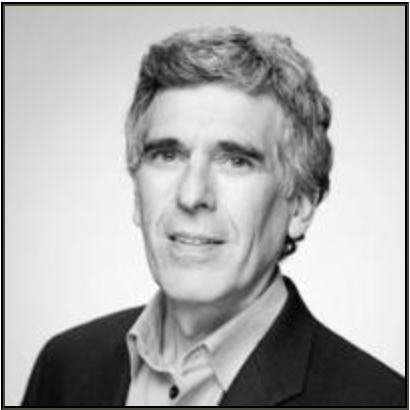
Norman Solomon is the national director of RootsAction.org and executive director of the Institute for Public Accuracy. The paperback edition of his latest book, War Made Invisible: How America Hides the Human Toll of Its Military Machine, includes an afterword about the Gaza war.
ZNetwork is funded solely through the generosity of its readers.
Donate




