
I’m skilled at eluding the fetal crouch of despair—because I’ve been working on climate change for thirty years, I’ve learned to parcel out my angst, to keep my distress under control. But, in the past few months, I’ve more often found myself awake at night with true fear-for-your-kids anguish. This spring, we set another high mark for carbon dioxide in the atmosphere: four hundred and fifteen parts per million, higher than it has been in many millions of years. The summer began with the hottest June ever recorded, and then July became the hottest month ever recorded. The United Kingdom, France, and Germany, which have some of the world’s oldest weather records, all hit new high temperatures, and then the heat moved north, until most of Greenland was melting and immense Siberian wildfires were sending great clouds of carbon skyward. At the beginning of September, Hurricane Dorian stalled above the Bahamas, where it unleashed what one meteorologist called “the longest siege of violent, destructive weather ever observed” on our planet. The scientific warnings of three decades ago are the deadly heat advisories and flash-flood alerts of the present, and, as for the future, we have hard deadlines. Last fall, the world’s climate scientists said that, if we are to meet the goals we set in the 2015 Paris climate accord—which would still raise the mercury fifty per cent higher than it has already climbed—we’ll essentially need to cut our use of fossil fuels in half by 2030 and eliminate them altogether by mid-century. In a world of Trumps and Putins and Bolsonaros and the fossil-fuel companies that back them, that seems nearly impossible. It’s not technologically impossible: in the past decade, the world’s engineers have dropped the price of solar and wind power by ninety and seventy per cent, respectively. But we’re moving far too slowly to exploit the opening for rapid change that this feat of engineering offers. Hence the 2 a.m. dread.
There’s good news, too: as the crisis grows more obvious, far more people are joining in the fight. In the year since the scientists imposed that deadline, we’ve seen the rise of the Green New Deal, the cheeky exploits of Extinction Rebellion, and the global spread of the school strikes started by the Swedish teen-ager Greta Thunberg. It seems that there are finally enough people to make an impact. The question is, what levers can we pull that might possibly create change within the time that we need it to happen?
Some of us have begun to change our own lives, pledging to fly less and to eat lower on the food chain. But, whatever our intentions, we’re each of us currently locked into burning a fair amount of fossil fuel: if there’s no train that goes to your destination, you can’t take it. Others—actually, often the same people—are working to elect greener candidates, lobbying to pass legislation, litigating cases headed for the Supreme Court, or going to jail to block the construction of pipelines.
These are all important efforts, but we need to do more, for the simple reason that they may not pay off fast enough. Climate change is a timed test, one of the first that our civilization has faced, and with each scientific report the window narrows. By contrast, cultural change—what we eat, how we live—often comes generationally. Political change usually involves slow compromise, and that’s in a working system, not a dysfunctional gridlock such as the one we now have in Washington. And, since we face a planetary crisis, cultural and political change would have to happen in every other major country, too.
But what if there were an additional lever to pull, one that could work both quickly and globally? One possibility relies on the idea that political leaders are not the only powerful actors on the planet—that those who hold most of the money also have enormous power, and that their power could be exercised in a matter of months or even hours, not years or decades. I suspect that the key to disrupting the flow of carbon into the atmosphere may lie in disrupting the flow of money to coal and oil and gas.
Following the money isn’t a new idea. Seven years ago, 350.org (the climate campaign that I co-founded, a decade ago, and still serve as a senior adviser) helped launch a global movement to persuade the managers of college endowments, pension funds, and other large pots of money to sell their stock in fossil-fuel companies. It has become the largest such campaign in history: funds worth more than eleven trillion dollars have divested some or all of their fossil-fuel holdings. And it has been effective: when Peabody Energy, the largest American coal company, filed for bankruptcy, in 2016, it cited divestment as one of the pressures weighing on its business, and, this year, Shell called divestment a “material adverse effect” on its performance. The divestment campaign has brought home the starkest fact of the global-warming era: that the industry has in its reserves five times as much carbon as the scientific consensus thinks we can safely burn. The pressure has helped cost the industry much of its social license; one religious institution after another has divested from oil and gas, and Pope Francis has summoned industry executives to the Vatican to tell them that they must leave carbon underground. But this, too, seems to be happening in too-slow motion. The fossil-fuel industry may be going down, but it’s going down fighting. Which makes sense, because it’s the fossil-fuel industry—it really only knows how to do one thing.
So now consider extending the logic of the divestment fight one ring out, from the fossil-fuel companies to the financial system that supports them. Consider a bank like, say, JPMorgan Chase, which is America’s largest bank and the world’s most valuable by market capitalization. In the three years since the end of the Paris climate talks, Chase has reportedly committed a hundred and ninety-six billion dollars in financing for the fossil-fuel industry, much of it to fund extreme new ventures: ultra-deep-sea drilling, Arctic oil extraction, and so on. In each of those years, ExxonMobil, by contrast, spent less than three billion dollars on exploration, research, and development. A hundred and ninety-six billion dollars is larger than the market value of BP; it dwarfs that of the coal companies or the frackers. By this measure, Jamie Dimon, the C.E.O. of JPMorgan Chase, is an oil, coal, and gas baron almost without peer.
But here’s the thing: fossil-fuel financing accounts for only about seven per cent of Chase’s lending and underwriting. The bank lends to everyone else, too—to people who build bowling alleys and beach houses and breweries. And, if the world were to switch decisively to solar and wind power, Chase would lend to renewable-energy companies, too. Indeed, it already does, though on a much smaller scale. (A spokesperson for Chase said that the bank has committed to facilitate two hundred billion dollars in “clean” financing by 2025, but did not specify where the money will go. The bank also pointed out that it has installed 2,570 solar panels at branches in California and New Jersey.) The same is true of the asset-management and insurance industries: without them, the fossil-fuel companies would almost literally run out of gas, but BlackRock and Chubb could survive without their business. It’s possible to imagine these industries, given that the world is now in existential danger, quickly jettisoning their fossil-fuel business. It’s not easy to imagine—capitalism is not noted for surrendering sources of revenue. But, then, the Arctic ice sheet is not noted for melting.
The last minutes of a football game are different from the rest; if you are far enough behind, you dispense with caution. Since gaining a few yards cannot help you, you resort to more desperate, lower-percentage plays. You heave the ball and you hope, and, every once in a while, you win. So a small group of activists has begun probing the financial industry, looking for chances to toss the kind of Hail Mary pass that could yet win this game. The odds are definitely long, but just talking with these groups has begun to lift my despair.
Banking
Around the turn of the century, a California-based environmental group called Rainforest Action Network (ran) was trying to figure out how to slow down the deforestation of the Amazon. It found that Citigroup, then the largest bank on earth, was lending to many of the projects that cut down trees for pastureland, and so it ran a campaign that featured celebrities cutting up their Citi credit cards. Eventually, Citigroup joined with other banks to set up the Equator Principles, which the participants call a “risk management framework” designed to limit the most devastating lending.
At some point in the campaign, ran started paying twenty-four thousand dollars annually to rent a Bloomberg terminal, the financial-information monitor that sits on any broker’s desk, allowing her to track stock prices, bond issues, and deals of every type. “Our Bloomberg rep is always flabbergasted when he visits us,” Alison Kirsch, a climate-and-energy researcher with ran, told me. “Essentially, we use it backwards.” The terminal will spit out the current league tables, which rank loan volume: showing, for example, which banks are lending the most money to railroad builders or to copper miners—or to fossil-fuel companies. “The banks all want to be at the top of those tables,” Kirsch said. “It’s how they keep score.” But ran turns the tables upside down. Every year, after six months of detailed analysis, it publishes a thick report called “Banking on Climate Change,” which ranks the financial giants according to how much damage they’re doing.
This year’s edition, the tenth, shows Chase in the lead, as usual, followed by Wells Fargo, Citi, and Bank of America. Two Japanese banks and the British giant Barclays are also among the top ten, but it’s mostly a North American club—three Canadian banks round out the list. And the trend is remarkable: in the three years since the signing of the Paris climate accord, which was designed to help the world shift away from fossil fuels, the banks’ lending to the industry has increased every year, and much of the money goes toward the most extreme forms of energy development. In the lead-up to the Paris talks, a team of scientists published a big paper in Nature that listed the planet’s most catastrophic deposits of hydrocarbons, the ones that should be left in the ground at all costs. It included Arctic oil and the tar-sands sludge found in northern Alberta; Chase has aggressively funded the extraction of both. According to ran, the bank’s largest single energy-sector client is TC Energy (until recently known as Transcanada), which is trying to build the Keystone XL pipeline, which would stretch from the tar sands to the Gulf of Mexico—a project that President Obama rejected and that the nasa scientist James Hansen said would be the start of a “game over” scenario for the climate. (Chase would not comment.) Jason Opeña Disterhoft, ran’s senior campaigner, told me, “It’s a climate moment. We’re in a process, as a society, of naming the actors most responsible for driving the climate crisis, and banks are absolutely on that list. And Chase—they’re No. 1 with a bullet, right at the top of the list of who should be held accountable.”
So what would happen if, tomorrow, Chase announced that it was going to phase out lending to the fossil-fuel industry—probably first by restricting loans for particular projects, and then by ending general corporate lending and banning the underwriting of new debt and equity for fossil-fuel companies? “Wells Fargo and Citi would follow within days,” according to Tim Buckley, a former managing director at Citi, who now serves as the director of energy-finance studies for Australasia at the Institute for Energy Economics and Financial Analysis (I.E.E.F.A.), a Cleveland-based nonprofit research group. In fact, “they’d look to go one step further, so as to pretend they weren’t really sheep. And this would have global ramifications—the music would stop, very suddenly.” Wall Street, Buckley said, “can be very deaf to warnings for years, but the financial-market lemmings will suddenly act in unison” once the biggest players send a signal. Everyone knows that the fossil-fuel era will come to an end sooner or later; a giant bank pulling back would send an unmistakable signal that it will be sooner. The biggest oil companies might still be able to self-finance their continuing operations, but “the pure-play frackers will find finance impossible,” Buckley said. “Coal-dependent rail carriers and port owners and coal-mine contracting firms will all be hit.”
Done badly, this halt could wreak chaos: the governor of the Bank of England, Mark Carney, warned four years ago that the “stranded assets”—the coal, gas, and oil that need to be left underground—amount to a twenty-trillion-dollar “carbon bubble” that far exceeds the housing bubble that sparked the 2008 financial conflagration. Carney has been diligently trying to deflate the bubble ever since, in hopes of avoiding another crisis. That’s why it might make sense for Chase and the others to first announce that they were ending loans for the expansion of the fossil-fuel industry, while continuing to extend credit for ongoing operations. “If Chase does what we’re asking for and other banks follow,” Alison Kirsch said, “the impacts of that social signal would be significant immediately, while the economic impacts from transitioning off of fossil fuels would happen over time.”
And it must be said that, even if bursting this bubble did short-term damage to the economy, that damage would pale next to the kind of wreckage forecast for the planet if the fossil-fuel industry continues on its current path for another decade. Even in economic terms, twenty trillion dollars is paltry compared with the sums that experts now think unabated global warming would consume. At the moment, the planet is on track to warm more than three degrees Celsius by century’s end, which one recent study found would do five hundred and fifty-one trillion dollars in damage. That’s more money than currently exists on the planet.
Is there any chance that Chase might halt its fossil-fuel lending? Perhaps not. The bank grew into a global giant under the leadership of David Rockefeller, the grandson of John D. Rockefeller, who established the country’s original oil fortune, by founding the Standard Oil Company, one of whose successor companies is ExxonMobil. For many years, the Chase board’s lead director has been Lee Raymond, who served as the C.E.O. of Exxon during the years when it was working hardest to cast doubt on the reality of global warming. (In 1997, Raymond gave an infamous speech, in Beijing, in which he claimed that the planet was probably cooling, and that, in any event, it was “highly unlikely that the temperature in the middle of the next century will be affected whether policies are enacted now or twenty years from now.”) However, in 2016, the Rockefeller Family Fund announced that it would divest from fossil fuels, singling out Exxon’s conduct as being “morally reprehensible” and adding that “we must keep most of the already discovered reserves in the ground if there is any hope for human and natural ecosystems to survive and thrive in the decades ahead.”
The director of the Rockefeller Family Fund, Lee Wasserman, says that it’s time to take on the reputations of the bankers, in much the same way that the Sackler family has increasingly been shunned for its role in the opioid crisis. “When the neighborhood tavern serves up several rounds to an already drunken patron, and the inebriated person rams into a minivan loaded with Little Leaguers, it’s not only a tragedy—the bar may be sued out of business, and the bartender could face jail time,” he said. “How much morally worse is it to enable the expansion of a deadly fossil-fuel industry, whose business model is certain to cause the death and suffering of millions of people and the loss of much of the earth’s diversity? Big, sophisticated banks such as Chase and Wells Fargo understand climate science and know that our current path is leading towards climate catastrophe. Yet their machine of finance cranks along.”
Some activists have begun to envision a campaign to pressure the banks. Chase’s retail business is a huge part of its enterprise, as is the case with Citi, Wells Fargo, and the others. “One of the major risk factors going forward for these guys is generational,” Disterhoft said. “You have a rising generation of consumers and potential employees that cares a lot about climate, and they’re going to be choosing who they do business with factoring that into account.” In 2017, when Twitter-based activists accused Uber of exploiting Trump’s anti-Muslim travel ban, rather than protesting it, it took just hours for downloads of the Lyft app to surge, for the first time, past those of the Uber app. Switching banks is harder, but, given the volume of credit-card solicitations that show up in the average mailbox every year, probably not much.
A few of the big European banks have begun taking steps away from fossil fuels already. In June, the French giant Crédit Agricole announced a change that Disterhoft calls the “gold standard to date”: the bank said that it would no longer do business with companies that are expanding their coal operations, and that, by 2021, its coal-business clients in the developed world would have to produce a plan for getting out of the business by 2030; its clients in China by 2040; and its clients everywhere else by 2050. BankTrack, an N.G.O. headquartered in the Netherlands, called the announcement a “welcome first step,” and, indeed, the restrictions have clearly begun to bite. In late June, an Indonesian power-company executive said, “European banks have said they don’t want to finance coal projects for a while. Japanese followed and now Singapore. About eighty-five per cent of the market now don’t want to finance coal-power plants.” He added, “Coal-power-plant financing is very challenging.” According to the I.E.E.F.A.’s Buckley, Crédit Agricole’s move helps explain why, for instance, Vietnam, which was supposed to be a key market for new coal-fired power plants, instead grew its “solar base tenfold in the twelve months to June, 2019.” At this point, the coal business is already on its heels, so campaigners are increasingly focussed on gas and oil, but C.A.’s move shows that big, quick shifts are possible.
Asset Management
Every year, Larry Fink, the C.E.O. of BlackRock, writes a letter to the C.E.O.s of the companies in which his company invests. This year, his letter was about capitalism with a “purpose.” Along with making a profit, he counselled, the C.E.O.s should be running their businesses to help “address pressing social and economic issues.” Given that the rapid heating of the planet would seem to meet that criteria, some have suggested that Fink should look at his own operation; BlackRock is the world’s largest investor in coal companies, coal-fired utilities, oil and gas companies, and companies driving deforestation. No one else is trying as diligently to make money off the destruction of the planet.
And no one else has as powerful a remedy at hand. Most of the money that pension funds and endowments and individuals invest at BlackRock goes into passive funds, which track a stock-market index, rather than trying to beat the averages. BlackRock, in essence, just buys the market. If the firm simply decided to exclude fossil-fuel stocks from its main funds—or if it even just decided to underweight the stocks—it would send a message like no other. (According to the I.E.E.F.A., it would also produce better returns for its clients. A study that the group published in early August notes that BlackRock investors lost ninety billion dollars over the past decade by staying heavily invested in fossil fuels, even as that sector dramatically underperformed compared to the rest of the market.)
The firm couldn’t make this change overnight. Casey Harrell, a senior campaigner at the Australia-based Sunrise Project—a nonprofit that coördinates a campaign called BlackRock’s Big Problem, which aims to pressure the firm to change its investing strategy—concedes that BlackRock simply holds too much stock: nine per cent of BP, seven per cent of Exxon. “If they had to sell it all at once, they’d get a bad price, and that would open them to legal exposure. But five years is absolutely doable,” Harrell told me. Tom Sanzillo, the finance director at the I.E.E.F.A., told me that he made just that suggestion at this year’s BlackRock shareholders’ meeting, in Manhattan. Sanzillo is not a rain-forest activist or a typical climate campaigner; he is a rumpled sixty-four-year-old veteran of the finance industry, who once served as the acting comptroller in charge of New York State’s two-hundred-billion-dollar pension fund. Here’s his account of what would happen if BlackRock decided to take an aggressive stand and announce that it would slowly start to exclude fossil-fuel stocks from the basket of equities in its biggest funds: “The stock market would react by driving oil- and gas-stock prices down for both private companies and those state-owned enterprises on the stock market to new lows—institutional investors would understand that continued investment in the fossil-fuel sector meant more volatility, lower returns, and negative future outlook.”
The sell-off in fossil-fuel stocks would be only half the story, though, Sanzillo says. Money would instead pour into renewable energy, and, since solar and wind power will be increasingly cheaper than fossil fuels, that shift would, in turn, “prompt substantial gains economy-wide, with manufacturing and other energy-intensive stock prices increasing.” The public-finance desks at every major bank in the world would issue economic-outlook alerts for every country whose economy depends on producing fossil fuels. Russia, Saudi Arabia, Iran, Iraq, Venezuela, Australia, and Canada would risk seeing their bonds downgraded. But four-fifths of the world’s population lives in nations that currently pay to import fossil fuels, and their economies would benefit, as ample financing would allow them to transition relatively quickly to low-cost solar and wind power. It wouldn’t just be a market signal, Sanzillo said; it would be a “glaring red rocket,” a signal that the “fossil-fuel industry has the wind in its face and been kicked in the ass.” How large would that signal be? The assets under BlackRock’s management are worth nearly seven trillion dollars, making it, by some measures, the third-largest economy on earth, after the United States and China, and ahead of Japan.
If the damage to BlackRock’s core business from fossil-fuel divestment would be manageable—how many people are going to go out of their way to demand some climate destruction in their passive index funds, after all?—why isn’t the company already moving (and Vanguard and Fidelity and State Street with it)? BlackRock grew to its mammoth size in the years after the financial crisis, in part because it wasn’t designated by the government as a “systematically important financial institution,” and so it was spared some of the regulation that big investment houses loathe. That, obviously, could change. And Harrell referred me to a 2017 report from 50/50 Climate, an N.G.O. now called Climate Majority, which noted that, as of 2015, BlackRock handled the pension and other welfare funds for BP, Exxon, and Chevron, earning millions of dollars in fees. “You can imagine the impact on that business if BlackRock started marketing fossil-free funds as the default option,” he said.
BlackRock’s corporate-communications department would not confirm if the company handles those pension funds. But a spokesperson pointed out that customers, if they so choose, can already buy “no-carbon, low-carbon, and energy-transition investments,” which currently make up forty-four billion dollars, less than one per cent of BlackRock’s business. Company representatives also offer a wonderfully circular defense: a spokesperson said that BlackRock holds investments only in funds that “our clients choose to invest in.” He added, “Our obligation as an asset manager and a fiduciary is to manage our clients’ assets consistent with their investment priorities.” So the customers buy the product; BlackRock is just the middleman. Which is true, but there’s no reason that BlackRock couldn’t construct its own index, and market it in such a way as to make a fossil-free fund the default option for investors. It’s as if the firm were saying, The buffet at our restaurant has always included arsenic. It’s part of what makes it a buffet. But wouldn’t it be a nicer restaurant if you actually had to go out of your way to order the arsenic?
That’s what Amundi, one of Europe’s largest asset-management funds, has decided to do. Earlier this year, it committed to phasing out coal stocks from its passive index (along with investments in chemical and biological weapons and cluster bombs). As climate concerns grow, the pressure for American companies to do likewise, and to extend the ban to oil and gas, will also mount. In January, for instance, the Yes Men satire collective released a hoax version of Fink’s annual letter to C.E.O.s, the day before the real one was due to be released. “Within 5 years, more than 90% of our 1000+ investment products will be converted to screen out non-Paris compliant companies such as coal, oil, and gas, which we see as declining and endangered,” the fake letter said. What’s interesting was how believable the idea was—even the Financial Times tweeted out the “news.” And why not? If you think about it for a moment—just as a person, not as a cynical and knowing sophisticate—why would anyone invest in companies that can’t even meet the modest commitments we made at Paris?
Insurance
In some ways, the insurance industry resembles the banks and the asset managers: it controls a huge pool of money and routinely invests enormous sums in the fossil-fuel industry. Consider, though, two interesting traits that set insurance apart.
The first is, it knows better. Insurance companies are the part of our economy that we ask to understand risk, the ones with the data to really see what is happening as the climate changes, and for decades they’ve been churning out high-quality research establishing just how bad the crisis really is. “Insurers were among the first to sound the alarm,” Elana Sulakshana, a ran campaigner who helps coördinate the Insure Our Future campaign for a consortium made up mostly of small environmental groups, told me. “As far back as the nineteen-seventies, they saw it as a risk.” In 2005, for instance, Swiss Re, the world’s largest reinsurance company, sponsored a study at the Center for Health and the Global Environment, at Harvard Medical School. The report predicted that, as storms and flooding became more common, they would “overwhelm the adaptive capacities of even developed nations” and large areas and sectors would “become uninsurable; major investments collapse; and markets crash.” As a result of cascading climate catastrophes, the day would come when “parts of developed nations would experience developing nation conditions for prolonged periods.” In April, Evan Greenberg, the C.E.O. of Chubb, the world’s largest publicly traded property and casualty insurer, said in his annual statement to shareholders that, thanks to climate change, the weather had become “almost Biblical” and that “given the long-term threat and the short-term nature of politics, the failure of policy makers to address climate change, including these issues and the costs of living in or near high-risk areas, is an existential threat.” To its credit, Chubb soon took a step that no other big U.S. insurer has managed, and announced that it was restricting insurance and investments in coal companies. But it still invests heavily in oil and gas, and so does virtually every other major insurance company.
The second thing that makes insurance companies unique is that they don’t just provide money; they provide insurance. If you want to build a tar-sands pipeline or a coal-fired power plant or a liquefied-natural-gas export terminal, you need to get an insurance company to underwrite the plan. Otherwise, no one in his right mind would invest in it. “You can’t even survey a pipeline route without some kind of insurance,” said Ross Hammond, a senior strategist with the Sunrise Project, which began looking at the insurance industry in 2016, while fighting plans for an Australian coal mine. “If you have a crew in the field, they need to be covered, Hammond said. “They break their ankle, they’re going to sue somebody.”
The insurance industry, in other words, has become the perfect embodiment of the axiom, attributed to Lenin, that “the last capitalist we hang shall be the one who sold us the rope.” (In fact, for a price, it would protect you against the risk that the rope might break.) James Maguire, before he joined a renewable-energy investment and advisory firm, spent the past quarter century as an insurance broker, much of that time in Hong Kong, where he led teams arranging reinsurance for vast fossil-fuel power plants. There’s no way they can be built without insurers, he explained: “You want to build a power plant in Vietnam? We’d get a lead insurer in Vietnam, and then arrange the reinsurance behind it. You could have twenty different companies involved.” And if a bunch of those companies, in essence, were to go on strike, refusing to underwrite new fossil-fuel projects? “Things would absolutely slow,” he said. “A project is typically not bankable until it is insurable.” Just as Exxon might be able to survive without bank financing, and might be able to buy back its shares if BlackRock put them on the market, it and a few other giant companies might be able to self-insure their ventures. But “it would absolutely create a more challenging financial process,” Maguire said. Insurance is so ingrained in our economy that it could work the same trick from many different angles—Mark Campanale, who directs the London think tank Carbon Tracker Initiative, says that just limiting the standard indemnity policies that cover a company’s officers and directors, to exclude coverage for those who don’t take climate change seriously, would be a big step. Insurance implies caution—but, in a rapidly deteriorating world, our only chance may be bold action. “There was five feet of hail in Guadalajara ten days ago,” Maguire said, when we spoke in July. “No company had a model that predicted that.”
Alec Connon is a soft-spoken Scotsman in his early thirties, who left home to shear sheep in New Zealand, and then went to Canada, to plant trees, before settling down in Seattle, where he has become a stalwart of the climate movement in the Pacific Northwest. (He is a leader of the local affiliate of 350.org.) He’s fought the construction of natural-gas terminals and has sat on railroad tracks to block oil trains. In 2016, he joined a flotilla of “kayaktivists” who blockaded a giant oil rig that Shell hoped would open the Arctic to oil drilling—a fight that ended in victory for the activists, late that year, when Shell announced it was withdrawing from the region.
Since the fight over the Dakota Access Pipeline erupted, at the Standing Rock Reservation, in 2016, Connon has been focussed on the role of the banks that underwrite such projects. Working closely with indigenous-led groups, such as Mazaska Talks (Lakota for “Money Talks”), he helped launch one of the first campaigns to encourage consumers and communities to switch banks. Seattle—with plenty of money and plenty of environmentalists—has been a natural testing ground for such efforts. Two years ago, the groups organized their first civil disobedience, shutting down thirteen Chase branches for the better part of a day, with everything from pray-ins to picnics with live music. Last December, they laid a giant inflatable pipeline through the lobby of Chase’s Northwest headquarters and staged a black-clad human “oil spill”; in May, ten roaming “affinity groups” shut down each of the forty-four Chase branches in the city for a few hours.
“We worried at first that it might be a cognitive leap for people,” Connon said. “That it wouldn’t be as clear to people as going directly at the fossil-fuel companies. But that’s not been my experience on the ground. It’s pretty clear. You can tell the story in one sentence: they’re funding the fossil-fuel industry, which is wrecking the planet.” In fact, he says, it’s easier to take on the whole issue than small parts of it: “We’ve found it much easier to talk about fossil fuels in general, not coal or particular projects.” Could the idea scale? “Every town has a bank,” he pointed out, not to mention an insurance agent and a stockbroker. “If you could protest at forty-four Chase branches, you could do it at all five thousand across the country.”
It’s all but impossible for most of us to stop using fossil fuels immediately, especially since, in many places, the fossil-fuel and utility industries have made it difficult and expensive to install solar panels on your roof. But it’s both simple and powerful to switch your bank account: local credit unions and small-town banks are unlikely to be invested in fossil fuels, and Beneficial State Bank and Amalgamated Bank bring fossil-free services to the West and East Coasts, respectively, while Aspiration Bank offers them online. (And they’re all connected to A.T.M.s.)
This all could, in fact, become one of the final great campaigns of the climate movement—a way to focus the concerted power of any person, city, and institution with a bank account, a retirement fund, or an insurance policy on the handful of institutions that could actually change the game. We are indeed in a climate moment—people’s fear is turning into anger, and that anger could turn fast and hard on the financiers. If it did, it wouldn’t end the climate crisis: we still have to pass the laws that would actually cut the emissions, and build out the wind farms and solar panels. Financial institutions can help with that work, but their main usefulness lies in helping to break the power of the fossil-fuel companies.
Most of the N.G.O.s already at work taking on the banks and insurers, which include many indigenous-led and grassroots groups, are small; often they’ve had no choice but to focus their efforts on trying to block particular projects. (The vast Adani coal mine planned for eastern Australia has been a particular test, and at this point most of the world’s major banks and insurers have publicly announced that they’ll steer clear of involvement.) Imagine, instead, this financial fight becoming a fulcrum of the environmental-justice battle.
Even if that happened, victory is far from guaranteed. Persuading giant financial firms to give up even small parts of their business would be close to unprecedented. And inertia is a powerful force—there are whole teams of people in each of these firms who have spent years learning the fossil-fuel industry inside and out, so that they can lend, trade, and underwrite efficiently and profitably. Those people would have to learn about solar power, or electric cars. That would be hard, in the same way that it’s hard for coal miners to retrain to become solar-panel installers.
But we’re all going to have to change—that’s the point. Farmers around the world are leaving their land because the sea is rising; droughts are already creating refugees by the millions. On the spectrum of shifts that the climate crisis will require, bankers and investors and insurers have it easy. A manageably small part of their business needs to disappear, to be replaced by what comes next. No one should actually be a master of the universe. But, for the moment, the financial giants are the masters of our planet. Perhaps we can make them put that power to use. Fast.
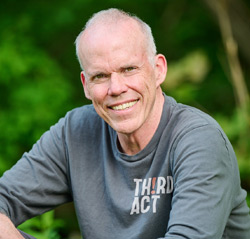
Bill McKibben, a former New Yorker staff writer, is a founder of the grassroots climate campaign 350.org and the Schumann Distinguished Scholar in environmental studies at Middlebury College. His latest book is “Falter: Has the Human Game Begun to Play Itself Out?
ZNetwork is funded solely through the generosity of its readers.
Donate