

Quite recently, the right-wing, led by the RSS, spoke for the umpteenth time in favour of erasing the word “Socialism” from the Preamble to the Constitution of India.
It is no historical secret, of course, that these forces have remained linked to private ownership of productive forces in opposition to an economic model in which the public control of productive and distributive systems has precedence.
That ideological alignment of the right-wing has, as is well recorded, obliged their spokespersons to castigate India’s first prime minister, Jawaharlal Nehru, for having instituted a “socialistic pattern” of economic production and distribution, which they rue has held Bharat back from a “great leap forward” by preventing “animal spirits” from filling to the brim the coffers of private corporates.
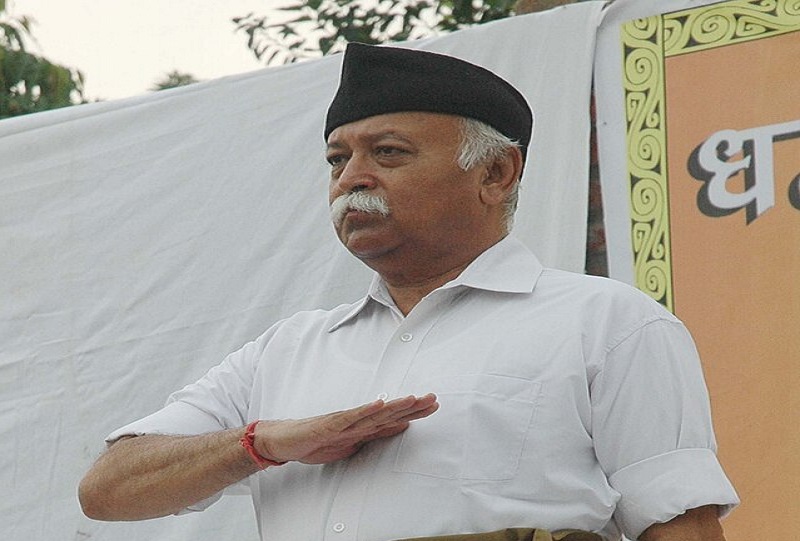
Well now, we are pleased to note, how the chief of the RSS, Mohan Bhagwat, speaking at an affordable cancer cure centre in Indore, has regretted the passing of a time when education and health were “services” and not “commercialised” activities.
Citing his interaction with a “minister”, Bhagat recalls how he was told that education has become a “trillion dollar business”.
“In earlier times” (the current prime minister may kindly note), schools and hospitals used to be affordable and accessible to the poor of the country, but not any more.
Bhagwat notes how the “corporate centralisation” of both the healthcare and educational sectors has had the effect of ejecting the poor from such affordability access..
Bhagwat notes with empathy how only when the people enjoy healthy bodies and are educated can they contribute their mite to the welfare and growth of the nation.
It is of course too early to conclude that the RSS, which leads the right-wing, has had a notable mind-change.
What is most likely still is that, keeping its allegiance to the bourgeoisie intact, it is nonetheless complaining on behalf of the petty bourgeois classes who find themselves cruelly disenfranchised from their rightful claim to some tolerable livelihood status.
That class of the lowly, history teaches us, has always been of utmost importance to the revanchist cultural project of the right wing, and, it may be that the RSS chief is issuing a caution to the powers-that-be that should the economic dispossession of such subaltern classes become too visible, that revanchist project could be in jeopardy.
But, for now, what Bhagwat has said does seem to validate the holistic vision of Nehru which ensured that the new nation did not institute a home-grown colonialism guaranteed to unravel Independent India.
That many on the Left believe Nehru did not go far enough is of course another well-known fact; but it may be a thought that the “socialistic pattern of society” he proposed instead of a full-blown socialism helped to hold ideologically opposed and disparate Indias together in an enlightened social contract.
There is, incidentally, also the speculation that what Bhagwat has said is related to the inner power struggle in the saffron camp.
It is thought that should pressure mount on Modi to step down after his seventy fifth birthday on September 17 – Bhagwat turns 75 on September 11 and has hinted at hanging up his shorts then – he would like the home minister, Amit Shah, to step into his shoes. But the RSS has other candidates in mind.
Could Bhagwat’s implied but disparaging criticism of the Modi government’s performance in education and healthcare thus be another element in a wider leadership tussle?
This piece was first published on The India Cable – a premium newsletter from The Wire & Galileo Ideas – and has been updated and republished here. To subscribe to The India Cable, click here.
ZNetwork is funded solely through the generosity of its readers.
Donate