

A United States court held an extraordinary hearing on November 16, where a judge carefully considered a lawsuit against the CIA and former CIA director Mike Pompeo for their alleged role in spying on American attorneys and journalists who visited WikiLeaks founder Julian Assange.
Judge John Koeltl of the Southern District of New York pushed back when Assistant U.S. Attorney Jean-David Barnea refused to confirm or deny that the CIA had targeted Americans without obtaining a warrant. He also invited attorneys for the Americans to update the lawsuit so that claims of privacy violations explicitly dealt with the government’s lack of a warrant.
In August 2022, four Americans sued the CIA and Pompeo: Margaret Ratner Kunstler, a civil rights activist and human rights attorney; Deborah Hrbek, a media lawyer who represented Assange or WikiLeaks; journalist John Goetz, who worked for Der Spiegel when the German media organization first partnered with WikiLeaks; and journalist Charles Glass, who wrote articles on Assange for The Intercept.
The lawsuit alleged that as visitors Glass, Goetz, Hrbek, and Kunstler were required to “surrender” their electronic devices to employees of a Spanish company called UC Global, which was contracted to provide security for the Ecuador embassy.
UC Global and the company’s director David Morales “copied the information stored on the devices” and shared the information with the CIA. The agency even had access to live video and audio feeds from cameras in the embassy.
On June 4, 2023, the Spanish newspaper El País reported that UC Global director David Morales had a folder on his laptop marked “CIA.” Spanish police initially withheld 213 gigabytes of files in a criminal case against Morales that has unfolded as the U.S. government pursues Assange’s extradition on Espionage Act charges. (Morales and UC Global were sued as well.)
Often a lawsuit—especially one involving allegations of illegal and unchecked surveillance—would end swiftly. A judge would accept all of the “national security” arguments made by the CIA and dismiss the case. However, Koeltl has chosen to be more fair and measured when assessing the stunning allegations.
Barnea, who represents the CIA and Pompeo, contended that the Fourth Amendment right to privacy under the U.S. Constitution did not apply at the Ecuador embassy in London. The CIA did not play a “sufficient role in controlling or directing” the actions of Morales and UC Global contractors.
When Barnea maintained that CIA access to live video feeds would not necessarily mean that the agency was in control or directing UC Global, Koeltl seemed baffled. “So U.S. agents were monitoring the feed in the United States, and that’s not sufficient involvement by the government?”
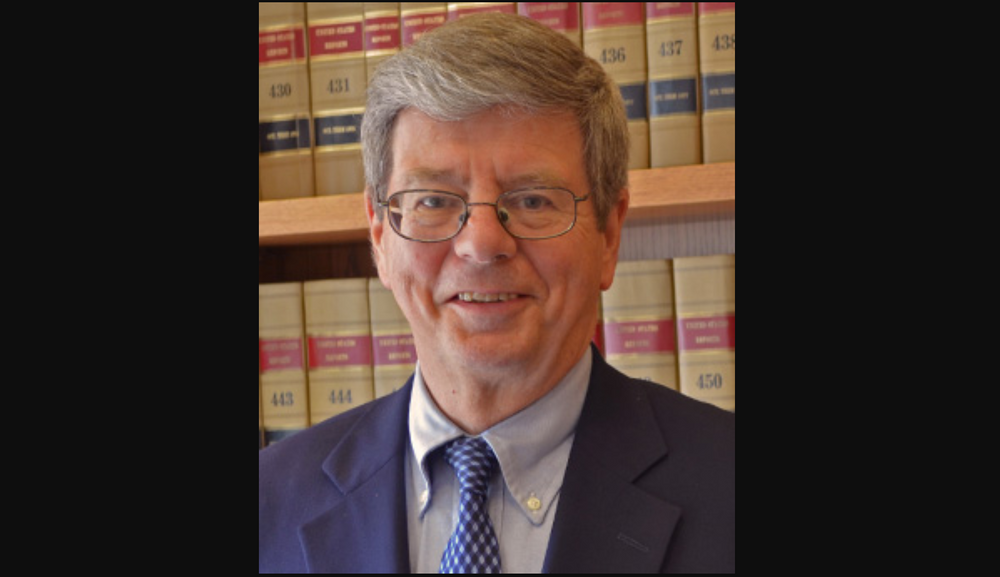
“You don’t seem to dispute in your papers that a warrant would be necessary to seize the contents of the electronic devices,” Koeltl said, as Barnea outlined the government’s argument that Americans who visited Assange had no “reasonable expectation of privacy” when they entered the embassy.
Barnea replied, “I don’t believe that a warrant is ever required outside the United States. The Second Circuit [Court of Appeals] has held that the warrant requirement of the Fourth Amendment only applies within the United States.”
Effectively, the government asserted in a U.S. courtroom that Americans cease to have constitutional privacy protections from U.S. government intrusion when they travel abroad.
As Brian Levenson, an attorney for the Americans, stated, “There is no case like this.” Not a single case has specifically dealt with the question of whether an American citizen has a “reasonable expectation of privacy” under the Fourth Amendment while in a foreign embassy.
“The argument can certainly be made that when people go into a foreign embassy, they would expect that there is security in the embassy that would cover surveillance in the same way that when you enter a courthouse, you can expect there is surveillance,” Koeltl said, repeating one of the government’s main responses to the lawsuit.
Levenson clarified that the issue was not over typical embassy building surveillance. The issue is that Americans identified themselves as U.S. citizens, and the CIA still targeted them.
“The Fourth Amendment protects conversations that cannot be heard except by means of artificial enhancement, which is what this is,” Levenson said. “Tiny microphones bugged on fire extinguishers, special devices put on windows to obscure outside noises. That is the only way these conversations could be heard.”
ZNetwork is funded solely through the generosity of its readers.
Donate