
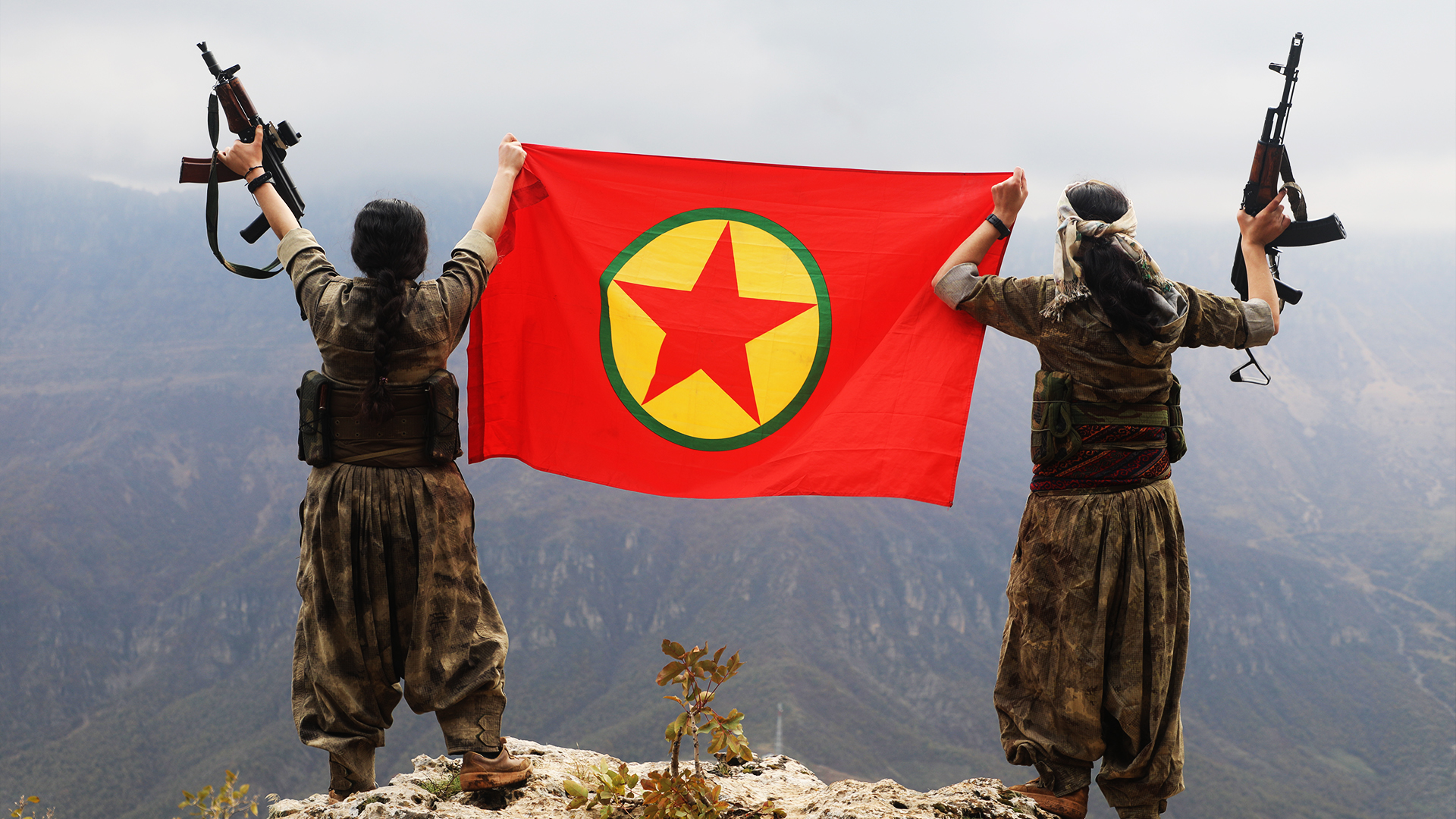
The crises of the modern world are multilayered: We are witnessing economic collapses, ecological destruction, and societal disintegration. Simultaneously, state violence, militarization, and the continuously reproduced dominance of patriarchy are fundamentally shaking not only the political and social order but also the mechanisms of knowledge production.
In this age of crisis, one truth is starkly evident: The current form of knowledge is as destructive as the current state of humanity. Epistemology—that is, how knowledge is produced, on whose behalf it speaks, and what it renders visible—has ceased to be merely an academic debate. The issue is positioned directly at the heart of the problem of freedom.
It is at this juncture that Jineology emerges. It represents a paradigmatic rupture, centered on the liberation of women, society, and truth, aiming to transcend the structural limits of male-dominated knowledge.
Jineology, born from the Kurdish Women’s Movement’s experience spanning over 40 years across mountains, cities, prisons, and the diaspora, is not merely an alternative women’s theory. It is a radical philosophy of freedom that claims to reconstruct knowledge itself. This claim challenges the tradition of modern science not just on a content level, but on ontological and methodological grounds:
Why does truth speak in the language of men?
Why has science been shaped within the triangle of the state, the military, the market, and the academy?
Why has woman been made the object of knowledge rather than the subject?
How can societal transformation be possible without closing the gulf between theory and practice?
These questions are not only those of the women’s struggle but of humanity’s search for truth. And Jineology offers a universal yet locally rooted answer to these questions: Knowledge is not knowledge unless it establishes a link with freedom. Truth is incomplete without women.
The theoretical foundations of the concept of Jineology are part of the paradigm developed by Kurdish People’s Leader Abdullah Öcalan regarding the quest for women’s liberation. Within this framework, Jineology is not merely a reflection of a local experience; it constitutes the women’s science of the Democratic Modernity thesis, developed in opposition to the structural problems of capitalist modernity, the nation-state, and the patriarchal system. This attribution is vital for clarifying Jineology’s theoretical roots and political responsibility.
To understand the conditions of Jineology’s emergence, one must analyze the phases feminism has undergone over the last 50 years—the points where these phases reached an impasse, and particularly the blindness produced by the Orientalist-positivist knowledge regimes of the Global North.
Western feminism has increasingly distanced itself from the mass organization that historically generated its revolutionary power. Due to academicization, institutionalization, and dependency on funding, it presents an appearance of having lost its political radicalism.
Furthermore, postmodern theory’s obsession with extreme fragmentation and deconstruction has rendered women’s material reality invisible. This has focused attention on individual fragments of experience rather than the structural nature of patriarchy. Consequently, the possibility of large-scale social transformation has been weakened.
In this context, the Kurdish Women’s Movement, while respecting feminism’s historical accumulation, deems it necessary to transcend its limitations. The birth of Jineology stems precisely from this epistemological necessity. Because women’s liberation is possible not just through theory, but through organized practice. It is possible not only through individual awareness but through a social rupture. It is possible not only through reform but through a fundamental change in paradigm.
Therefore, Jineology considers knowledge production in conjunction with all areas of life. It does not see the academy as a separate sphere from politics, nor politics from social struggle, nor social struggle from women’s historical truth. The concept of “Women’s Science” signifies changing the nature of science. It aims to purify knowledge from male-dominated structures and establish an organic link with social transformation. Thus, Jineology proposes a new paradigm of liberation that transcends disciplinary boundaries, rather than being merely an interdisciplinary study.
Jineology’s claim is not only theoretical. The multilayered organization of Kurdish women—extending from guerrilla zones to municipalities, from assemblies to academies—has transformed this claim into a concrete social practice. This practice carries a level of continuity, sacrifice, organization, and historical consciousness that many feminist movements worldwide have yet to achieve.
Jineology is therefore not only a reflection of the Kurdish women’s experience. It is a universal search for truth aimed at overcoming all hegemonic structures produced by male-dominated science, the state, the military, and the economic order. We will examine this quest across three dimensions:
1) The Limits of Feminism and the Need for a New Paradigm
Feminism is one of the most powerful social transformation movements in modern history. It has profoundly influenced a broad range of areas: from suffrage and labor struggles to universities, streets, and discussions on domestic labor and sexual orientation freedom. However, this historical legacy of feminism has faced a critical threshold issue on a global scale over the last 40 years: A paradigmatic impasse.
At the forefront of this stagnation is the confinement of feminism, especially in the Global North, to a sterilized academic sphere. While the concepts, methods, and theories of academic feminism are valuable, these structures have also created a framework that has blunted the political radicalism of feminist knowledge. Knowledge produced in university corridors often becomes detached from the concrete experiences of women on the ground; the gap between theory and practice widens.
This situation contradicts the historical revolutionary nature of feminism. Feminism was born not as a mere idea, but as a way of life, a form of resistance, a movement for social rupture. Despite this, a significant part of contemporary feminist literature has replaced social organization and collective action with analyses of individual experience.
The effects of postmodern theory on feminism have also deepened this impasse. Concepts like the fragmentation of reality, the rejection of grand narratives, and the fluid nature of identity, while initially offering liberating potential, have gradually rendered the structural nature of patriarchy invisible. The struggle has been reduced to the level of personal stories. Yet, patriarchy is not an experience but a holistic regime of power. Fragmented subjectivities cannot generate a powerful social transformation against this power regime.
Another limit of feminism is its necessary relationship with the state and capitalism. Feminist structures institutionalized within the bounds of liberal democracy, supported by funds, and dependent on project logic, are unwillingly confined to a system-immanent position.
This approach, which centers on the politics of “recognition” and “representation” within capitalist modernity, increasingly overshadows the revolutionary goal that constitutes the core of the women’s liberation struggle. By limiting women’s liberation to areas recognized by the state and individual advancement opportunities provided by the capitalist system, this approach excludes a holistic struggle capable of shaking the historical construction of patriarchy.
It is at this point that the experience put forth by the Kurdish Women’s Movement creates a decisive rupture. Amidst a multilayered reality of oppression—intertwining state, military, tribal, familial, and capitalist market relations—Kurdish women have not only resisted but have also built their own forms of organization, practices of free life, and truth regimes.
This construction has concretized many concepts that feminist theory often left at the discussion level: self-defense, communal living, gender consciousness, collective decision-making mechanisms, systematic struggle against patriarchal ideology, and a comprehensive transformation process against the male-dominated mentality.
Therefore, Jineology does not create a break with feminism, but rather establishes a new paradigm that transcends feminism. While feminism is vital for women’s rights struggles, its power to transform knowledge is limited as long as it remains within the confines of modern science. Jineology questions not only the condition of women but also how knowledge is produced, on whose behalf science speaks, and which power relations establish the social order. It follows the paths opened by feminism but is not satisfied with them. It aims to reconstruct the subject of science and liberate knowledge itself.
2) The Masculine Construction of Knowledge and the Jineological Critique
The destiny of societies is not determined solely by political decisions, economic systems, or military might. How a society thinks, what it considers right or wrong, and which ways of life it legitimizes also carry a power that is just as decisive. Therefore, the production of knowledge is one of the deepest, most invisible, yet most powerful tools of power. Throughout history, fields like science, philosophy, religion, law, and education have been not only “tools to explain reality” but also grand mental mechanisms through which power relations are reproduced.
It is precisely for this reason that Jineology’s most fundamental proposition is: “The source of societal distortions lies not only in the behavior of men, but in the masculinity of knowledge.”
a) The Construction of Masculine Knowledge: A History Built on the Absence of Women
Modern science presents itself as an impartial, objective, and universal producer of reality. Yet, a study of the history of science shows that women were not only excluded but that the “subject of knowledge” was codified as masculine. This is not merely about male scientists. The categories, concepts, methods, and forms of explanation in knowledge bear the stamp of a male-dominated mentality.
Woman has been systematically secondary in scientific narratives. For example, the female body is treated as a “deficient organism” in medical texts. Female intellect is defined as “irrational nature” in philosophy, female labor as “invisible workforce” in economics, and female identity as “domestic function” in sociology. Woman’s social position is either absent, secondary, or incomplete in all scientific narratives.
The masculinity of knowledge does not merely exclude women. It also determines the knowledge produced about women through the male gaze. The female body, female emotion, and female experience are shaped by the interpretation of the male mind. Thus, woman is alienated from her own truth. This is why Jineology states, “for the liberation of women, one must first begin with knowledge.”
b) The Masculinization of Truth and Mental Colonization
Male-dominated knowledge is not limited to scientific production. It also shapes daily life. It is a form of mental colonization that dictates love, family, norms, morality, the sacred, and even what is “natural.” This mentality equates woman with nature and man with culture. The woman’s duty is to intuit; the man’s duty is to know. Woman is “emotion,” man is “reason.” Woman is the “sphere of life,” man is the “sphere of the world.”
These distinctions form the fundamental ideological construction of the thousands of years of patriarchal order. They legitimize male mental superiority. They make women’s social invisibility seem natural. Thus, the liberation of women ceases to be merely a social or economic problem. The issue requires touching the scientific ontology itself.
The Jineological critique emerges at this precise point. Jineology rejects the claim of neutrality in modern science. It reveals that knowledge is established by a male-dominated power mechanism. The moment this mechanism of knowledge is dismantled, woman becomes visible again—not only in society, but in history, culture, science, and truth itself.
c) The Jineological Critique: Intervention not Just in Science, but in Mentality
Jineology’s critique is directed not only at science but at the universe of mentality. It is emphasized that the greatest obstacle to women’s liberation is not male behavior, but the masculinized mind. Therefore, Jineology is a call for transformation not only for women but also for men. Because in a society enslaved by masculinized knowledge, man is not free either.
The Jineological critique involves three fundamental forms of intervention:
Epistemological intervention: Dismantling the male-dominated structure of knowledge.
Historical intervention: Rendering women’s memory visible again.
Social intervention: Establishing forms of free life organization.
From this perspective, Jineology is not just a science, but an endeavor to create a new life. Without changing the subject of science, the subject of society cannot change. Without changing the subject of society, a free life cannot be established.
3) The Gender Regime, the Construction of Society, and the Rebirth of Women’s Truth
Gender defines far more than the biological differences between individuals. It operates across nearly all areas of society, from economic relations to cultural norms, power structures, and emotional modalities. Therefore, patriarchy is not just a social structure but a historically shaped regime of thought. Jineology argues that this regime must be dismantled. Because the transformation of a society cannot be considered independently of the transformation of its gender regime.
a) The Historical Codes of the Gender Regime: State, Patriarchy, and Knowledge Production
The historical construction of gender is closely linked to the emergence of the state. With the centralization of the state, the male-dominated mind monopolizes the task of “protecting,” “governing,” and “organizing” the social order. Woman, in turn, becomes the carrier of the private sphere, emotion, care, and the invisible part of production. This division is not only an economic regulation but also the political policing of the woman’s body, fertility, and labor.
The state ensures the continuity of the structural basis of patriarchy by accepting the family as the fundamental social institution. The family turns into a unit where male power is reproduced on a micro-scale. The claim of right over the woman’s body is a miniature of the state’s claim of right over society.
b) The Reproduction of Gender: Family, Education, and Economy
Society is constructed through institutions that constantly reproduce the male-dominated order. Jineology analyzes the functioning of the gender regime across all layers of daily life:
Family: The most powerful ideological apparatus of patriarchy. It is here that women’s roles of sacrifice, obedience, service, and emotional labor begin to be seen as natural.
Education: The education system transmits sexist norms to children as a cultural heritage. Girls are coded as passive, compliant, sensitive; boys as active, rational, strong.
Economy: Women’s invisible labor is one of the core resources of capitalist modernity. Domestic labor, care work, emotional labor, and reproduction activities are not valued in markets. Jineology defines this situation as “the systematic erasure of women’s labor.”
c) The Reconstruction of Women’s Truth: Jineological Ontology
Woman is not merely a socially suppressed being. She has also been rendered ontologically invisible. Jineology approaches woman not as a figure confined to specific roles, but as the primary subject that constructs society. This new ontology rests on three core propositions:
Woman is the first subject of society; male-dominated order is a deviation.
Women’s knowledge is centered on emotion, relationality, and life. Therefore, women’s knowledge is not merely scientific but knowledge that constructs ethical and social existence.
Women’s truth can be reproduced; Jineology argues that this ontology can be re-established not by a return to a lost past, but through a free social model oriented towards the future.
4) The Integration of Theory and Practice: Freedom, Militancy, and the Reconstruction of Female Subjectivity
One of Jineology’s most distinguishing aspects is its approach to theory not merely as an intellectual activity, but as a practice of existential transformation. It argues that whenever knowledge is abstracted from life, resistance, and collective experience, it loses its capacity to be a real force. Therefore, Jineology rejects the historical separation of theory and practice. It proposes a militant epistemology that centers political and social transformation.
a) Militant Knowledge: The Epistemological Status of Resistance
Militancy here refers to the struggle for freedom becoming a holistic way of life, rather than a militaristic stance. In the Jineological sense, militancy requires knowledge to be a transformative force, not a passive accumulation. In this approach: Knowledge cannot remain inactive. Truth cannot only be written; it must be lived and defended. Jineology finds the source of knowledge in the mountains, city squares, and women’s daily resistance practices.
b) Free Body, Free Mind, Free Will
Jineology does not see women’s liberation merely as a matter of legal equality or social representation. Freedom is the reclamation of the woman’s mind, body, and will.
Free Body: Liberation from the political, cultural, and economic policing of the woman’s body.
Free Mind: Overcoming the ideologies of guilt, shame, conformity, and sacrifice that patriarchy has imposed on women.
Free Will: Strengthening the woman’s decision-making power in conjunction with collective organization.
c) The Practice of Freedom: Women’s Communes, Educational Structures, and Self-Defense
Jineology has developed concrete models that institutionalize the practice of freedom:
Women’s Communes: Communal living spaces, established even under conditions of war, are unique social laboratories where horizontal organization and solidarity replace hierarchy.
Women’s Educational Structures (Political Academies): Show that liberation is a continuous learning process. Knowledge becomes a collective consciousness and life practice.
Self-Defense: It is emphasized that women’s freedom cannot be conceived without the capacity for self-defense. Self-defense is a mental, emotional, and organizational competence.
5) Conclusion: Jineology’s Universal Paradigm of Freedom and the Future of the World
Jineology emerges not merely as a women’s science but as a comprehensive paradigm of freedom developed against humanity’s deep-rooted crises. By centering women’s liberation, it aims to resolve the oldest and deepest form of structural violence that lies at the root of social problems.
Women-Centered Analysis of the Global Crisis
Jineology reads all current global crises (from ecological destruction to militaristic policies) as the results of the historical rupture that began with the displacement of women. The starting point for solving the global crisis is the re-emergence of women as social subjects.
Alternative Modernity: Transcending State-Male Centered Modernity
Jineology identifies three fundamental problems of modernity: its state-centric character, its male-dominated epistemology, and its capitalist exploitation model. The alternative modernity proposed by Jineology is based on principles such as sociality, ecology, women’s freedom, communality, and pluralistic democracy. This model converges with the Democratic Modernity paradigm, opposing state-centric modernity.
Universal Women’s Unity
Jineology argues for a historical commonality and a universal unity among women worldwide. This unity is a collective consciousness where differences meet freely. Jineology views feminist theories, indigenous women’s struggles, and resistance traditions as a universal network of women’s struggle that mutually reinforces itself.
In conclusion, Jineology is not a social theory in the classic sense but a constitutive world project with social, historical, and philosophical dimensions. It integrates knowledge with life and life with freedom, centered on radical rupture, constitutive will, and a universal women’s science. As the world crisis deepens, Jineology’s paradigm of freedom becomes increasingly universal, because the crisis of our age can only be resolved by a women-centered paradigm that reconstructs humanity’s relationship with truth, society, and life.
ZNetwork is funded solely through the generosity of its readers.
Donate