

Source: Truthout
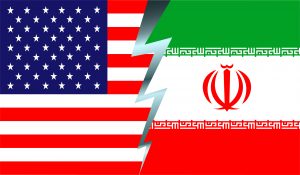
By Trenkov/Shutterstock.com
As the entire world grapples with the most devastating pandemic of the modern era, the United States is pouring kerosene on the fire in Iran and Venezuela. The U.S. government has maintained punishing sanctions against the people of Iran and Venezuela to engineer regime change. But instead of ending the sanctions to help Iranians and Venezuelans fight the coronavirus, the Trump administration has expanded them and exacerbated the danger they pose.
“The world is facing the risk of an unprecedented humanitarian disaster,” the International Association of Democratic Lawyers wrote in a statement calling on the U.S. government to immediately lift all sanctions against Iran and Venezuela.
Sanctions (unilateral coercive measures), collective punishment and forcible regime change are illegal under U.S. and international law. Donald Trump’s intensification of sanctions against Venezuela and Iran during the pandemic constitutes a crime against humanity.
U.S. Sanctions Against Iran Add to the Death Toll
Iran “has emerged as an epicenter of the virus globally and regionally,” 34 members of Congress wrote in a March 31 letter to Secretary of State Mike Pompeo and Treasury Secretary Steve Mnuchin, urging them to “substantially suspend” sanctions against Iran during this worldwide health emergency. The letter was endorsed by 13 groups.
As of April 13, Iran had suffered 73,303 cases of COVID-19 and 4,585 deaths. Trump’s sanctions are a primary cause of these extremely high casualties. “There can also be no question that the sanctions have affected Iran’s ability to contain the outbreak, leading in turn to more infections, and possibly to the virus’ spread beyond Iran’s borders,” Center for Economic and Policy Research (CEPR) Co-Director Mark Weisbrot said in a statement.
Adding insult to injury by “keeping up its economic pressure campaign,” the U.S. government has imposed additional sanctions on Iran in the middle of the deadly pandemic, according to Reuters. The Trump administration is “literally weaponizing the coronavirus,” human rights lawyer Arjun Sethi said.
Iranian Foreign Minister Javad Zarif called the sanctions “economic terrorism.”
Congress members who signed the March 31 letter called Trump’s March 18 sanctions “callous and short-sighted,” warning that the virus is reportedly spreading from Iran to Afghanistan, where U.S. troops are stationed.
The United States had already maintained “an effective economic blockade” of Iran’s energy, banking and finance sectors, as well as its foreign investment and the targeting of basic foodstuffs and medicines, Eskandar Sadeghi-Boroujerdi wrote in December 2019.
In 2018, after Trump pulled out of the Iran nuclear deal, which was working to prevent Iran from developing nuclear weapons, he reimposed heavy economic sanctions. The U.S. government’s stated goal was to eliminate all Iranian oil exportation. It blacklisted 50 Iranian banks, individuals and ships, and Iran’s national airline and fleet of aircraft. Pompeo said the United States would “crush” Iran with new sanctions so severe they could lead to regime change.
As a result of the reimposition of sanctions, oil exports plummeted, Iran’s currency has been substantially devalued and the country is in a severe recession.
In October 2018, the International Court of Justice ordered the United States to lift its sanctions against Iran on food, medicine, humanitarian trade and civil aviation. The U.S. government refused to abide by the court’s decision.
An October 2019 Human Rights Watch report concluded that the U.S.’s “maximum pressure” campaign “drastically constrained the ability of Iranian entities to finance humanitarian imports, including vital medicines and medical equipment.”
Foreign Minister Zarif referred to the U.S. refusal to lift the sanctions during the pandemic as “medical terrorism.”
The United States has escalated the sanctions during the pandemic while blocking Iran’s request for a $5 billion loan from the International Monetary Fund for its fight against the coronavirus.
In their March 31 letter, the congress members noted that “by targeting an entire economy that supports more than 80 million people, U.S. sanctions make it harder for ordinary Iranians to obtain basic necessities like food and hygienic supplies essential to stemming the pandemic and that are basic to survival.”
U.S. Sanctions Against Venezuela
As of January 22, the United States had leveled sanctions on Venezuela’s state oil company, government and central bank and at least 144 Venezuelans or individuals connected to Venezuela.
U.S. sanctions against Venezuela caused 40,000 deaths in 2017 and 2018, CEPR reported. In April 2019, Johns Hopkins Bloomberg School of Public Health and Human Rights Watch issued a 71-page report detailing shortages of food and medicine and sharp increases in disease. They called the situation a humanitarian emergency.
In mid-February, the U.S. government imposed additional sanctions on Venezuela. The Trump administration continues to attack the Nicolas Maduro government, indicting him for a narco-terrorism conspiracy, with the Trump administration planning to deploy Navy destroyers to the Caribbean on the pretext of an anti-narcotics operation.
On April 6, dozens of legal organizations worldwide issued a letter to Pompeo and members of the Senate Foreign Relations Committee urging that U.S. intervention in Latin America be ended, especially in light of the escalation of U.S. threats against Venezuela.
The sanctions against Venezuela have contributed to “the largest economic collapse in a country outside of war since at least the 1970s,” The New York Times reported. In February, Venezuela filed a complaint against the United States in the International Criminal Court, calling the sanctions crimes against humanity.
Although Venezuelans are not yet contracting COVID-19 in large numbers, the pandemic could prove catastrophic to the country.
But when Venezuela asked the International Monetary Fund for a $5 billion loan to help it cope with the pandemic, the U.S.-controlled IMF denied its request.
Unilateral Coercive Measures Violate the UN and OAS Charters
By imposing unilateral coercive measures for collective punishment leading to forcible regime change, the United States has violated several ratified treaties.
When the United States ratifies a treaty, it becomes part of U.S. law under the Supremacy Clause of the Constitution, which says treaties constitute “the supreme law of the land.”
The protection of health is a stated purpose of the United Nations Charter and all member countries are required to take actions that promote health. Yet the United States is doing just the opposite, magnifying the suffering of the Iranian and Venezuelan people in the midst of the pandemic.
Under the UN Charter, member countries must refrain from the threat or use of force against the political independence of any other country. Only the UN Security Council has the authority to order the use of sanctions. That means the United States cannot unilaterally impose sanctions against other countries without the approval of the Council.
Meanwhile, the Charter of the Organization of American States (OAS) prohibits any country from directly or indirectly intervening in the internal or external affairs of another country. That includes any type of interference against its “political, economic and cultural elements.” No state can use coercive economic or political measures “to force the sovereign will of another State.” The United States’s imposition of sanctions against Venezuela violates the OAS Charter.
Collective Punishment Violates the Fourth Geneva Convention
U.S. sanctions against Iran constitute “the collective punishment of over 81 million Iranians through and by means of one of the most comprehensive and unrelenting sanctions regimes in modern history,” writes Sadeghi-Boroujerdi.
The Trump administration is also trying to coerce regime change in Venezuela by punishing the people with sanctions.
Collective punishment is a war crime. The Fourth Geneva Convention says, “No protected person [civilian] may be punished for an offense he or she has not personally committed. . . . Reprisals against protected persons and their property are prohibited.” The United States is punishing the people of Iran and Venezuela for the actions of their governments. This constitutes illegal collective punishment.
Forcible Regime Change Violates the International Covenant on Civil and Political Rights
After Trump withdrew from the Iran nuclear deal and reimposed harsh sanctions, Pompeo said, “Things are much worse for the Iranian people, and we’re convinced that will lead the Iranian people to rise up and change the behavior of the regime.”
That strategy hasn’t worked in Cuba. The U.S. blockade was imposed in 1960 pursuant to a secret State Department memorandum that advocated “a line of action which … makes the greatest inroads in denying money and supplies to Cuba, to decrease monetary and real wages, to bring about hunger, desperation and overthrow of government.” But the Cuban people have not overthrown their government.
No country has the right to forcibly change the regime of another country. The International Covenant on Civil and Political Rights recognizes self-determination as a human right and guarantees all peoples the right to “freely determine their political status and freely pursue their economic, social and cultural development.”
Idriss Jazairy, UN special rapporteur on the negative impact of sanctions, stated, “Coercion, whether military or economic, must never be used to seek a change in government in a sovereign state.”
More than 200 legal professionals and organizations, including the National Lawyers Guild and the International Association of Democratic Lawyers, wrote in a letter to Trump, Mnuchin and Pompeo, “Your administration’s disapproval of the government of a foreign state provides no legal justification for policies and actions intended to deprive residents of the targeted state of necessaries as a means of forcing a change to a regime more to the liking of the United States.”
The letter’s signatories called on the U.S. government to cancel the sanctions against Venezuela and Iran “at the very least,” because they violate the International Executive Economic Powers Act (IEEPA). The IEEPA empowers the president to impose sanctions only after he makes “a good faith declaration that the targeted country presents an ‘unusual and extraordinary’ threat to the U.S.” As the letter says, “Neither Venezuela nor Iran presents such a threat to the U.S.”
In fact, the Trump administration’s intensification of sanctions against Iran and Venezuela rises to the level of “a crime against humanity against the people of Iran and Venezuela,” the signatories wrote.
Congressional Oversight of Sanctions
Congress members Ilhan Omar and Rashida Tlaib introduced a bill in the House titled “Congressional Oversight of Sanctions Act.” H.R.5879 would require a report on why sanctions were chosen rather than another tool to address the emergency; whether the sanctions are unilateral and if so, why no other country has imposed them; and the requirements for lifting the sanctions.
Grassroots peace group CODEPINK is circulating a letter to Pompeo urging the lifting of sanctions on Iran, and a letter to Congress opposing military intervention in Venezuela and urging the lifting of sanctions against that country. Both letters have garnered thousands of signatures.
Meanwhile, constituents should pressure their congressional representatives to end the sanctions against Iran and Venezuela. Economic and medical warfare during the pandemic amounts to a crime against humanity perpetrated by the United States.
Copyright Truthout. Reprinted with permission.
Marjorie Cohn is professor emerita at Thomas Jefferson School of Law, former president of the National Lawyers Guild, deputy secretary general of the International Association of Democratic Lawyers and a member of the advisory board of Veterans for Peace. Her most recent book is Drones and Targeted Killing: Legal, Moral, and Geopolitical Issues.
ZNetwork is funded solely through the generosity of its readers.
Donate