
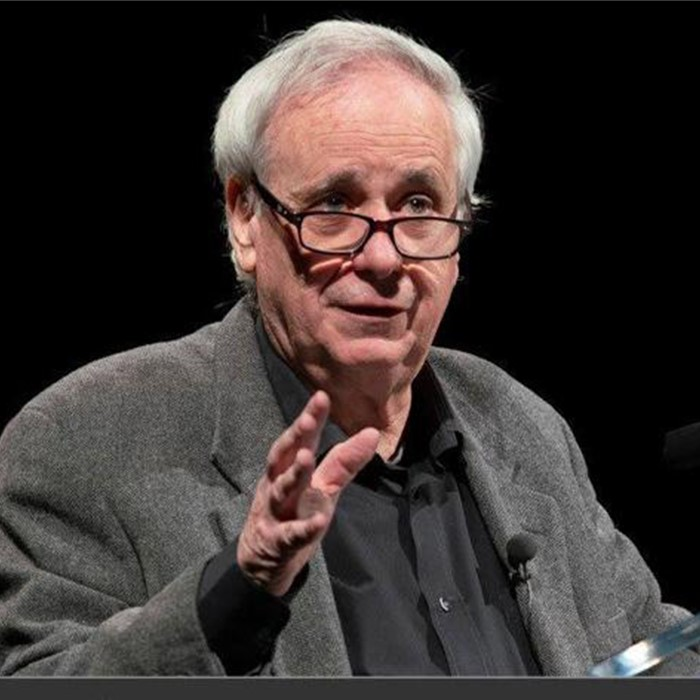
He is currently Chair of the Department of History at the University of Exeter and Co-Director of the Exeter Center for Ethno-Political Studies. Pappe has just completed a cross-Canada tour on the topic of his book, The Ethnic Cleansing of
Am Johal: Why did you decide to leave
Ilan Pappe: The main reason was an inability to function as an academic which is what I was within the Israeli academic community.
I could not manage a proper dialogue with my professional group or with the public at large. There was a feeling of being irrelevant to the debate.
My family wasn’t safe because of threats. That alone wouldn’t have pushed me out, but was a factor.
Thirdly, I thought the focus of the struggle over the public discourse is much more outside of
Johal: As someone who travels to different places in the West, the debate around the Israeli/Palestinian conflict is mediated differently in parts of Europe, Canada and the U.S. What is your view of how the conflict is disseminated in different places and the diversity of the public sphere?
Pappe: I think there are differences. In the
In
Even Jimmy Carter said that there is a difference in terms of how things are talked about in
If you compare the
This is the function of years and years of indoctrination. We have some changes in the civil society. Here, in
Johal: What are the limitations today facing the Palestinian citizens of Israel, who comprise 20 percent of the Israeli population?
Pappe: The situation in
On a less formal level, budgets are being delivered to health, education and school systems in an unfair way. The school system is segregated. There are quotas for Palestinians for professional programs. Even less obvious is the institutional duress placed on Arab citizens. It’s important to remember that leaders of Zionist parties have basically agreed that the Arab citizens of
Johal: You are in support of a one-state solution to address the historic challenges of the Israeli/Palestinian conflict and support the right of return. It seems to me politically unrealistic given the trauma of this conflict that
Pappe: Taking over all of
One day the world will wake up. The two-state solution or the wish of full Israeli control is not possible. It can be taken by force perhaps, but is not a viable long-term solution.
The peace process failed after 2000 for the same reasons it failed before that. The two-state solution is not going to work – they are not equal partners at the table. What happened in 2000 was a more ridiculous form of what they offered before. There still is not Palestinian sovereignty over the
Johal: Is the Kosovo example relevant to the Israeli/Palestinian conflict?
Pappe: I think Kosovo is not the right example.
There was a war for liberation which was supported by pressure from the outside. You can change the ideology of the state. They are both based on notions of supremacy and racism. In other words, Jews and Palestinians, if they have a chance to survive in the future, must choose a future together in one state.
There are not two states right now. There is only one state. The state is already there. Can you create a state with a better situation?
A bi-national model with secular democracy is also a possibility. It would take invention – it would require the principle of territorial integrity, return of refugees, exclusive ethnic, religious ideology. From these principles, we must end the military occupation. We have to convince the world that Israel is an oppressive, racist state.
Johal: Your visit to Canada was portrayed as the visit of some sort of radical figure in the Israeli political landscape when in fact you have often engaged in lively public debates with new historians like Benny Morris and others. On the other hand, the visit of Moshe Feiglin, a right-wing activist within the Likud Party, seems to be presented as within the mainstream in Canada even though he engages in hate speech and supports the ethnic transfer of Arab Israelis, amongst other policies. What are your views of this?
Pappe: It’s a very interesting comparison. Feiglin believes that he could translate his beliefs in to reality. A pure, ethnic religious state for Jewish people in Israel. He addresses very specific religious laws and others like the racist Rabbi Kahane. For that reason, the British didn’t allow him in. The Canada-Israel Committee shouldn’t be defending this guy. He has extremely racist views.
I am presented as a great danger to Israel because I support the establishment of a democratic state. In the name of the struggle for "democracy," countries are being invaded and destroyed by the U.S.
It is this kind of abnormal world of concepts and positions that we have been living in with respect to Israel. The juxtaposition of an historian who acts according to humanist international principles shows how distorted the media can be.
ZNetwork is funded solely through the generosity of its readers.
Donate