


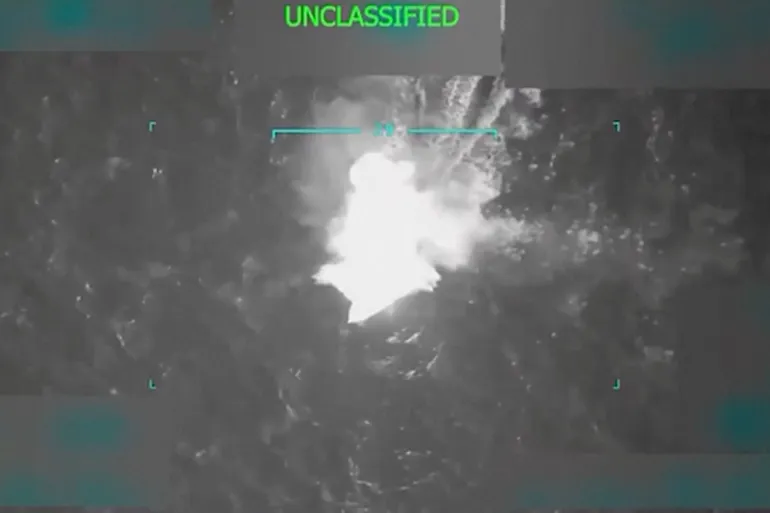
“Kill them all!”
You have a problem with that? What are you, some kind of unmanly wimp? Pete Hegseth spits in your face.
Let me catch my breath, calm myself, wipe my face. The cutting edge is raw. A hundred deaths, a thousand deaths, quickly turn into “collateral damage.” But the killing of two desperate men, clinging to the wreckage of their boat in the Caribbean – their boat that has just been bombed – rips open the abstraction of military public relations. They’re just ordinary human beings – like you, like me, like our parents and our children – rather than . . . uh, narco-terrorists. And suddenly this new war the Trump administration has launched is more than just a videogame. Hey, Pete, this is not keeping us safe!
Indeed, as I write these words, I picture the so-called Secretary of War clinging to the wreckage himself. Perhaps he’ll eventually realize that war always comes home, that what we do has consequences, that creating peace is a bit more complex than killing the bad guy (and thus preventing him from contradicting the official narrative).
Yeah, creating peace. I wish that process, rather than “winning” the war of the moment, were central to the mainstream media’s global political focus. I wish this nation’s trillion-dollar annual military budget would suddenly abandon the weapons contractors and begin embracing complex, actual human and planetary needs.
As George Cassidy Payne asks in his insightful essay: “What kind of country do we want to be?
“The Caribbean strikes are more than tactical operations; they are a test of national character. When influence becomes the ultimate measure of safety, morality becomes the first casualty. Without public scrutiny and full transparency, legality, proportionality, and human cost become negotiable, reshaped to match strategic objectives.”
War is slicing the planet into pieces. It’s also the ironic core of global governance. We don’t yet know how to be one planet, a collective whole that values every aspect of itself. Or do we? “I stroke the unknown. . .”
As I cling, myself, to the planetary wreckage – with Pete Hegseth next to me, as well as Donald Trump, Venezuelan fishermen, every living being who wants to survive – I feel tomorrow emerge from our collective soul. I don’t know how to put it into words. This poem, which I wrote several years ago – “The Gods Get in Touch with Their Feminine Side” – is the best I can do, for now:
I stroke the unknown,
the dark silence, the
soul of a mother. I
pray, if that’s what
prayer is: to stir the certainties of
pride and flag and brittle
God, to stir
the hollow lost.
I pray open
the big craters
and trenches of
obedience and manhood.
Now is the time
to cherish the apple,
to touch the wound and love even
the turned cheeks and bullet tips,
to swaddle anew
the helpless future
and know
and not know
what happens next.
Robert Koehler (koehlercw@gmail.com), syndicated by PeaceVoice, is a Chicago award-winning journalist and editor. He is the author of Courage Grows Strong at the Wound, and his album of recorded poetry and artwork, Soul Fragments.


Robert Koehler is an award-winning, Chicago-based journalist and nationally syndicated writer. Koehler has been the recipient of multiple awards for writing and journalism from organizations including the National Newspaper Association, Suburban Newspapers of America, and the Chicago Headline Club.
ZNetwork is funded solely through the generosity of its readers.
Donate





1 Comment
Trumps’ killing of Caribbean noncombatants is simple murder despite all his stupid dressings of calling his victims “narco-terrorists” and such… and his claim that these skiffs that he is exploding pose a threat to the national security of the US is ridiculous beyond understanding. Trump/Hegseth are so stupid that they claim Venezuelans are poisoning Americans like humans poison rats. Americans are drugging themselves… Venezuelans are not poisoning anyone. T/H’s claims are all just idiocy. American demand for cocaine is the primary driver behind the cocaine trade and unless that aspect is properly addressed, probably nothing will prevent the import of cocaine into the US as its users are willing to pay so big for the stuff……….