
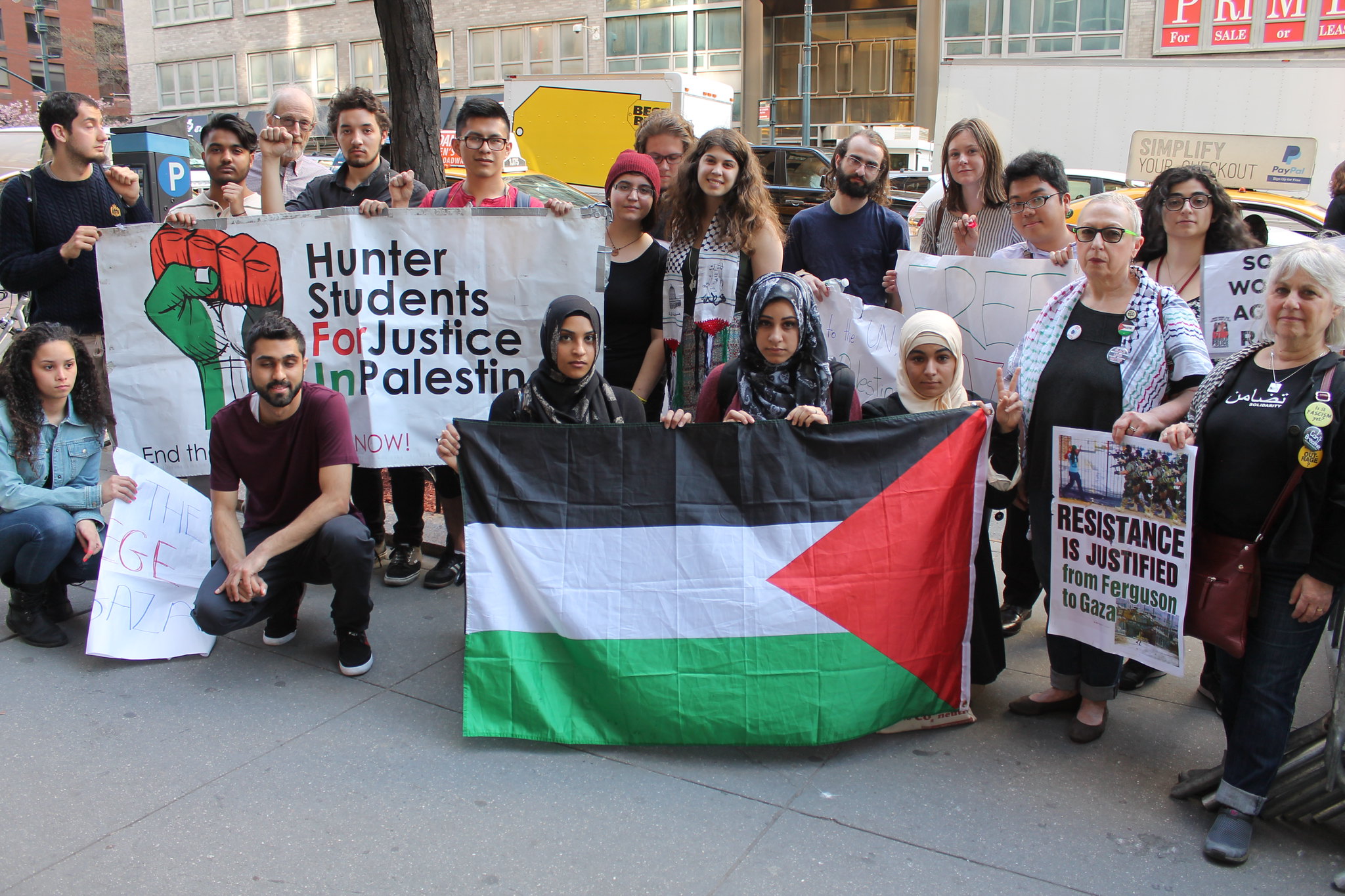
Student organizing has played an important role in US history, yet student organizing itself is fundamentally unstable, at the whim of graduations and expulsions of its best leaders.
That said, students internationally have an established model for addressing this. This model is the student association, sometimes called a student union. These student groups are elected decision-making bodies that serve as the voice of the student body. In some countries, student unions have even toppled dictators and colonizers. Unfortunately, US student unions have remained rather weak.
Back in the late 1970s, two groups came together to create the US Student Association (USSA), a federation of local student government associations that played a valuable movement infrastructure role from its founding in 1978 until its demise in 2017.
USSA’s dissolution was tragic, not only because it served as a stable fighting force for students, but because it was also a vital place for young organizers to learn how to build community, engage in internal democracy, manage staff, and run campaigns.
Last year, however, efforts to rebuild USSA began. In March 2025, 150 students from nearly 40 campuses in 18 states gathered for the group’s first in-person meeting in eight years.
What Is the USSA?
What makes [independent state student associations] unique … is their funding model and legal structure.
Student organizing, and what would eventually become the USSA, fundamentally changed with the passage of the 26th amendment in 1971, which lowered the voting age from 21 to 18.
This meant that college-age students had the right to vote for the first time. State student lobby groups grew in response and most, eventually, adopted a student government federation model. By 1974, just three years after the 26th Amendment was enacted, there were at least 28 state students associations (SSAs) in the United States.
What makes them unique—aside from having a clear, geographically bound, electoral base—is their funding model and legal structure. SSAs, or more specifically “Independent State Student Associations” as defined by the Student Empowerment Training Project (SET), are funded by student fees, which are collected by the universities or the state on behalf of the association. SET also defines them as fully staffed and legally independent from the university system.
Legal incorporation, usually as 501c3 or 501c4 nonprofits, and membership fees, which function a lot like union dues, allow these student associations greater independence than most university-funded student organizations.
To be clear, not all student associations enjoy this independent status. Some system-organized student associations receive funding from campus administrators but exist completely under their legal control. Others are informal state groups or student power networks that rely on foundation or union funding. These arguably are even more independent from the university, but they are dependent on grants and have less incentive to organize students since funding does not rely on their support.
In her book, Diminished Democracy: From Membership to Management in American Civic Life, Theda Skocpol refers to SSAs as groups that are far more democratic than most modern political organizations. Most SSA leaders are either elected during some form of state student assembly or at the local student government level. While they have staff, these employees usually take a backseat to student leadership who can hire and fire them. And these student leaders are accountable to the students locally, who can defeat them in elections or threaten to cut off their funding through the mandatory fee.
Mandatory fees play an important role in ensuring a stable SSA membership base. Usually between a few cents and a few dollars a month, this fee is automatically applied to student tuition bills; students wishing to forgo the fee must opt to decline.
While “opt in” fees in theory might force student leaders to engage more with students, a 2004 SET survey of SSAs found that those with mandatory fees tended to have higher levels of volunteer engagement.
Mandatory fees also allow the SSAs to predict their funding from year to year and plan accordingly. This allows them to hire staff, rent offices, print materials, and have higher capacity to run trainings and engage in longer term leadership development. Maxwell John Love, a former USSA president described joining an SSA to NPQ as “being served leadership development on a silver platter, all I had to do was say yes.”
Staff who answer exclusively to the students is key. On top of having stable mentorship, students can hire recent alumni and extend their student organizing time by a few years. Staff help maintain organizational knowledge, allowing new generations to pick up where the last left off. Increasing the capacity of student organizers has paid dividends in terms of improving students’ lives.
[State student associations] have not only focused on campus protests; they’ve also had a significant impact on larger political issues.
In the early 1970s, the University of California Student Association successfully pushed then-governor Ronald Regan to increase the school’s budget with $1 million toward small seminar courses and other changes. They also worked to maintain funding for on-campus childcare centers and attempted to increase the amount of funding colleges received for enrolling students with children. The association, moreover, pushed the state to divert $4.1 million in funding from new building construction to financial aid.
In Wisconsin, the United Council of the University of Wisconsin Students abolished a sales tax on dormitory food, which collectively saved students hundreds of thousands of dollars a year. The United Council was also unique in that it secured in state statute its own right to exist, control over student fees, and the ability to negotiate over any policy impacting students.
New York’s SSA, the Student Association of the State University of New York (SASU), was created in 1970 and was influential in shaping financial aid in the state and increasing the distribution of scholarships. They also provided life and property insurance and operated a student travel agency; about 20 percent of their income came from such projects.
SSAs have not only focused on campus protests; they’ve also had a significant impact on larger political issues. In the 1980s, SASU participated in a successful divestment campaign against companies doing business in apartheid South Africa. On the national front, they joined other organizations alliances, like the November 12th Coalition that opposed the US invasion of Grenada and the CIA’s activities in Latin America.
SSAs are not only important vehicles for direct reform, they are also important leadership pipelines. The president of SASU during its successful South African divestment campaign became the legendary labor organizer and author Jane McAlevey.
As McAlevey wrote: “We stopped tuition increases, stopped room rent increases, won the largest single act of divestment from South Africa at the time, and a lot more concrete wins. A lot of key leaders in the movement today all came from this one organization. We had really good organizers teaching us, and, we continued to teach the students coming up under us.”
More Recent Wins
SSAs continued to be effective throughout the 2010s. The Washington Student Association (WSA), the Oregon Student Association, and the UC Student Association won state DREAM Act campaigns that made colleges more affordable for undocumented students. The United Council and New Jersey United Students—a new informal association—won tuition freezes. And though they did not win, the University of California Student Association fought for a tuition freeze during the 2009-2010 school year, endorsing a walkout and a series of protests that mobilized thousands of students and faculty.
In 2011, United Council occupied the Wisconsin Capitol building together with thousands of union and community members. And in 2012, the UC Student Association became a relatively early adopter of the Boycott Divestment and Sanctions (BDS) movement and has been a fervent one since, despite facing constant retaliation for their stance.
SSAs also have run effective voter registration campaigns. In 2012, the Oregon Student Association helped register roughly 50,000 students, twice its flagship campus population.
United Council produced organizers like Beth Huang, who is currently director of foundation relations at the Movement Voter Project. And out of the Oregon Student Association’s DREAM Act fight and voter registration drive came Alexandra Flores-Quilty, who serves as campaign director of Free Speech for People.
Additionally, as Shayna Greathouse, operations manager with the Arizona Students’ Association, told NPQ, “We currently have three state representatives who are recent alumni, alumni become politicians, lawyers, judges—one judge had to recuse himself from one of our court cases because he was an alum. Most go into organizing and nonprofit work, and a lot of recent alumni have run for school board across the state.”
Institutional Challenges
Stable student fee funding makes leadership development easier. That longevity has allowed SSAs to win transformative victories and vie for power, mainly through fighting for seats on university governing boards. These victories, however, have long put them in the crosshairs of state legislators and administrators trying to claw back their power. Since their creation, SSAs have fought against legislation that would prevent them from collecting student fees or using student fees for any political purpose.
But such efforts have not always been effective. For example, in 2013, Scott Walker and the Wisconsin Republicans, after gutting public sector unions and witnessing United Council members join labor and community advocates in protests, took aim at the SSA and eliminated the policy that allowed it to receive funding.
At the same time, the Arizona Students’ Association’s structure was dismantled by its state legislature. As Huang wrote in The Forge, “In one year, the right-wing destroyed the only two statewide student associations in battleground states. . . . [By] January 2014, USSA only had member campuses in California, Oregon, Washington, and Massachusetts.”
As efforts to end mandatory fees took hold in most states, new models of informal student associations were being experimented with across the country. In 2011 in New Jersey, the Rutgers University student government, newly under control of a radical coalition, created New Jersey United Students (NJUS) to bring both student governments and unaffiliated student activists together.
Matt Cordeiro, current Working Families Party organizer and former president of NJUS, described finding the SSA model as a “clarifying moment.” He continued, “We were trying to build student power, we’re trying to connect campuses, consolidate the power we have, and gather resources. This just checked all the boxes.”
More informal statewide youth and student organizations—which lacked stable funding and a clear permanent structure—flourished in this era, from the Ohio Student Association, New York Students Rising, and the Virginia Student Power Network, to Dream Defenders in Florida, the IRON Student Network in Illinois, and Ignite NC in North Carolina. And in Arizona, the Arizona Students’ Association once funded through mandatory fees has reinvented itself as an informal association.
In 2012, these student-led organizations connected, along with the still-existing SSAs and other left-leaning student organizations, at the Student Power Convergence. But even those that tried were unable to adopt the full mandatory student fee model. Few of the informal associations established in that era still exist, and those that survive were built on a broader youth base. None of the informal associations from the initial 2004 SET survey exist today.
Reestablishing the [state student association] model in states …looking for ways to resist Trump, could act to launch a new generation of SSAs.
The Return of the Organized Student Voice
Amid our current era of repression and reaction, there is, however, some good news. In 2024, leaders from some of the remaining SSAs—at that time, the Washington Student Association, Oregon Student Association, UC Student Association, and Arizona Students’ Association—convened to relaunch USSA. Since then, they’ve revived their annual Legislative Conference (Leg Con 2025), which brings in hundreds of students from across the country to learn how to lobby and build grassroots organizing campaigns—and then immediately pressure Washington politicians afterward.
The organization has a growing membership of student governments in new states and an elected national leadership body. They’ve joined with other organizations in opposing Trump administration attacks on public education and academic freedom. They are also forming a student planning committee for their second Leg Con happening in Spring 2026.
Yet history shows the USSA cannot stand alone without more state-level backing. State laws that protect the ability of SSAs to collect fees and the ability of their elected leadership to use that money for political purposes could help considerably.
Despite their ability to increase the capacity of student organizations and the inherent value of student organizing, SSAs have been allowed to collapse across the country with little protest.
Reestablishing the SSA model in states that have the political will, like those with Democratic trifectas that are looking for ways to resist Trump, could act to launch a new generation of SSAs. This feels crucial in this moment.
While it is easy to dismiss the SSA model, the SSAs that are alive today have survived over half a century. As Greathouse observes, “Our history gives us the confidence to make 50-year plans; most organizations don’t have that.”
ZNetwork is funded solely through the generosity of its readers.
Donate