
Correction: An earlier version of this commentary incorrectly stated that “the Rockefeller philanthropies announced [they] were divesting” from fossil fuel stocks. McKibben was referring to one Rockefeller philanthropy, the Rockefeller Brothers Fund, which announced in September that it had divested from companies involved in coal and tar-sands mining, with a divestment from other stocks related to fossil fuels to follow. The following version has been updated.
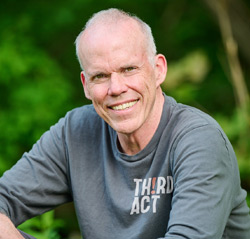
Bill McKibben is a distinguished scholar at Middlebury College and a founder of the group 350.org.
If historians someday need to explain how mankind managed to blow the fight against climate change, they need only point to last month’s shareholder meeting at Exxon Mobil headquarters in Dallas.
The meeting came two days after Texas smashed old rainfall records — almost doubled them, in some cases — and as authorities were still searching for families swept away after rivers crested many feet beyond their previous records. As Exxon Mobil’s Rex Tillerson — the highest-paid chief executive of the richest fossil fuel firm on the planet — gave his talk, the death toll from India’s heat wave mounted and pictures circulated on the Internet of Delhi’s pavement literally melting. Meanwhile, satellite images showed Antarctica’s Larsen B ice shelf on the edge of disintegration.
And how did Tillerson react? By downplaying climate change and mocking renewable energy. To be specific, he said that “inclement weather” and sea level rise “may or may not be induced by climate change,” but in any event technology could be developed to cope with any trouble. “Mankind has this enormous capacity to deal with adversity and those solutions will present themselves as those challenges become clear,” he said.
But apparently those solutions don’t include, say, the wind and sun. Exxon Mobil wouldn’t invest in renewable energy, Tillerson said, because clean technologies don’t make enough money and rely on government mandates that were (remarkable choice of words) “not sustainable.” He neglected to mention the report a week earlier from the not-very-radical International Monetary Fund detailing $5.3 trillion a year in subsidies for the fossil fuel industry.
All in all, a sneering and sad performance by a man paid nearly $100,000 a day, whose company spends $100 million a day looking for new oil and gas even though scientists say we simply can’t burn most of the fossil fuel we’ve already located without devastating consequences.
If any good can come from Tillerson’s performance, it’s that it forever breaks the idea that “shareholder engagement” with companies such as Exxon Mobil accomplishes anything. In the past few years, as the fossil fuel divestment movement has gathered steam, some colleges, governments and religious organizations have bucked the trend toward selling off their investments in these companies and announced that they would persuade them to do the right thing instead. Many of those hoping to “engage” in this way are local and state officials.
For instance, Vermont treasurer Beth Pearce has turned down repeated calls for divestment, even as fossil fuel stocks have badly underperformed the broader market. “I prefer constructive engagement where we have a seat at the table,” she said recently. “We are making our voice heard.” Vermont Gov. Peter Shumlin (D) has taken the same tack: Divestment is “not the sharpest tool in the drawer,” he said — even after more sophisticated investors from Oxford University to a Rockefeller philanthropy announced that they had given up on engagement and were divesting. (With the Rockefellers, remember, Exxon Mobil was once the family business; if they couldn’t successfully “engage,” no one can.)
But Pearce decided to take on Exxon Mobil anyhow. She said in advance of the shareholder meeting that the company’s diversification beyond oil and gas had been “wholly inadequate.” Ouch, fighting words! Her effort to have the company set greenhouse-gas emissions targets won barely 10 percent of the vote.
This kind of effort is not really designed to put pressure on Exxon Mobil. Every year the same resolutions come up and every year they are voted down — in fact, they attracted a smaller percentage of the vote this year. They’re designed instead to take pressure off officials like Pearce and Shumlin, who don’t want to offend Wall Street by divesting.
Engagement can be a sensible strategy for pressuring corporations to address the ways they run their business — Krispy Kreme, for instance, recently announced that it would do a better job of making sure its palm oil comes from a sustainable source because campaigners made such a stink about rain forests being cut down. But that’s because Krispy Kreme makes doughnuts, not palm oil; when it comes to core business questions, says former Reagan-appointed Securities and Exchange Commission member Bevis Longstreth, such engagement is like “trying to convince Philip Morris to give up making cigarettes or Johnnie Walker to abandon its distilleries.” It will, he said, “most certainly be a fool’s errand.” Rex Tillerson has proved his point.
Happily, more and more investors are giving up this sham theater. This week, Georgetown University’s board voted to sell off its investments in coal, and Norway’s sovereign wealth fund, the largest pool of investment money in the world, announced it would do the same. This came on the heels of an announcement by the University of Edinburgh that it would divest from coal and tar-sands oil. The University of Washington did the same, and the University of Hawaii went one better and announced it was selling off all fossil fuel shares. Two days later France’s largest insurer, the AXA Group, said it would get rid of its coal portfolio.
ZNetwork is funded solely through the generosity of its readers.
Donate