

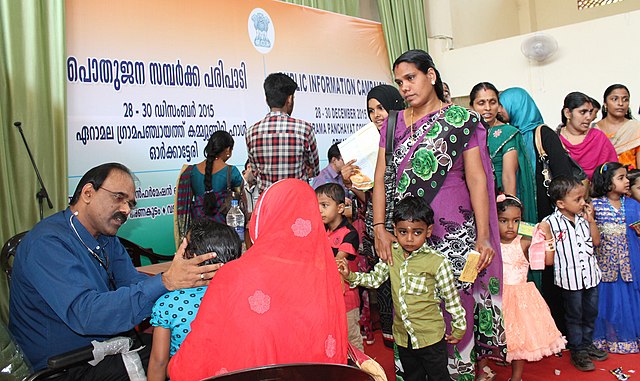
In 1945, two years prior to India’s independence, the current Chief Minister of Kerala, Pinarayi Vijayan, was born into a working-class family in northern Kerala. He was his mother’s fourteenth child; of the thirteen siblings born before him, only two survived. His mother was an agricultural labourer and his father a toddy tapper. They belonged to a downtrodden caste, deemed untouchable under the Indian caste system.
One of Kerala’s most significant achievements under Vijayan’s tenure is its status as a society with an Infant Mortality Rate (IMR) of 5 deaths per 1,000 live births. This is substantially lower than India’s national average of 25, and even surpasses nations in the Global North, including the United States (5.6).
Vijayan’s childhood was not an isolated experience; rather it typified mid-twentieth-century Kerala. According to the Kerala Fertility Survey conducted by the Directorate of Economics and Statistics, the infant mortality rate in Kerala before 1960 exceeded 100. This article explores the historical background to Kerala’s achievement and the focused interventions undertaken over the last decade.
Towards a Modern, Democratic Kerala
In 1956, Kerala was established as a state on a linguistic basis. In the first elections held the following year, the Communist Party was voted into power, marking the first time in the world that a communist party assumed power through a democratic ballot in a major polity (though British Guiana with a population of nearly 42 million had seen a similar instance on a much smaller scale).
While the first government was undemocratically dismissed by the Union government, communist-led Left administrations came to power in Kerala at regular intervals. Each term saw the implementation of transformative measures: land reforms, literacy campaigns, the strengthening of public education, welfare pensions, and the strengthening of the public health sector.
Land reforms were particularly pivotal. By abolishing landlordism and providing land security to tenant cultivators and agricultural labourers, these reforms addressed the material causes of infant mortality: food security, housing conditions, and the ability of labouring families to allocate resources in childcare rather than paying rent. From the very first left government, there were resolute efforts towards the process of decentralisation—predating national legislation—empowering local governance. This has bolstered the democratic provisioning of primary healthcare facilities with accountability at the grassroot level. By 1990, Kerala’s infant mortality rate had declined to 17.10, while India’s stood at 83.
Health Protection During Neoliberal Era
In the last decade of the twentieth century, as India began embracing neoliberal policies and reduced social security spending, healthcare became a commodity. Despite major struggles, the entry of private capital into the health sector in Kerala proved significant. However, successive Left governments remained committed to protecting Kerala’s health sector.
This reflected the accumulated strength of mass organisations, trade unions, and a politically conscious working class that made wholesale privatisation politically untenable. The successive Left created a “ratchet effect”: Once social gains were achieved, they proved difficult to reverse even by the subsequent liberal forces of Congress or UDF. Equally significant was the decentralised planning experiment in 1996, which transferred substantial resources to local self-government institutions and fortified the network of primary health centres that became the backbone of later interventions. What the Left governments achieved was not the elimination of commodified healthcare but the preservation of a public health infrastructure universally accessible. By 2015, Kerala’s infant mortality rate stood at 12 per 1,000 live births.
2016 to Present: A Decade of Mission-Driven Governance
The Left Democratic Front (LDF), led by the Communist Party of India (Marxist), came to power in 2016 with Pinarayi Vijayan as Chief Minister. In 2021, the LDF was given a consecutive term, the first time in Kerala’s history that the Left retained power continuously. During this period, two women Communist ministers, K. K. Shailaja (2016-2021) and Veena George (2021 to the present), led the health department.
One of the missions initiated in 2016 was to reduce the infant mortality rate to single digits. This required reducing neonatal mortality, deaths occurring within 28 days of birth. Two specially designed schemes merit particular attention: Hridyam and Shalabham, both part of the Aardram Mission which aims at improving the quality of the healthcare system by introducing modern treatment facilities and people-oriented healthcare at grassroots-level.
Hridyam, (“hearty,”) targets congenital heart diseases in newborns, the most common congenital defect and fourth among causes of newborn deaths. The programme equips government hospitals with advanced pulse oximeters. Within 24-48 hours of birth, trained nurses measure oxygen levels in a baby’s hands and feet, instantly flagging anomalies. Positive cases receive prompt echocardiograms, surgeries, and free treatment in government medical colleges, public tertiary centres and empanelled private institutions. The children receive comprehensive follow up care extending up to eighteen years. Around nine thousand newborn babies have been treated under this program over eight years.
Shalabham (“butterfly,”) is the Comprehensive Newborn Screening Programme, embodying the slogan ‘from survival to healthy survival.’ Institutional deliveries account for more than 99 per cent of deliveries in Kerala, of which one third occur in public health facilities. Through Shalabham, all infants born in government hospitals undergo four key screenings: visible defects through head-to-toe examinations; enhanced monitoring through a digitally equipped app; hearing screening through otoacoustic emission tests; and screening for metabolic disorders through heel-prick blood cards. Specially trained nurses and paediatricians ensure no child is missed.
Together, these free, technology-driven programmes exemplify Kerala’s leadership in public health. However, their replicability elsewhere depends not merely on technical transfer but on the existence of political conditions that prioritise public provisioning over private profit, along with an organised working class capable of defending such provisioning. Without these conditions, technical innovations remain isolated experiments rather than systemic transformations.
Kerala celebrates Onam as its national festival. A popular song speaks of a period when a mythical ruler, Mahabali, governed Kerala, under whom an ideal society existed. One line describes his time:
“There are no worries or illness,
and there are no child deaths to be heard of.”
Kerala announced the reduction of its infant mortality rate to 5, the lowest in the history of the state, on September 5 of last year, the final day of the ten-day-long Onam celebrations.
This article was produced by Globetrotter.
ZNetwork is funded solely through the generosity of its readers.
Donate




