


I love the name of this conference, United In Radical Solidarity. Solidarity to me is an action of putting into practice, the Wobbly, IWW slogan, “An Injury to one is an Injury to All.” Solidarity, if meaningful, is active, not just a feeling. Solidarity means the willingness to take risks as those in power will oppose and repress active solidarity. Without this willingness, solidarity is limited.
In this talk, I share my global solidarity activism, going back to the 1960’s, using concrete historical examples. I have three aims: 1) to show who we should show solidarity with, 2)to develop the idea of critical support and critical solidarity, and 3)examine different forms and tactics of solidarity.
I differentiate between cases where solidarity with governments and movements that are being attacked by the United States is appropriate versus cases where only an anti-interventionist practice is appropriate. In the latter case, solidarity and support is with the people and progressive movements of the country challenging imperialism and defending themselves. My analysis is from the perspective of a resident of the United States although I also consider myself a global citizen. My conclusions are relevant, especially for those living in the global north.
Global solidarity is of strategic importance for overthrowing global capitalism and creating a world where poverty, exploitation, oppression and alienation are ended, where domination and hierarchy are overcome, the second part of the title of this conference. Global solidarity makes it more difficult to isolate and defeat social movements. We live in a global capitalist world, obscenely unequal between and within countries. Transnational corporations cross boundaries with their goods and capital in search of maximum profits. Communities and workers are pitted against each other in a race to the bottom. A common response today by workers, political parties and governments is ethnonationalism. It blames immigrants and other societies for a decline in living conditions. Global solidarity is an antidote to this reactionary politics. Moreover, supporting revolutionary struggles can weaken global capital by reducing their ability to exploit others. It raises the possibility of transformative change in the country of those acting in solidarity who learn about inspiring challenges to domination and then act on this in their own country.
Global solidarity is a moral imperative. A foundational pillar for the left should be the equal value of all human life. This implies a particular burden of responsibility for those in the global north. Movements are more likely to remain principled and radical when strategic and moral concerns are united.
1960’s and the Vietnam War!
My growing and deepening opposition to the Vietnam war was a major cause of my lifetime of activism and global solidarity. At first, I thought the US aggression against Vietnam was a mistake and that a few protests, lobbying, writing letters to the editor, would end the war by the U.S., a country that I thought, for the most part supported democracy abroad. I got more involved in student and city-wide groups organizing against the Vietnam war in 1967. I learned more about the history of U.S. interventions, and that anti-communism was used by those in power to maintain support for U.S. imperialism, a new and important concept to me. I developed an ongoing systemic anti-capitalist analysis. It is one reason why I have maintained a lifetime of organizing. I went from guilt for what my country was doing to Vietnam to solidarity with Vietnam and the Vietnamese people. Guilt is sometimes a first step towards activism, but it is important to go beyond it. Similarly, in this period, I went from feeling guilty for being “white” to being in solidarity with the Black Freedom Movement in the U.S.
An effective tactic I learned while participating in an organization, Vietnam Summer in 1967, was reaching out to people and building on existing networks. We went door to door in different neighborhoods in Boston and if people were sympathetic or open to an anti-Vietnam war perspective–most weren’t at that time–we asked them to invite their neighbors, friends, family to their apartment and we would return with a slide show showing the lies of those in power and the destruction caused by the U.S. in Vietnam. We would discuss with these small groups, what they could concretely do, e.g., visiting their local congressperson and demanding the U.S. withdraw from Vietnam. They, not us, proposed the action.
A demonstration that particularly sticks out was the October 1967 march from Washington, DC to the Pentagon. Over 100,000 marched to the Pentagon; we had a permit until 5 PM. Just before five, civil and human rights leader and comedian, Dick Gregory, urged us to stay beyond five P.M., stating that justice and stopping the war were more important than being obeying the law. About 10,000 of us stayed. It was the demonstration where protesters–mainly women–put flowers on the bayonets of the military police. I remember after the last news media camera left, around 9 PM, the military police attacked us. I learned from this action not to trust the New York Times as objective, as they claimed on their front page, the following Monday, that the demonstrators had turned violent when I knew that was a lie. It is important to read the mainstream news, but do it critically.
In the late 1960’s and early 1970’s, there were two major anti-war coalitions. The one led by the Trotskyist Socialist Worker’s Party, the Mobe, took what I call an anti-interventionist position, calling for U.S. withdrawal but they did not support the National Liberation Front (NLF) or North Vietnam. The coalition I was part of, which had various names including the People’s Coalition for Peace and Justice, PCPJ, supported the total withdrawal by the U.S. from Vietnam, supported the NLF and North Vietnam and in our opposition, focused on all casualties of the war, especially Vietnamese, and not just U.S. soldiers. Also, we supported the Black Liberation Struggle and made anti-racism a central part of our program. The Mobe claimed they wanted to form the broadest movement against the war by not taking a stand on other issues besides Vietnam. We argued in joint meetings that they were ignoring the oppression of Black and other third world people by not taking a principled stand. (At that time, the term Third World was used for people in the U.S. from non-European backgrounds, what today is usually called, people of color). Another difference was direct action, going beyond peaceful, legal demonstrations. We organized and mobilized for actions that disrupted business as usual such as attempting to block the entrances to a lab at MIT that did research for weapon development, that the US military used against Vietnam, and Mayday, 1971 where 10,000 were arrested blocking the streets and government buildings in Washington, DC.
Another example of direct action was a protest of about 500 people in May 1972. We temporarily stopped a train in Del Mar, going from Los Angeles en route to San Diego to load ships going to South Vietnam to supply weapons to U.S. soldiers and their allies, the South Vietnamese Army. Seven of us were indicted by a grand jury for obstructing a railroad. I was convicted and would have served far more time in prison than I did but there was a lot of support for me, including a petition initiated by Noam Chomsky. This caused the judge to not sentence me back to prison when I returned to court after serving almost 90 days. The judge gave me a stiff probation instead. Organizing in support of political prisoners should be a part of our activism. It reduces the fear of imprisonment, reduces the probability of conviction and a lengthy sentence, and reduces our isolation if we are incarcerated
The strategy that often justifies direct action is “raising the social cost.” By social cost, we mean that the cost, not mainly in dollars, but in loss of legitimacy of the elites causes them to concede, at least partially. This is because the social cost of not conceding begins to threaten their rule and raises the possibility of systemic change. The growing support for revolutionary change, particularly among young people, partly because of their abhorrence of the Vietnam war raised the social cost of the war as did the growing support and participation for actions that disrupted the functioning of the system. This usually meant breaking the law which delegitimized the state. Of course, if actions, including sabotage, alienate most of the population, they do not raise the social cost and give the state more power to repress us. Ironically, the Vietnam war became less and less popular over time, but the anti-war movement did not become more popular.
When the United States, withdrew all its troops from Vietnam on April 30th, 1975, we celebrated the victory of the Vietnamese people and the revolutionary forces and the total U.S. withdrawal. The main reason for this victory was the persistence of the Vietnamese people and Communist Party and their military, but we had also contributed. However, a weakness of our solidarity movement with the Vietnamese struggle was that our movement rapidly declined. For the most part, we did not continue to support Vietnamese rebuilding its infrastructure and economy after April 30th, as the U.S. continued to isolate Vietnam so that it would not be a model of a thriving socialist society. The U.S. succeeded.
When we are in solidarity with liberation and revolutionary movements that win, it is necessary that concrete solidarity continues after their taking of power. This would increase the ability of the revolutionary government to meets the needs of its people, to develop in a socialist direction and to defeat ongoing attempts to undermine and overthrow it.
Critical Solidarity!
In the late 1960’s and 1970’s, much of the New Left that I was part of was in solidarity with Vietnam and its heroic fight against the United States and the victorious Cuban Revolution. To me, this was right looking back 50 years later. These were positive alternatives for the Global South—substantial land reform, free medical care and education, full employment, subsidizing basic needs, and anti-imperialist. Although many of us were critical of Cuban support of the Soviet invasion of Czechoslovakia in 1968, our overall support for Cuba tended to be uncritical. We convinced ourselves that Vietnam and Cuba were more democratic, less bureaucratic and less top-down and that workers had more power in those societies than they had. Our values were good, but we didn’t see these negative aspects. This reminds me of many people today idealizing Rojava and the Zapatistas who certainly deserve solidarity and are positive alternatives to neoliberal capitalism, but these communities and regions are not as liberatory and socialist as they are idealized.
I am advocating for a position of critical support, i.e., critical solidarity. We should respect self-determination and not require that movements we support to have all our positions. However, it does mean solidarity should be limited to those being oppressed but not to the organizations, political parties challenging the U.S. when their politics are not liberatory: when they are patriarchal or sectarian towards other religions, ethnicities; or when their political project is not aimed at improving the lives and power of the popular classes. It is important to carefully investigate the real situation and accept neither the negative slanted versions of our mass media nor uncritically support a group because they challenge U.S. power. Critical does not mean finding excuses to not be in solidarity. However, the more we are in active solidarity with liberation movements and governments, resisting U.S. domination and intervention, e.g., Cuba, the more we have the right to offer some criticism also.
In the 1980’s, a period of neoliberalism, and right-wing ascendancy and rule in many parts of the world, e.g., Latin America, there were strong solidarity movements in the U.S. and beyond with the anti-apartheid struggle in South Africa, and with the Sandinista government in Nicaragua, and with the revolutionary guerilla struggles in Guatemala and El Salvador. In these cases, much of the activism here went beyond anti-intervention to include solidarity.
Approximately 100,000 solidarity activists from the U.S. went to Nicaragua, between 1979 when the Sandinistas took power until 1990 when they lost the election. Many went to experience a society that was resisting the CIA backed contras and U.S. subversion, David vs Goliath, and seemed to be developing a socialism that was also democratic; the “New Left” coming to power. I worked for one of the Sandinista ministries in 1988, the social security ministry.
A major group in solidarity with the El Salvadorean revolutionary struggle that formed in 1980 and still continues today is CISPES, Committee in Solidarity with the People of El Salvador. It supported with literature, rallies and demonstrations, direct action and material aid, the FMLN, the united group fighting the U.S. backed right wing governments there. CISPES supported the social movements in El Salvador, including unions and the major women’s organization. CISPES organized visits of its members to go to El Salvador to meet with courageous organizers there. It worked in coalition with religious groups who opposed U.S. intervention as did the major Nicaragua solidarity organization. The movement in the U.S. prevented a U.S. invasion which was a victory although we couldn’t stop the damage to these countries and the killing of many militants which is an important factor in the non-progressive development of these societies since the 1990’s.
In Nicaragua in the 1970’s and El Salvador and Guatemala in the 1980’s, there were several guerilla organizations fighting their reactionary, U.S. supported governments. The left in these three cases, united, although as separate organizations, as the FSLN, the Sandinistas in Nicaragua; the FMLN in El Salvador, and the UNRG in Guatemala. Solidarity groups in the U.S. supported these three coalitions rather than the individual guerilla organizations. It is wrong for solidarity groups to pick one organization to support when they are more than one who are deserving support. It is us choosing who we prefer rather than the people of the country involved in a revolutionary movement. For example, in South Africa, although I personally preferred the politics of the ANC for their inclusiveness and for their socialist program to the Pan African Congress (PAC), I thought we should be in solidarity with both. In retrospect, we should have also been in critical support of both the two main liberation groups in Zimbabwe, ZAPU and ZANU, not just ZANU. In other anti-colonial struggles in southern Africa, there were groups that espoused decolonization and independence but were supported by and dependent on the CIA and South African intelligence. They were counterrevolutionary, e.g. UNITA in Angola. We need to investigate carefully before making these important choices.
A criticism made of our global solidarity activism is that we are intervening in the politics and struggles in other countries which is similar to what the U.S. government is doing; that our interference in other countries violates their right to self-determination. My response is that our actions and motives are totally different. The aim of U.S. intervention is U.S. capitalist domination and against the interests of most of the local population. It is our responsibility to oppose this. U.S. government involvement in the internal politics of other countries is fundamentally different from grass roots solidarity groups in the U.S. acting in solidarity and supporting struggles with and by local people and organizations against imperialist and capitalist domination.
Another criticism is that we only criticize U.S. imperialism and there are other imperialisms, e.g., the Soviet Union or Russia today. Yes, there are others although I consider U.S. imperialism still the most destructive and powerful one. More importantly, U.S. residents are more capable of making a difference in the country where they live than in another country, and that we have a special responsibility as it is being done in our name by our government. I remember in one of my visits to Nicaragua in the 1980’s, at a rally there, a speaker said that the U.S. government was their enemy not the American people who are our friends. They asked me to speak, and I said, thank you, and added, that it is our responsibility to divide further the people of the U.S. in their views and actions from that of the U.S. government and corporations.
Anti-Intervention and Solidarity with Whom?
It was right to oppose the U.S, wars in Afghanistan and Iraq but most of those fighting the United States occupation did not deserve solidarity. Solidarity should be with movements, parties, governments who are not only opposing the U.S. but whose objective is a liberated and just society. This made it difficult to build a strong anti-intervention and anti-war movement even though anti-war activism was necessary. There was not the inspiration and energy that solidarity activists brought to the Vietnam, Central America and anti-apartheid struggles.
Solidarity with social movements and the popular classes in the Global South and our anti-interventionist perspective should also include actively challenging economic dominance. This imperialist economic intervention includes using U.S. power to further the profits of multinational corporations. It means extending high interest rate loans, often from international financial institutions, and demanding as conditions for these loans, privatization, low corporate taxes and anti-labor legislation. Economic intervention includes the U.S. and global capital promoting and supporting neoliberal governments wining and staying in power in the Global South and the connected corporate exploitation of labor and environmentally destructive extraction of natural resources at low prices. Sanctions by the U.S. government on the imports to and exports of other countries, and stopping or limiting their participation in the dollar dominated global financial system are a form of economic warfare.
Palestine
I have been active in supporting Palestinian self-determination and in solidarity with Palestinian Marxist groups since the 1970’s, supporting an arms embargo of Israel and since 2005, the BDS (Boycott, Divestment, Sanctions) movement. Solidarity with Palestine has been a major part of my activism and of many people I work with since October 2023. The Palestine solidarity movement has contributed to declining popular support for Israel in the population here and increasingly by the U.S. Congress although U.S policy has not changed—backing Israel’s genocidal war against Gaza and ethnic cleansing of the West Bank continues. Opposing U.S. support of Israel should be a part of the agenda of every progressive group in the United States, it is a defining moral issue of our time. Also deserving our solidarity is supporting the right of armed Palestinian resistance. This means supporting Hamas, Islamic Jihad and other groups in their resisting the Israeli genocide. This does not mean solidarity with and support of Hamas and other organizations whose vision is not liberatory. I am making a distinction between supporting Palestinian resistance in which Hamas plays the major role today versus specifically supporting Hamas as a revolutionary party. Their ideology and policies are patriarchal and neither democratic nor do they promote economic equality in Gaza. Hamas has the right to fight an armed struggle against the Israeli occupation and ongoing blockade, although this does not mean that I support the killing of Israeli civilians except when Israeli civilians are committing violence and ethnic cleansing against Palestinians in the West Bank and East Jerusalem.
In our activism, speaking, writing about Palestine our focus should be on ending the horrific U.S. role and not on Hamas’s shortcomings given the already public prejudice against Palestine armed resistance. This has meant understanding the reasons for the Hamas attack on Israel of October 7, 2023, and publicly neither condemning nor supporting it. This was the position of Palestine Action of South Sound, the group I actively participated in.
Debate on How to Oppose the Iran War!
I will end with a brief analysis of the U.S, and Israeli war against Iran, the latest one beginning w February 28th, 2026, with their murderous bombing. I briefly present two major positions of the left. Both strongly oppose the ongoing U.S. aggression. The first position is presented in in a letter to the The Guardian, August 20, 2026. “To Iran’s Political Prisoners, Trapped “Between Two Blades of a Scissor”, Open Letter”. It was signed by several well-known left activists and writers, some who have been political prisoners and others who have written in defense of political prisoners and towards carceral abolition, including Angela Davis, Mumia Abu-Jamal, and Walden Bello.
I support this position. It totally opposes the U.S. and Israeli war and sanctions against Iran but also calls for supporting Iranian political prisoners. The second position calls for an anti-war movement that does not make any criticism of the ruling class of Iran, or of repression there. In this perspective, the position and practice of the anti-war movement should be limited to the task of ending the war and the sanctions against Iran. The debate has been heated on social media.
For the most part, both sides agree that Iran is a repressive, patriarchal, capitalist society. I believe that although our main task is ending the U.S.-Israeli war against Iran, we should also support Iran’s political prisoners and demand that their government end executions, which are numerous, the highest per capita in the world. Ours is a strong anti-interventionist position with solidarity with Iranian political prisoners but not with the Iranian state. Complicating this position is that Iran is waging a brilliant defensive war against the United States which is undermining U.S. military and political hegemony and making the world multipolar. The U.S. aggression has little popular and government support world-wide, no prospect of achieving its objectives and unequivocally weakens the position of the dollar and United States internationally.
I am arguing for reforms in Iran and support for those Iranians under attack but against the overthrow of the Iranian government as long as the war continues. When the war ends and hopefully the U.S. is defeated it is up to the Iranian people to decide their future.
Most of those who hold the second position of no criticism of Iran do not support the Iranian State and their policies. They know it is not progressive, internally. But they believe that criticism of Iran weakens the support in the U.S. and globally of the Iranian defensive war, strengthens the side of U.S. aggression and weakens support for the anti-war movement. Holders of this position claim that most people cannot simultaneously hold two truths, criticism of Iran internally while opposing the U.S. and Israeli war and sanctions against Iran. In this perspective, politics is usually reduced to geopolitics, only one’s international stance matters; are you on the side of the U.S. or not? This denies that people can holds two truths simultaneously. This position often claims the internal opposition is being duped by Israeli or U.S. intelligence or are supporters of the United States and want to restore the Pahlavi family to power. It is true that Israeli intelligence, the Mossad, and the CIA are involved in subversion in Iran but opposition there should not be reduced to that. It denies the subjectivity of the Iranian people. It trivializes the major protests and mass participation against the Iranian government in 2022, the “Women, Life, Freedom” protests; and the massive protests in December 2025 and January 2026, against their economic hardships.
Conclusion
In the 1960’s and 1970’s, the central revolutionary struggle was anti-U.S. imperialist–national liberation struggles and societies in the Global South trying to build socialism, e.g., Chile in the 1960’s and early 1970’s, Cuba, post 1959. Solidarity with these struggles and societies was not problematic for those who wanted a socialist world although it should have been a critical solidarity. Today, countries and armed political parties such as Hamas and Hezbollah most actively resisting U.S. and Israeli imperialist domination are not anti-capitalist or socialist. In these and similar cases, we should oppose U.S. and Israeli intervention, not only wars of aggression and covert intervention, but also economic dominance.
Our solidarity should be with social movements and organizations and people who are organizing for justice, liberation and socialism.
Si Se Puede, Yes We can!
Thank you!

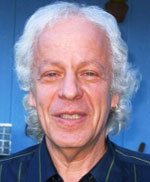
Peter Bohmer has been an activist in movements for radical social change since 1967, which have included anti-racist organizing and solidarity movements with the people of Vietnam, Southern Africa, Puerto Rico, Cuba, Palestine and Central America. For his activism and teaching, he was targeted by the FBI. He was a member of the faculty at the Evergreen State College in Olympia, WA from 1987 to 2021 where he taught political economy. He believes alternatives to capitalism are desirable and possible. Peter is the proud parent of a daughter and three sons.
ZNetwork is funded solely through the generosity of its readers.
Donate




