
Please Help ZNet
Source: Democracy Now!
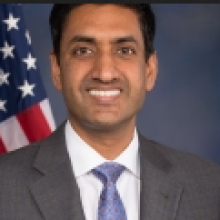
Congressmember Ro Khanna of California says hundreds of billions of dollars in annual defense spending could be better used on diplomacy, humanitarian aid, public health and other initiatives. He’s one of 50 House Democrats who signed a letter to President Joe Biden in March urging a “significantly reduced” Pentagon budget, which has grown to over $700 billion. “The Pentagon increases make no sense,” says Khanna. “If you’re ending the forever war in Afghanistan … then why are we increasing, at the same time, the defense budget?” Khanna also discusses the Saudi-led, U.S.-backed war in Yemen, a major U.S. arms deal with the United Arab Emirates and more.
AMY GOODMAN: You tweeted Tuesday Congress should reject President Biden’s Pentagon spending hike, at the same time he’s talking about pulling out of Afghanistan. You wrote, “Instead of continuing to increase the bloated Pentagon budgets or defense contractors, we should invest in keeping us safe from pandemics and climate change. We need a 21st century national security strategy.” And you signed, along with 50 House Democrats, a letter to Biden from the Defense Spending Reduction Caucus that read in part, “Hundreds of billions of dollars now directed to the military would have greater return if invested in diplomacy, humanitarian aid, global public health, sustainability initiatives, and basic research.” So, talk about Biden both announcing he will end this forever war but increasing the Pentagon, and what you think needs to happen.
REP. RO KHANNA: Amy, the Pentagon increases make no sense. President Biden’s own secretary of treasury describes the federal budget as military spending plus pensions. The military budget is 50% of discretionary spending. We have not seen the breakdown yet, but if you’re ending the forever war in Afghanistan — as the president pointed out, that should save about $50 billion a year — then why are we increasing, at the same time, the defense budget?
We need to look at where the numbers are being allocated, and have a strategic reduction and allocate that instead in the threats that the United States faces — potential pandemics, climate change, cybersecurity. So, I am going to continue to advocate on the Armed Services for a smart defense budget that meets the 21st century needs. One final point, we ought to be returning them to where Obama-Biden had it, which was significantly less, instead of increasing it from where Trump had it.
NERMEEN SHAIKH: And, Congressmember Khanna, I’d like to turn to another issue now which you’ve also been very active on, and that is the war in Yemen. You joined almost 80 other Democrats urging President Biden to demand an end to the Saudi-led blockade of Yemen, telling The Nation magazine, quote, “What we’ve seen is that the blockade is really what’s starving Yemeni children and Yemeni civilians. Right now, there is a moral outrage in Congress about what’s going on.” Has President Biden or anyone in his administration responded to what you’ve said? And could you explain also Biden’s promise to end all American support for offensive operations in the war in Yemen, including relevant arms sales? There have been some questions raised about what support, precisely, apart from that, that President Biden has pledged to end.
REP. RO KHANNA: Well, Nermeen, there’s no doubt in my mind the administration needs to be doing more to stop the Saudi blockade of Yemen. There is food and medicine getting in, but that’s not the point. The fuel is not getting in. Very little fuel is getting in. That is leading to a great difficulty in getting the food transported to people who need them. It’s leading to blackouts at hospitals. And the administration says, “Well, the Houthis are to blame, as well.” Sure, the Houthis are to blame, as well. No one is saying that the Houthis are angelic actors. But David Beasley at the World Food Programme, the United Nations have said that the biggest source right now of the famine is the blockade of the fuel getting in.
I spoke to the Saudi ambassador, and she said, “Well, we’re not engaged in a blockade. We’re just enforcing the U.N. resolution.” Well, enforcing the U.N. resolution to prevent fuel getting in is a de facto blockade. So the Saudis shouldn’t be enforcing any resolution. If anything, it should be a third party. The National Security Council now is engaged on this. We are going to be receiving briefings from Lenderking and others. And they know how serious the House and the Senate are about taking further actions if that blockade is not lifted.
NERMEEN SHAIKH: Congressmember Khanna, even as President Biden has said that he will stop U.S. arms sales to Saudi Arabia over what’s happening in Yemen, the administration is moving ahead with more than $23 billion in weapons sales to the UAE, to the United Arab Emirates. Your response to that, given the UAE’s previous involvement in the war in Yemen, in supporting Saudi Arabia?
REP. RO KHANNA: I believe it’s a mistake. I don’t know, and there’s no evidence to suggest, that they’re continuing to be involvement militarily in the war or, for that matter, the blockade. But there are reports — and again, these are reports — that there is funding from the UAE, from the Saudis, and even from Iran, still making its way into Yemen. And one of the issues that Martin Griffiths and others have said is that we have to stop any of the external funding into the Yemen civil war, or the war will never end, if the groups fighting there are continuing to get support from outside. And so, until the UAE stops all of that funding and we have verification of that, until their commitment to some form of reparations to Yemen for redevelopment, I don’t believe we should be affirmatively selling them more weapons.
AMY GOODMAN: Speaking of reparations, Tulsa is the site of one of the deadliest massacres in iU.S. history. Nearly a century ago, in 1921, a white mob attacked a Black neighborhood in Tulsa, killing as many as 300 African Americans. Over two days, white mobs set fires to homes, businesses, churches in Greenwood, a thriving African American business district known as “Black Wall Street.”
Congressman Khanna, you tweeted an article titled “Why Black Wall Street Should Be Rebuilt as a Global Capitol of Black Tech,” and wrote, “This is Silicon Valley’s moment to prove a commitment to solving systemic injustices. Together, we can build upon the foundation of Black Wall Street in Tulsa and invest in @Blacktechstree1.” This is particularly relevant because you represent Silicon Valley. Also, for the first time, a committee just voted out a reparations committee bill that will be voted on the floor of the House next week. Can you talk about exactly what you’re calling on the Silicon companies to do?
REP. RO KHANNA: Amy, thank you for noticing that. First, I’m very proud that Sheila Jackson Lee’s reparation bill is going to get a vote, eventually, in the House this time. I obviously support it. And what we need to think about is: What does it mean to have reparations? One of those views, in my opinion, is economic development. The racial wealth gap in this country has increased since the end of formalized Jim Crow. We actually have more wealth disparity between white families and Black families. One of the reasons for this is the total exclusion of many Black communities, Black entrepreneurs, Black venture capitalists from the wealth generation of the digital economy, from the wealth generation of Silicon Valley.
I met a brilliant young man, Tyrance, who went to Tulsa and is now trying to make Tulsa a technology hub, attracting venture capital, attracting entrepreneurs, attracting remote workers in tech who may be leaving Silicon Valley or Boston because they can now work remotely. I would like to see all of the technology companies and venture capitalists support this young man’s vision. Already we’re seeing venture capital go there. But if we could rebuild Tulsa into a technology hub that is thriving with entrepreneurship, what a wonderful story that is, is a 21st century response to the destruction that happened with Black Wall Street.
AMY GOODMAN: Well, I want to thank you so much for being with us, Ro Khanna, Democratic congressmember from California, member of the House Armed Services Committee.
ZNetwork is funded solely through the generosity of its readers.
Donate