


With the neo-fascist AfD overtaking – or at least matching – Germany’s traditional conservatives, Merz’s CDU, in recent public polling, a renewed debate has emerged on how to challenge the authoritarian, far-right, or even neo-Nazi AfD.
Meanwhile, the neo-fascist AfD has – almost – become Germany’s strongest political force: 26% over the CDU’s 25%. Polling agency Forsa (November 2025) predicted: the CDU at 24% and AfD at 26%.
Worse still, the AfD has received, according to recent polling, between 30% and 40% voter support in Saxony-Anhalt – an East German state scheduled for state elections in September 2026.
One possible recipe against the AfD can be found in the East German town of Templin and in West Germany’s Duisburg. Yet, almost every conceivable strategy against the AfD seems to incur rather unpleasant side effects.
For example, banning the authoritarian and anti-democratic AfD might reinforce the hallucination that the AfD is a “victim.” Neither the Nazis (1930–1945) nor today’s neo-Nazis have ever been victims.
Still, many know that if Germany’s civic society stands together, the right-wing extremist party has no chance in terms of power politics. At the same time, one gets the impression that the AfD – unlike almost all right-wing populist and extremist parties in Europe – exists under a kind of “political quarantine.”
No democratic party cooperates with the AfD in any parliament – apart from Merz’s pandering or better: colluding with the AfD in February 2025.
Still, Germany’s most successful right-wing hooligans are kept away from representative offices such as, for example, the Bundestag Presidium – responsible for the routine administration of Germany’s parliament, including its clerical and research activities.
Anyone who plays foul is not fit to be a referee in Germany’s parliament. Meanwhile, the repeated exclusion of the AfD has not stopped its rise.
Worse still, the conservative ex-Minister Karl-Theodor “zu” [read: aristocrat, i.e. born with the conviction of being “born to rule” – over us!] Guttenberg wants to end the boycott and “disenchant” [read: legitimize] the neo-fascist AfD.
Guttenberg is widely remembered for the “extensive” plagiarism in his doctoral dissertation and the University of Bayreuth’s decision to revoke his doctorate – an affair known as the “Guttenberg plagiarism scandal.” He resigned from all political positions in March 2011.
Meanwhile, former CDU General Secretary Peter Tauber – himself not a particularly right-wing man – wants to free the CDU, as he calls it, “from the Babylonian captivity of red-green.” As if the social-democratic, moderate, and highly accommodating SPD (red) and the petty-bourgeois environmentalists, the Greens, had ever held the CDU captive.
Shiftily, they advocate “no cooperation with the AfD” – but somehow want exactly that. Historically, this is a touchy issue, as German conservatism, in the form of Papen, made Hitler’s first coalition government possible. The world knows what followed.
Yet, for Guttenberg and Tauber, the image they conjure is that of a CDU minority government – supported by the authoritarian and anti-democratic AfD.
After the 2026 elections in Mecklenburg-Western Pomerania and Saxony-Anhalt, their beloved conservative CDU might only be able to secure a majority either with a Red-Green-Red coalition (Die Linke/Greens/SPD) or with Germany’s extremist far right: the AfD.
Under the latter scenario, the neo-fascist AfD would have its foot in the door of democracy – and would be able to destroy it from within.
There are often completely opposing positions on the AfD inside the conservative CDU. For the CDU, there seems to be no strategy that avoids unintentionally helping the AfD.
Not least the idea that, by joining the AfD in hammering migration, the CDU could attract voters. It has been shown time and again that this strategy is doomed, as voters:
- are made to believe that social ills result from a single issue – migration; and
- once convinced that migration is “the” issue, tend to support the original (the AfD) rather than the copy (the CDU).
The demarcation – unhappily christened the “Firewall” – gives the conservative party an attractive aura of fighting against the dangerous AfD.
For propagandistic purposes, the AfD uses its exclusion by Germany’s democratic parties to rub the ideology of “double standards” under their noses – insinuating that it is a democratic party.
The neo-fascist AfD is not a democratic party. Yet, the authoritarian and anti-democratic AfD plays “Robin Hood,” while its very own neoliberal program advocates the opposite: take from the poor to give to the rich.
Meanwhile, German conservatism – in the form of Merz’s CDU – is currently relying on a failed tactic: imitation. The CDU’s minister Alexander Dobrindt is even trying to overtake the AfD with his own version of an anti-migration policy.
This only exists because the AfD exists. Yet voters trust the original (the AfD) more than the Ersatz, the copy (the CDU). Worse, the calculation that falling migration numbers mean falling AfD approval does not work out. The neo-Nazi does not need the migrant next door to remain a neo-Nazi.
The political isolation of the AfD by Germany’s democratic parties often seems rather helpless. Germany’s debate on how to effectively combat the AfD is reminiscent of a Formula 1 race – fast, noisy, and endlessly circling.
Meanwhile, recent elections in Germany’s most populous state, NRW (18 million – about the same as the Netherlands), and in East Germany’s Brandenburg show that, in both states, the AfD is not gaining real power.
For example, in East Germany’s Eisenhüttenstadt – where the authoritarian and anti-democratic AfD received more first votes in the recent Bundestag election than the CDU, SPD, FDP, and Greens combined – the AfD candidate still lost the run-off election for mayor.
In East Germany’s Frankfurt (Oder), a non-party candidate defeated the right-wing AfD candidate. Meanwhile, in West Germany’s Duisburg, Hagen, and even in much-debated Gelsenkirchen, the AfD had no chance in any run-off elections.
And in East Germany’s Templin, the much-favoured AfD mayoral candidate – set against an SPD opponent – pulled the short straw: the AfD lost. An important pattern has emerged:
the AfD is growing,
but the resistance to it is stronger in the end.
The rather bleak prospect of being (mis)represented by right-wing extremists mobilises Germany’s democratic and urban communities from the Rhine in the west to the Oder in the east. This is not a matter of automatism – yet it is, for once, a positive development.
Meanwhile, the AfD continues to radicalise itself. In some cases, its “ethnic fundamentalism” – more correctly: racism – even pays off in elections. Yet the authoritarian and anti-democratic AfD can win polls, not necessarily elections. When it comes to taking power, the AfD hits a wall.
It seems as if “Weidel & gang” are neither willing nor able to follow in the footsteps of France’s far-right Marine Le Pen, who – despite her SS-loving father – has steered her movement toward at least the appearance of “de-radicalisation.” She has put on a propaganda show that, for now, seems to be working.
Back in next-door Germany, the AfD is suffocating in a strategic trap. Any strategy to “tame” the AfD with offers would only achieve one thing: loosening that trap.
The false hope that the AfD would moderate itself once in power is as misguided as believing Adolf Hitler or Donald Trump (Project 2025) would – in both cases, things only got worse.
The AfD seems incapable of de-demonising itself. Expecting to bring far-right demagogue Alice Weidel to moderation is naïve – at best.
Worse, virtually all attempts by conservatives across Europe to “disenchant” the far right through cooperation have ended in disaster.
The political isolation strategy – which Germany’s democratic parties largely follow – seems effective. It is, perhaps, the best of all bad strategies.If German conservatism accepts the AfD as “normal” – as it once did with Adolf Hitler in 1933 – then there will soon be AfD mayors, councillors, later state premiers, and even federal ministers and, to the utter delight of Germany’s right-wing extremists, perhaps even an AfD chancellor. Since 1933, the world knows what that means.

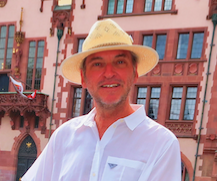
Thomas Klikauer has over 1200 publications (including 16 books) and writes regularly for Cross Border Talks ( Europe), Countercurrents (India), and ZNet (USA) on global warming, labor relations, and Germany’s far right.
ZNetwork is funded solely through the generosity of its readers.
Donate




