
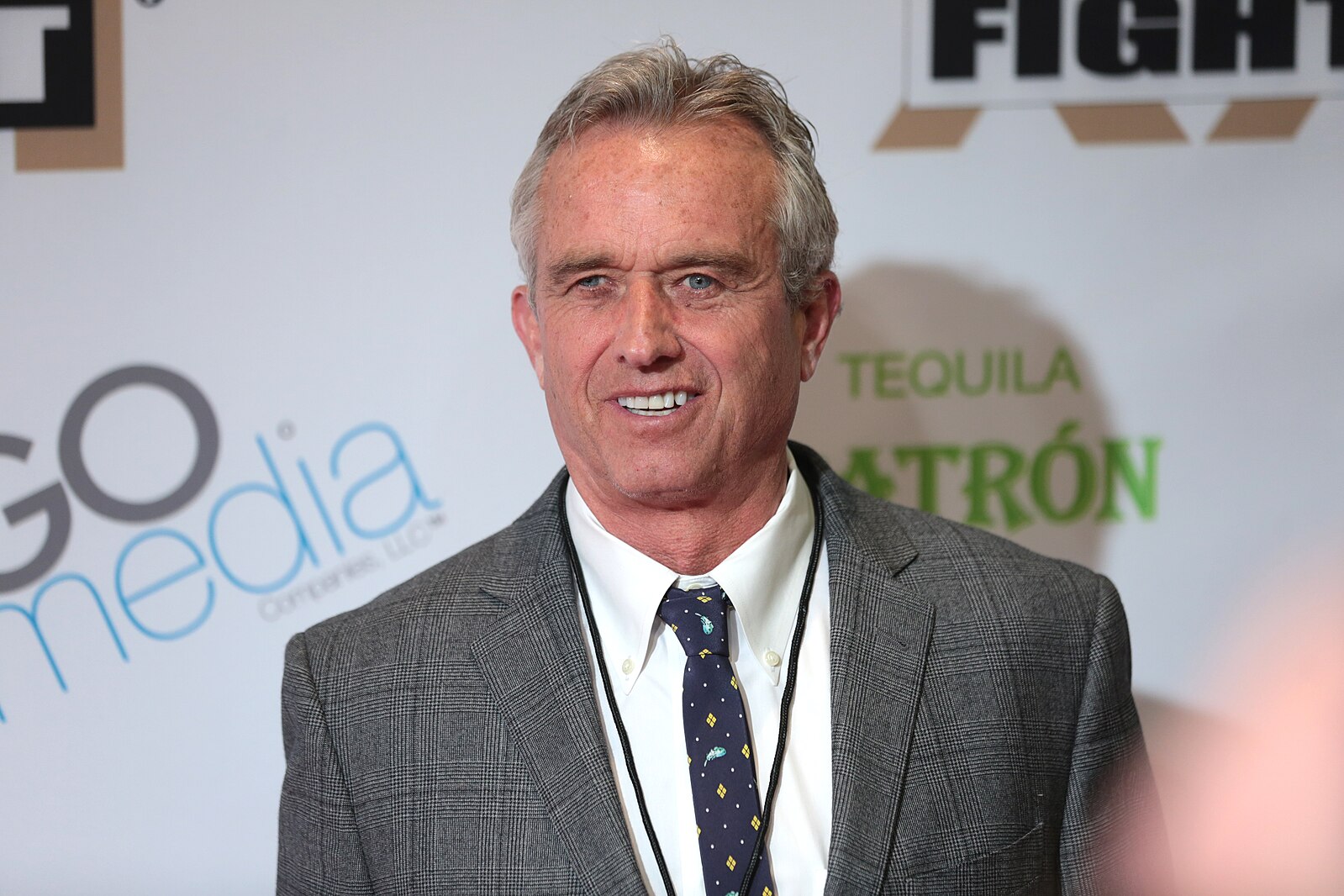
As a proudly Autistic person, I can say that, rightfully, there has been much ridicule and outrage among decent and thoughtful people about President Trump’s recent press conference on Autism. Although the specific consequences of Trump’s pronouncements on public health and Autistic persons are not yet clear, it seems safe to say that nothing good can come of them. It is especially dangerous that the president’s Autism policy is being heavily influenced by wellness industry quackery, of which four of the health officials of his administration flanking him at the press conference–Robert F. Kennedy Jr., Mehmet Oz, Marty Makary and Jay Bhattachariya–are leading proponents.
As extreme as the Trump administration is, sadly in key ways it represents a continuation of longstandingly prevalent misguided and destructive thinking in the United States about Autistic people. A main Trumpian continuation of previous policy is that the voices of Autistic people are virtually absent in the creation of governmental policy–instead we are demonized and targeted for eradication (through the quackish treatment and preventative steps recommended by Trump). As the late Autistic journalist Steve Silberman demonstrated in his landmark 2016 book Neurotribes:The Legacy of Autism and the Future of Neurodiversity, the search for a “cure” for Autism ignores substantial evidence that Autism isn’t a mental illness or disorder but part of a normal and healthy variation in human brain development.
For decades, the leading voice for Autism policy in American political and social life–and placing front and center in its mission the search for an Autism “cure”–has been the non-profit Autism Speaks (AS). Like the Trump administration’s policy toward Autism, AS has historically ignored the voices of Autistic people and concentrated instead on the concerns of parents of Autistic children who want to find a “cure” to make their kids “normal.” Perhaps the worst aspect of AS’s pursuit of a “cure” has been its promotion of Applied Behavior Analysis (ABA) as treatment for childhood Autism, with critics arguing that ABA leads to significant psychological damage in its Autistic targets.
In response to criticism that it excludes the voices of Autistic people from its policy formulations, AS has taken a few modest steps, including the addition of several Autistic medical professionals and researchers to its 28 member board of directors. Similarly, the federal government’s leading advisory board on Autism, the Interagency Autism Coordinating Committee (IACC) has 3 Autistic persons on its 31 member board–however it has not been convened since Trump returned to the White House in January.
The appointment of a few upper class Autistic medical professionals to government agencies like IACC or corporate non-profits like AS will do little to address the problem of exclusion of Autistic voices. Most Autistic people, like most people in the world generally, are poor or working class. Their most basic need is not to find a non-existent “cure” for their condition but to access the basic necessities to live an independent life: food, shelter, health care and an adequate stream of income.
Job Market
The foundation for a minimum level of existence for most people in the United States is to generate income from employment. It is here where the voicelessness of autistic people is especially exacerbated. The unemployment rate of autistic adults is extremely high–85 percent by one estimate. One reason for this is that autistic people often learn new tasks and process and respond to verbal communication in ways that may be slower than those of non-autistic peers. As I can testify from personal experience, it is not often that employers (especially those offering higher range salaries) are willing to accommodate these Autistic needs even if they are offered a considerable tax break for doing so.
In many cases, these Autistic adults are able to secure paid employment only as part time, cheap labor; they are integrated into full time employment only to the extent that they can “mask” i.e. suppress the symptoms of their condition (for instance, the need to engage in stimming behavior). Masking by Autistic people can lead in some cases to having successful careers; but it can also be psychologically damaging in the long run–as is always the case when one tries to suppress one’s true self.
Common Ground
Autistic people–of whom, as mentioned above, I am proud to be one, having received my Asperger’s Syndrome diagnosis as an adult in 2012–face extremely unique challenges. We often have complex needs in terms of communicating with others and processing what goes on in the world around us. All too often the non-Autistic world is unwilling or unable to accommodate our needs. It is in an attempt to give self-expression to autistic people that groups like the Autistic Self-Advocacy Network have arisen. More than anything, autistic people need understanding, acceptance and tools for self-empowerment; the misinformation and bigotry promoted by the Trump administration should be opposed by all decent people.
ZNetwork is funded solely through the generosity of its readers.
Donate