
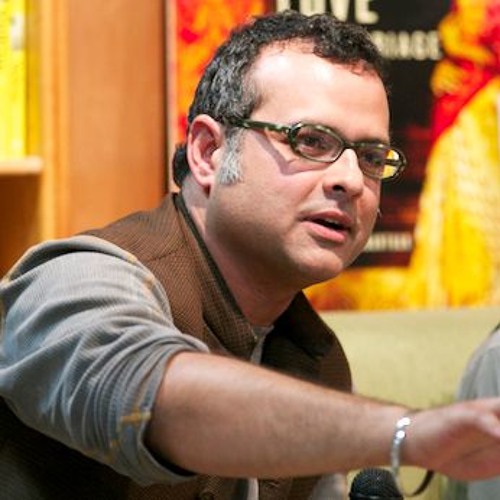
Vijay Prashad
No one can guess the horror of Ms. Rachna Katyal as she sits aboard the
Indian Airlines plane (IC-814) in Kandahar, Afghanistan. Recently married, Ms.
Katyal was on her way home to Delhi from a honeymoon in Kathmandu when her plane
was hijacked for a horrifying ride across southern Asia. Because her husband Mr.
Rippan Katyal looked too long at one of the hijackers, he was killed and his
body thrown from the plane. A few hours ago, Mr. Katyal was cremated while his
wife was denied permission to leave the plane by those who still hold it and
most of its passengers hostage.
After a period of speculation, reports now confirm that the hijackers demand
the release of Maulana Masood Azhar, a Pakistani who has been in an Indian jail
since 1994. This is at least the fourth attempt by Mr. Azhar’s organization, the
Harkat-ul-Ansar, to spring him from jail (a previous attempt, in July 1995,
resulted in the death of several foreign tourists). Mr. Azhar, a professor at
Karachi’s Jamia Uloom-i-Islami, came to India on a Portuguese passport to
coordinate the activities of two bands of extremists. First, those under the
command of Sajjad Khan (or Afghani), a Pakistani with the Harkat-ul Mujahideen,
and, second, those with Nasarullah Mansur Langaryal of the
Harkat-ul-Jihad-i-Islami International (founded in 1980 by the
Jamaat-ul-ulema-Islam and the Tablighi Jamaat of Pakistan with the blessings of
the US). The Indian security forces arrested all three in a fortuitous
operation.
New Delhi Television now reports that one of the hijackers is Mr. Ibrahim, a
brother of Mr. Azhar. The hijackers asked for the release of the Pakistani
extremist (along with 160 associates), and their act has once more raised the
question of Kashmir for the world. The <Washington Post> offered the
following comment: ‘Focused as it is on a Kashmiri separatist leader, the
incident again highlighted the trouble that continues to plague the Indian
subcontinent because of the conflict over the majority Muslim region. Most
Indians are Hindus, and controversy over control of Kashmir has sparked intense
border skirmishes with the neighboring Muslim state of Pakistan" (Howard
Schneider, ‘Jet’s Hijackers Demand India Free Pakistani,’ <Washington
Post,> 26 December 1999, A1).
Once more the US mainstream media fails its readers, but goes along the grain
of US strategy in the region. To say that ‘most Indians are Hindus’ and to speak
of Pakistan as a ‘Muslim state’ adopts the kind of ethnicist rhetoric of the
right wing chauvinists in both India and Pakistan. India is a multi-ethnic state
despite the shenanigans of the ruling Bharatiya Janata Party, and the
Islamicists in Pakistan face a civil society uncommitted to their bigotry.
Furthermore, ‘controversy over Kashmir’ is hardly the reason for the border war
of June-July 1999, since that violence was fomented principally by the
instability occasioned by the nuclear tests of May 1998. The trials of Kashmir
will not be solved by its absorption into Pakistan or by its formal independence
(a position dropped by most former secessionists).
The US’s idea of ‘democracy’ in such places is to preach Balkanization along
ethnic lines, a racist notion that does not even allow for the multi-religious
and multi-linguistic character of Kashmir. If Balkanization was a bad word until
recently, Madeline Albright and the State Department seem to have adjudged it to
be a worthwhile strategy in the Balkans itself. The military-feudal government
of Pakistan uses Kashmir as a political wedge with which to create instability
along its border with India. The bourgeois-landlord government in India,
meanwhile, fails the Kashmiri people whose own voice is given no place in the
discussions over its future. While India and Pakistan sit at a table and talk
about Kashmir (in circumlocutions, no doubt), the Indian government refuses to
talk to disaffected and alienated Kashmiris. The Left movement in India has as
one of its principal demands the re-creation of trust amongst the people and the
provision of ‘maximum autonomy within the Indian Union’ (from the Communist
Party of India-Marxist). Religion is not as much a wedge in Kashmir as the lack
of structures for political power and socio-economic development in the region.
People such as Mr. Azhar see the Kashmir struggle as an opening for an
Islamic jihad rather than for the liberation of the Kashmiri people themselves.
In 1994, Mr. Azhar told Pakistani Television that ‘soldiers of Islam have come
from twelve countries to liberate Kashmir. Our organization has nothing to do
with politics. We fight for religion. We do not believe in the concept of
nations. We want Islam to rule the world.’ While once the Kashmir-based Jammu
and Kashmir Liberation Front fought for the development of the Kashmiri people,
the Pakistan-based (and latterly Afghanistan-based) Islamicists fight without a
program for Kashmir itself. Their struggle is already alienated from the people.
However, the hideousness of the Hindu Right produces insecurity amongst many
Muslim youth, some of whom turn to these well-funded Islamicist organizations to
ease their own fears within their own land. This is the tragedy of Kashmir,
caught as it is between the vise of competing, but still relatively marginal,
reactionary forces.
The US now has Mr. Azhar’s group on its terrorist list. Those notorious
cruise missiles that struck Afghanistan in August 1998 killed HUA militants in
Khost, as they trained for their various jihads. However, the activities of Mr.
Azhar’s group allow the US to further its strategy in Southern Asia, which is to
ensure that the states there remain weak and, therefore, open to penetration by
US capital. On 6 October 1999, Karl Inderfurth (Assistant Secretary of State for
South Asian Affairs) told the School of Advanced International Studies that US
attention was focused on South Asia for, principally, ‘the economic potential of
the regionI the South Asian region is potentially one of the world’s largest
markets, and commercial opportunities are growing. Liberalization is improving
the investment climate for US business throughout the region. India is one of
the ten major emerging markets, especially for the high-tech sector.’ As the
militants, the right wing and the US officials seem eager to keep the pot of
Kashmir on boil, this will facilitate an active US entry into matters of state
in South Asia (as it latterly has done so). Strong South Asian solidarity might
block the will of the US, and it may even ask that the Seventh Fleet withdraw
from the Indian Ocean and its Diego Garcia base (on which, more in a separate
commentary).
Meanwhile IC-814 sits on the tarmac in Kandahar. The Indian foreign minister
is recalcitrant to negotiate with the hijackers, since ‘our position on
terrorism is well-known.’ The Pakistanis allege that the hijackers may be Indian
secret agents whose mission is to embarrass Pakistan. The Taliban asks the UN to
intervene, and Erick de Mul of the UN in Afghanistan frets about the situation.
Images of the incident travels across the world. Reports of dangerous ‘Islamic
terrorists’ revisit the kinds of stereotypes made common during the 1991 Gulf
War. Context vanishes, as the US media speaks with a mixture of condescension
and concern for the region. There is little concern for the alienated Kashmiris,
for the failure of partition as a solution to the problem, for the production of
more such crises through the failure of capitalist development that side of the
imperialist curtain. The Katyars join a long line of the victims of the
insurgency over Kashmir, one that will continue as long as the right rules the
destiny of South Asia.
