


In this recorded webinar, economist and political activist, professor Robin Hahnel gives a presentation of his new book A Participatory Economy (2022), highlighting the latest features of his coherent vision for an alternative to capitalism, known as a Participatory Economy. The presentation is followed by questions and answers from a U.S and European audience. The event took place on the 3rd November 2022 and was hosted by the Participatory Economy Project and AK Press. Thomas Piketty describes A Participatory Economy as: “A key contribution to the on-going debate on democratic and participatory socialism. A must read!”
The book A Participatory Economy is available as paperback, ebook and audiobook: https://participatoryeconomy.org/book…
▬▬ Contents ▬▬▬▬▬▬▬▬
0:00 – Introduction 01:43 – Presentation starts 05:52 – Key goals of a desirable economy 16:03 – Major features of a participatory economy 25:28 – History & Origins of a Participatory Economy 32:03 – Worker Councils 33:24 – Neighbourhood Consumer Councils 36:06 – Federations of Councils 36:41 – Participatory Annual Planning 49:59 – Participatory Investment and Development Planning Q&A USA 00:57:35 – Advice for setting up an eco retreat 01:01:24 – To what extent have you explored and consulted indigenous people? 01:06:55 – How would you suggest planning for farms? 01:10:51 – How does Participatory Planning take into account negative impacts to the environment? 01:18:53 – Is one worker one vote fair? 01:27:30 – What has Participatory Planning got to do with Participatory Budgeting? Q&A Europe 01:31:56 – How is this book ‘A Participatory Economy’ connected to the book ‘Democratic Economic Planning’? 01:35:45 – How would the participatory process handle resources that are not scarce eg. carbon dioxide emissions? 01:42:00 – How does a Participatory Economy help us to have more free time and escape the rat race? 01:45:11 – What does this book do better or differently than earlier books? 01:49:25 – Can a Participatory Economy help us to live within our planetary boundaries? 01:53:30 – Could a Participatory Economy be done as a pilot on a small scale? 02:00:13 – How does the planning process ensure the care and investment for the needs of future generations? 02:03:13 – How is a Participatory Economy effected by education and vice versa? 02:10:25 – Can Participatory Budgeting be a seed where a Participatory Economy can be germinated? 02:17:13 – Do you know of any Co-ops or Co-op federations that would be open to participating in a Participatory Economy pilot project? 02:20:46 – Is there a role for entrepreneurship in a Participatory Economy? 02:28:04 – Outro
▬▬ About PEP ▬▬▬▬▬▬▬▬ This video was by the Participatory Economy Project. Our mission is to build confidence in the viability of a radical new post-capitalist economic system, based on cooperation, sustainability and democratic participation, known as a Participatory Economy. Find out more at https://participatoryeconomy.org/

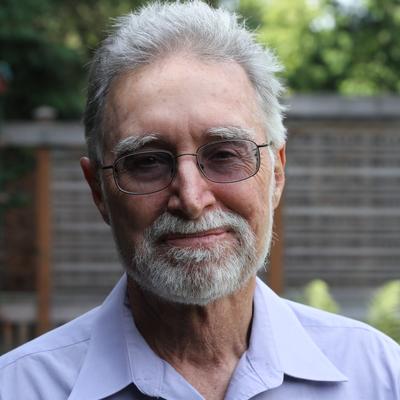
Robin Hahnel is a radical economist and political activist. He is Professor Emeritus at American University in Washington, D.C. where he taught in the Economics Department from 1976 – 2008. He is currently a visiting professor in economics at Portland State University in Portland, Oregon, where he resides with his family. His work in economic theory is informed by the work of Thorstein Veblen, John Maynard Keynes, Karl Polanyi, Pierro Straffa, Joan Robinson, and Amartya Sen among others. He is best known as co-creator, along with Michael Albert, of a radical alternative to capitalism known as participatory economics, (or parecon for short). His more recent work is focused on economic justice and democracy, and the global financial and ecological crisis. Politically he considers himself a proud product of the New Left and is sympathetic to libertarian socialism. He has been active in many social movements and organizations over forty years, beginning with the Harvard and MIT SDS chapters and the Boston area anti-Vietnam war movement in the 1960s.
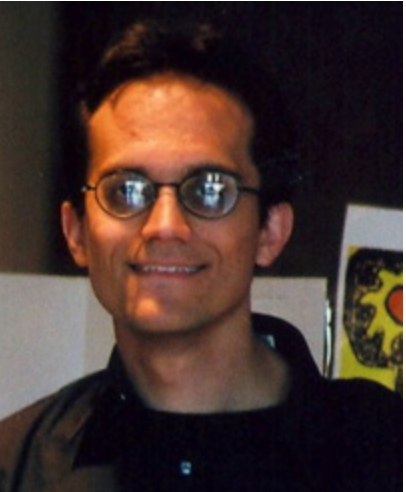
Mitchell Szczepanczyk is a software developer, media producer, political activist, aspiring polyglot, degree-holding linguist, and game show aficionado. He has written two e-books, and contributed to the books Real Utopia and Democratic Economic Planning. Mitchell has been involved with groups working on the heterodox economic model known as a "participatory economy"; he co-founded CAPES, the Chicago Area Participatory Economics Society, and has organized events with CAPES. He is currently helping to develop computational models of a participatory economy. A son of Polish immigrants and a native of Michigan (USA), he makes his home in Chicago where he has lived since 1996.
ZNetwork is funded solely through the generosity of its readers.
Donate




