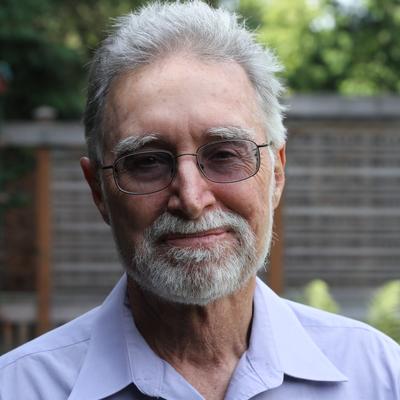
The International Network for Democratic Economic Planning (INDEP) held their first international conference, called Democratic Economic Planning for the Real World in Montreal in July 2025. This is a recording of a talk by Participatory Economy Project member and Professor of Economics, Robin Hahnel on a brief introduction to the Participatory Economy model.
This article was originally published by Participatory Economy Project; please consider supporting the original publication, and read the original version at the link above.
Robin Hahnel is a radical economist and political activist. He is Professor Emeritus at American University in Washington, D.C. where he taught in the Economics Department from 1976 – 2008. He is currently a visiting professor in economics at Portland State University in Portland, Oregon, where he resides with his family. His work in economic theory is informed by the work of Thorstein Veblen, John Maynard Keynes, Karl Polanyi, Pierro Straffa, Joan Robinson, and Amartya Sen among others. He is best known as co-creator, along with Michael Albert, of a radical alternative to capitalism known as participatory economics, (or parecon for short). His more recent work is focused on economic justice and democracy, and the global financial and ecological crisis. Politically he considers himself a proud product of the New Left and is sympathetic to libertarian socialism. He has been active in many social movements and organizations over forty years, beginning with the Harvard and MIT SDS chapters and the Boston area anti-Vietnam war movement in the 1960s.
ZNetwork is funded solely through the generosity of its readers.
The Wind Cries Freedom, the new book from Z co-founder Michael Albert, is a sweeping oral history of a future American revolution.
Through thirty interconnected chapters, it draws out the strategies, failures, turning points, and hard-won wisdom of a movement that called itself the Revolutionary Participatory Society. These are not the polished memoirs of politicians: they are the unfiltered accounts of people who organized in neighborhoods, hospitals, universities, stadiums, courthouses, and places of worship, and kept a shared vision alive through cynicism and exhaustion.
The result is speculative political fiction that reads like history: messy, human, and quietly hopeful in the way that only real experience and long thought can produce.
Get your copy and peruse more features on the book’s website below.
“Read it, argue with it, but don’t look away. The future it recalls is one we must still fight to deserve.”
Yanis Varoufakis
“The most unusual and intriguing combination of prophecy, manifesto, and movement building manual that I have ever encountered.”
Bill Fletcher Junior
“This work fills a huge gap in our social movement literature.”
Cynthia Peters
This is your article this month.
We’re glad you keep coming back. If Z’s work has informed, challenged, or inspired you, that’s no accident: there are no paywalls, no ads, and no billionaire owners here, and there never will be. Independent media survives because readers choose to support it.
Billionaires fund their own media. We fund ours. Help us reach 1,000 sustaining donors:
Your reading count is stored only in your browser and is never sent to us.
Sound is muted by default. Tap 🔊 for the full experience
CRITICAL ACTION
Critical Action is a longtime friend of Z and a music and storytelling project grounded in liberation, solidarity, and resistance to authoritarian power. Through music, narrative, and multimedia, the project engages the same political realities and movement traditions that guide and motivate Z’s work.
If this project resonates with you, you can learn more about it and find ways to support the work using the link below.
Independent media is not disappearing because the ideas are weak.
It is disappearing because platforms reward speed, outrage, and algorithmic visibility over thoughtful analysis.
More than 100,000 people read Z every month, free of paywalls, ads, and billionaire owners. It takes fewer than 1 in 100 of them to fund all of it: 1,000 donors who keep Z independent, for everyone, and build what comes next.