


1) What is Fat Cats and Running Dogs about?
By now we have all read enormous amounts about the shenanigans of Enron, the excesses of the CEO class and the waste that is capitalism. But this rendition of the story fails to address at least two elements of the fall of Enron: (1) the structural role played by Enron as the forerunner among many other firms for the global capital’s attack on the Commons; (2) the global story of Enron’s activities.
Enron was not simply a crooked firm that defrauded its workers and pensioners. That is far too parochial as a framework. I detail the role played by Enron to enclose that section of the human economy that we have, for fifty years, called the ‘public sector.’ The zones of water, energy, air, education, and others, had been held off from commodification and held in trust by the state. In the Second Enclosure movement of the 1990s, these zones came under threat from global corporations — with Enron leading the way. The book tells this story, using the Phillipines, India and Argentina as the main examples.
Furthermore, the book is a manual for global conquest — it offers hints to would-be capitalists that if they want to get to the Enron pinnacle, they need to use the CIA, craft monopoly conditions and hire US government workers just out of the revolving door. This is imperative.
Finally, the book offers a window into the fight over oil and water, over the tensions in Colombia, Afghanistan and Bolivia.
2) Can you tell ZNet something about writing the book? Where does the content come from? What went into making the book what it is?
The book draws from articles I wrote for ZNET, Frontline and elsewhere. The material comes from the mainstream press, interviews with the participants and extensive archival and library research. Greg Bates of CCP read a ZNET commentary, asked me to do the book, and here it is (even as Bank One delayed its publication by several months).
For the past several years Frontline magazine in India has allowed me to follow stories in the Americas, from Argentina to Montreal. I have covered stories on Colombia’s war and on the anti-globalization movement. These articles offered me the opportunity to study the work of Enron in Bolivia, Brazil and Argentina. When the scandal broke I returned to these earlier pieces and to the research I had done then.
Being an academic, I have also studied the impact of the IMF in its structural adjustment phase on the fifty years of development that preceded it. I found that it is important to put Enron in the context of the Bandung dynamic, from the 1950s to the 1970s — the two decades of relative movement for the Third World. I drew upon some fabulous secondary work on the economic destinies of this part of the world.
I wrote the book in an immense hurry, impatient to get a left view out there on the disaster that is Enronism.
(3) What are your hopes for “Title” What do you hope it will contribute or achieve, politically? Given the effort and aspirations you have for the book, what will you deem to be a success? What would leave you happy about the whole undertaking? What would leave you wondering if it was worth all the time and effort?
A CFO of a bank asked me what work I do and I said that I was writing a book about Enron. He almost spat when he repeated the word ‘Enron’ because he knows that it has given corporate America a bad name. Liberals and those who believe in the money world find Enron to be an excrescence on the system, something to regulate out, something to dismiss from the normal practice of capitalism. I come to Kenny Boy’s defense: he did nothing worse than any other capitalist of his ilk. Enron is nothing worse than any other firm: indeed, it epitomizes this phase of capitalism, the Second Enclosure Movement. I wrote this book, therefore, to offer a spin on the Enron story, not to allow the powers to drop Enron and pretend that now everything is cool. This should not happen.
Of course, I have no illusions that a book can make this case.
However, a book can help those of us in the fight to alter our bearings, not to fall prey to liberal illusions, to struggle against them with facts that I have laid out in the book. This is a book for those in the anti-globalization movement, for us to come to terms with the political and economic logic of the Second Enclosure movement. Let’s get to it.

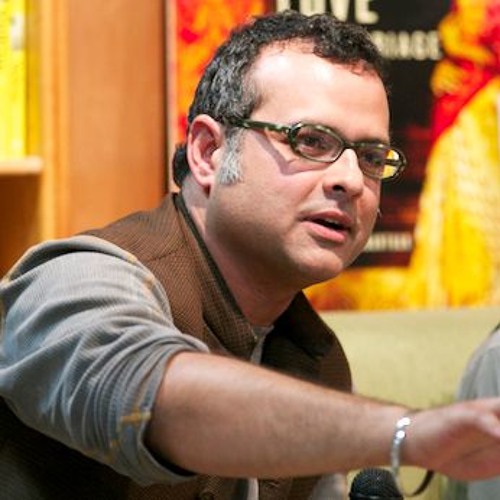
Vijay Prashad is an Indian historian, editor, and journalist. He is a writing fellow and chief correspondent at Globetrotter. He is an editor of LeftWord Books and the director of Tricontinental: Institute for Social Research. He is a senior non-resident fellow at Chongyang Institute for Financial Studies, Renmin University of China. He has written more than 20 books, including The Darker Nations and The Poorer Nations. His latest books are Struggle Makes Us Human: Learning from Movements for Socialism and (with Noam Chomsky) The Withdrawal: Iraq, Libya, Afghanistan, and the Fragility of U.S. Power. Tings Chak is the art director and a researcher at Tricontinental: Institute for Social Research and lead author of the study “Serve the People: The Eradication of Extreme Poverty in China.” She is also a member of Dongsheng, an international collective of researchers interested in Chinese politics and society.
ZNetwork is funded solely through the generosity of its readers.
Donate




