


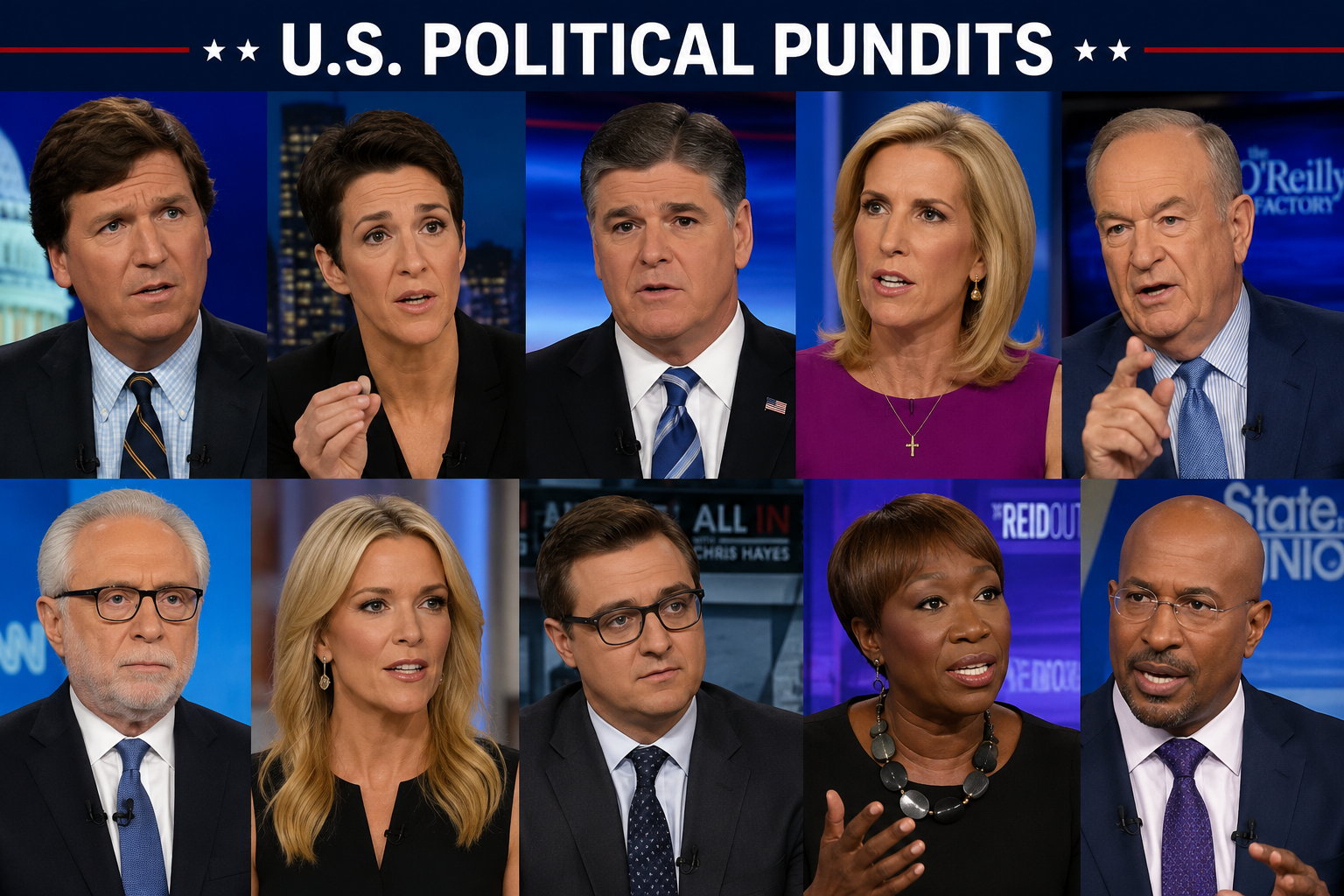
Most wisdom comes from tangible experience in our wide world. It comes from human relationships, from travel, from living and loving and fighting and falling in the dirt. There is little wisdom to be had from spending years and years reading stuff on the internet. A single hard-won lesson, though, which I have learned after wasting an embarrassing amount of time reading and writing about politics, may help to save you a good amount of angst.
You can just ignore the bad pundits. You don’t have to read them. You can just carry right on with your life.
You don’t have to talk about the bad pundits. You don’t have to engage with them. You don’t have to craft painstaking responses to their vapid arguments. You don’t have to take them seriously. Their existence creates no obligation for you. Each new piece they produce generates no appointment on your calendar. The law does not accord them any reservation on your attention. They have no inherent power over you. Instead, they get their power from you. You give it to them, for free. You, who fancy yourself their enemy, provide the fuel for their careers.
Instead of doing that, you are free not to do it.
“Ugh, the New York Times opinion page is so awful!” Don’t read it then. “I can’t stand the bullshit that Bret Stephens wrote!” Don’t read it then. “I hate the sanctimony of David Brooks! I hate the smugness of Matt Yglesias! I hate the fascists at the Wall Street Journal, the bootlickers at the Washington Post, and the clowns at the Free Press!”
Don’t read them then. Problem solved.
You may interpret this as me telling you to shelter yourself from challenging opinions. Not at all. I encourage everyone to read widely and freely. When you read widely and freely, you are able to familiarize yourself with the work of many people. What you will come to realize is that many or even most of those people are not worth reading. Some because they don’t have much to say, and others because they are consistently wrong in a way that, once you figure it out, allows you to project their opinions into the future without needing to constantly check in on them. You can move on. You gave them their audition, and they didn’t pass. Not many will! This is all as it should be. You have a limited amount of time to read and most of that time should be spent reading books and the second most time should be spent reading facts, such as news. Opinion writing that does not prove its value is crowding out other things that have a much higher chance of being worthwhile.
Why does this seem so hard for so many of us in practice? Because we are all haunted by the demons of prestige. Prestige, a false god, tells us that a person’s work is valuable because of their position, their title, rather than because of the work itself. In the case of certain powerful people, this may be true. (It’s worth knowing what Elon Musk and Donald Trump think because it may directly affect many lives, notwithstanding the fact that they are morons.) In the case of writers, however, this is always false. Good work is valuable and bad work is not. The understandable tendency of many people to use prestige as a heuristic to guide their reading often leads them down a dead end road of frustration.
I thought of this the other day as I read a long and detailed piece by an expert on land use in the Western US, which was a response to a Matt Yglesias column about a “simple solution” to the Western water crisis. The land use expert gave many reasons why there is not in fact a simple solution to the Western water crisis. His piece was illuminating. Yet it was premised on a mistake: The idea that Matt Yglesias is a man who must be taken seriously when it comes to the complexities of water use policy.
Writers must be taken seriously if the quality of their work demands it and if not, not. That’s it! There are many ways to be a worthwhile pundit. Some are experts on specific subjects, and some get access to very important people’s thoughts, and some are gifted at distilling many disparate ideas into a coherent whole, and some are funny, a quality which justifies itself. My point is not that famous pundits are never worth reading, but rather that they are never worth reading just because of who they are. Look at this transcript of Ezra Klein and Ross Douthat discussing their own careers. One thing you may notice is that both of these people have spent their entire adult lives doing nothing but sitting at a computer blogging. Does that mean that don’t know anything? Not at all. Then again, does it mean they do know anything? Also no. “Winning the pundit lottery with a New York Times gig” tells you nothing about whether these people are worthy of your attention. They must earn your respect, and their right to your time, solely with the quality of their work. That’s all they have! And you can judge that for yourself. Any further temptation to check for them because of the positions they hold is an error of judgment, by you.
I am no better than anyone when it comes to this error. The number of enraged responses to Tom Friedman and Peggy Noonan columns that I have written in the course of my own career is truly deranged. It took me many years to begin to realize that this activity, while amusing, was not making me any smarter. Nor was it actually important, except as a little release valve for all of the other idiots like me wasting time hate reading the same things. Once I began to give myself permission not to read the writers that I already knew sucked, I found that the quality of my overall reading improved drastically.
The more subtle and substantial danger of patronizing idiot pundits is that the accumulated weight of attention that we grant them bestows them with actual influence, which they use to make the world worse, as you would expect. This is bad enough when it’s, you know, Matt Yglesias morphing into a Democratic Party power broker; it is even worse when it is a calculated political effort, of the sort that Rahm Emanuel is trying to pull off now by parlaying his stint as a monotonous Wall Street Journal columnist into a presidential campaign.
James Carville is a wheezing old coot. Why is he influential? Because we all pay attention to him! Also, Donald Trump. Think about it. Depriving this sort of person of the material benefits of having a large audience is a patriotic act.
If you are a genuine hate read connoisseur, I respect it. But if you are a regular person who finds yourself continually getting mad at the idiot pundits you continue to read—stop!
The idea that if you want to be a well informed person you are obligated to read all the stuff that certain prestigious writers and outlets publish is not much different from the idea that since McDonald’s is very popular, you are obligated to stop there and eat a Big Mac every day. To keep your finger on the pulse. This, just like the belief that you must read every Jonathan Chait story, will eventually give you a heart attack. Embrace ignorance of dreary idiocy. It is the kind of ignorance that makes you smarter.


Hamilton Nolan is a labor writer for In These Times. He has spent the past decade writing about labor and politics for Gawker, Splinter, The Guardian, and elsewhere. More of his work is on Substack.
ZNetwork is funded solely through the generosity of its readers.
Donate





1 Comment
I’ve been saying this about Piers Morgan for about twenty years. Don’t go on his show, don’t respond to his shows, don’t post a criticism of his shows on your YouTube channel, don’t watch his show. All you are doing is feeding his bank account.