

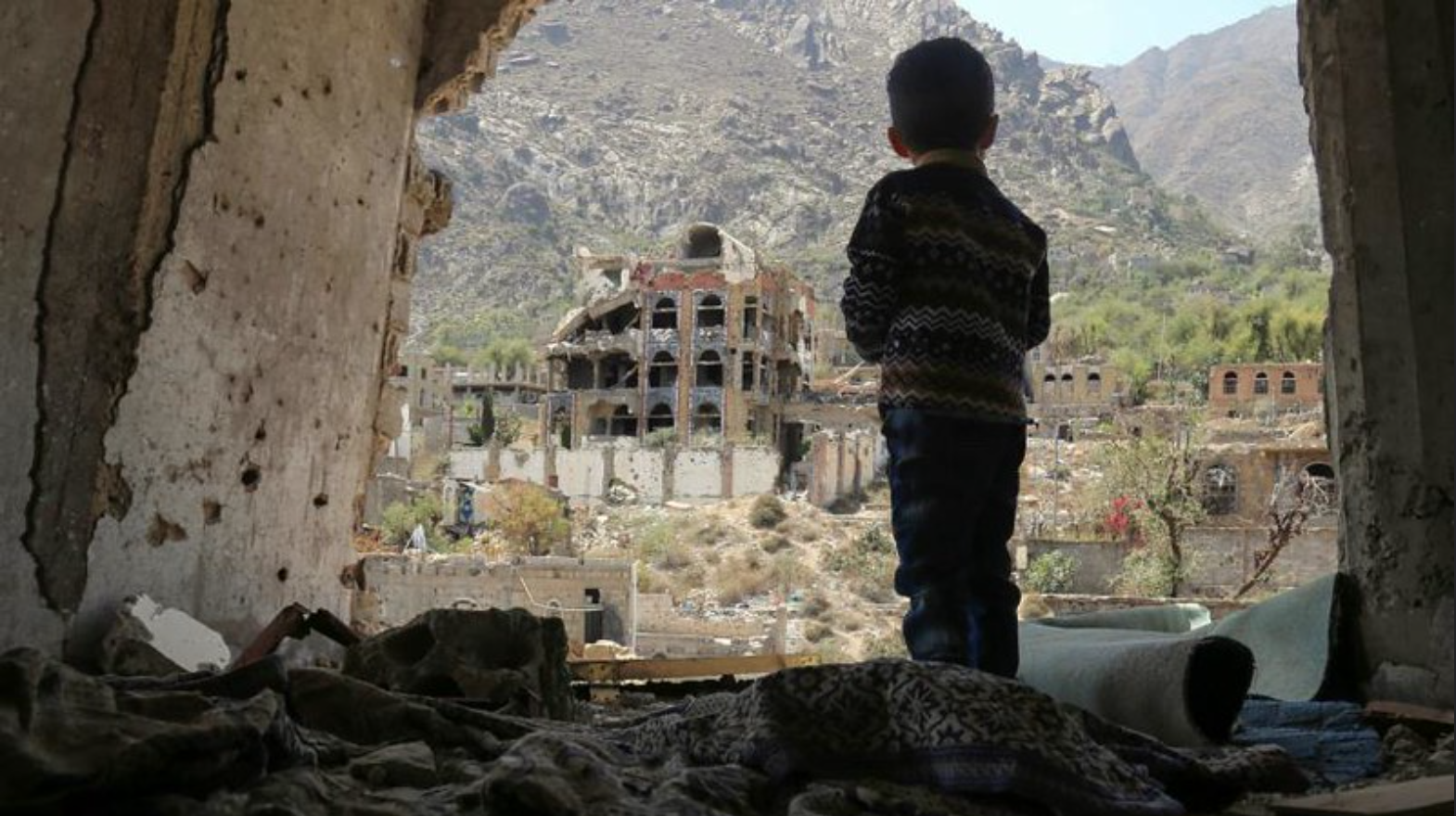
The conflict in Yemen, a country already exhausted by more than a decade of war, is entering another uncertain phase. In recent weeks, fighters aligned with the Southern Transitional Council (STC)—backed by the United Arab Emirates (UAE)—have taken control of large parts of Hadramout and al-Mahra in southern and eastern Yemen, including key cities and security installations. These provinces are strategically important, rich in resources, and central to trade routes, making their takeover far more than a local power shift.
At the same time, Saudi-backed government forces have regained control of key districts, including Mukalla and Seiyun, following the withdrawal of STC troops. The STC has agreed to talks in Riyadh, while Saudi Arabia consolidates its influence and seeks to prevent further fragmentation along its southern border.
On December 30, a Saudi-led coalition airstrike hit the port of Mukalla, targeting what Riyadh said were UAE-supplied weapons intended for the STC. Saudi Arabia framed the strike as a response to an imminent security threat. The UAE rejected the accusations, denied directing operations that threatened Saudi security, and announced the voluntary withdrawal of its remaining counterterrorism personnel. Yemen’s Presidential Leadership Council responded by demanding a full UAE exit and imposing restrictions on ports and crossings, while STC leaders vowed to defend their territorial gains.
This escalation has exposed deepening disagreements between Saudi Arabia and the UAE over Yemen’s future. For Riyadh, the STC’s advances into Hadramout and al-Mahra are not only political but also a security concern. Both provinces border Saudi Arabia, host oil and gas resources, and sit along sensitive trade corridors. A fractured Yemen risks empowering the Houthis or creating space for Islamist groups, outcomes Saudi Arabia has spent years trying to prevent.
The split is also a growing headache for the United States, particularly for the Trump administration, which has sought to manage Middle East policy through close alignment with Gulf partners while avoiding deeper military entanglements. Washington has long relied on Saudi–UAE coordination as a pillar of its regional strategy. Their open disagreement in Yemen complicates U.S. efforts to claim progress toward “stability,” undermines any coherent diplomatic track, and exposes the limits of an approach that outsources security to regional strongmen while ignoring civilian consequences.
The STC is formally part of Yemen’s UN-recognized government, yet it has long pursued the secession of an independent South Yemen. Although its roots lie in the Southern Movement that emerged in 2007 as a grassroots protest against marginalization, its transformation into a powerful armed actor followed decisive external backing. The group’s formal creation in 2017 came after the dismissal of Aidarus al-Zubaidi as Aden’s governor, and its rapid rise was enabled by UAE political and military support including the formation of proxy forces such as the Security Belt Forces in 2016.
This support was not incidental. Abu Dhabi viewed the STC as a counterweight to Islamist actors, particularly Yemen’s Islah Party, and as a means to secure strategic ports and coastlines. Saudi Arabia, meanwhile, led a coalition intervention beginning in 2015 that has consistently been criticized for prioritizing geopolitical objectives over civilian protection.
Yemen has long been a theater for proxy warfare. Since the Houthis’ takeover of Sanaa in 2014 and the outbreak of civil war in March 2015, an estimated 377,000 people had died by the end of 2021 due to direct and indirect causes. Nearly 15,000 civilians were killed by direct military action, most of them in air strikes carried out by the Saudi-led coalition, which has faced accusations of war crimes and disproportionate attacks on civilian infrastructure. The United States provided critical support for the Saudis in these attacks.
Over the past decade, conflict and economic decline have produced one of the world’s worst humanitarian crises. Some 4.5 million Yemenis—14 percent of the population—remain displaced, many repeatedly. Over 19 million now need humanitarian assistance, with 17.6 million facing food and nutrition insecurity. Yemen ranks among the most vulnerable in the Middle East for malnutrition and poverty, with 2.4 million children under five suffering from acute malnutrition. In addition,16 million people lack safe drinking water, exacerbated by years of Saudi-imposed restrictions on imports and aid. Famine risks are acute: tens of thousands face famine-like conditions, while around 5 million suffer severe food insecurity.
Yemen cannot afford another conflict that kills, maims, and displaces innocent people. Even if large-scale violence is avoided, the socio-economic damage alone would be unbearable for a country already dependent on external aid and humanitarian support. Yet, the world continues to look away.
ZNetwork is funded solely through the generosity of its readers.
Donate




