Since Obama came to office in January 2009, U.S. security assistance to the Yemeni regime has gone up 20-fold. Despite such large-scale unconditional support, however, the 32-year reign of autocratic President Ali Abdullah Saleh may finally be coming to an end. Yet the Obama administration has been ambivalent in its support for a democratic transition in this impoverished but strategically important country.
Saleh’s behavior has gotten increasingly bizarre. He has begun claiming that an unlikely coalition of Israel and Qatar has incited and financed the pro-democracy struggle, and that women in leadership positions in the pro-democracy struggle and even men and women protesting in the streets together is somehow “un-Islamic.”
Efforts by Saudi Arabia and other regional monarchies to negotiate Saleh’s resignation, despite showing some initial promise, have failed both as a result of the dictator’s obstinacy and the protesters’ demands for a genuine democratic transition. Saleh continues to lose support despite his corrupt system of patronage. This policy of “bribe a tribe” appears to be failing as tribal leaders, top military officers, and other formal allies have joined the protesters in demanding that the increasingly repressive and eccentric U.S.-backed dictator to step down.
Rising Protests
Yemen is a desperately poor country, with high unemployment, and a long history of division and instability. Sheila Carapico, a professor at the University of Richmond, has described
the grotesque enrichment of regime cronies at the expense of the many; deteriorating standards of living; obscenely bad schools, hospitals and roads; the skyrocketing price of meat, staples and even clean water; the lack of jobs for college and high-school graduates. … Grandiose pageants of presidential power, half-truths in the official media, indignities at military checkpoints, arbitrary arrests and imprisonments — these and other daily insults feed popular alienation, despair and frustration, most notably among the youth. While a privileged few cool off in swimming pools in their luxury compounds, the water table has fallen, decimating the farm economy that remains the livelihood of the rural majority. Farmers and ranchers facing starvation have flocked to the cities where water supplies and social services are swamped. Misery has become the new normal; millions barely survive on the equivalent of a dollar or two per day.
The United States has sent plenty of money, but it's almost all been military assistance. The small amounts of economic aid have mostly gone through corrupt government channels.
Until the pro-democracy struggle emerged as a major nationwide challenge to the regime, the attention of the U.S. media and the Obama administration had almost exclusively been on al-Qaeda cells operating in the country and Shiite Houthi tribesmen fighting in a remote northern region. There was a sense that the people of Yemen were too poor or too tribal or too “backward” to engage in a nonviolent civil insurrection against their dictator. However, as other unarmed pro-democracy uprisings in the region have demonstrated, the desire of human freedom and the willingness face down the tanks, machine guns, tear gas, and truncheons to defend basic rights is indeed universal.
As with Tunisia and Egypt, young people make up the majority of the protesters, though people of all ages have taken to the streets in more than a dozen cities across the country. As with similar pro-democracy protests, there has been a strong cultural dimension, including street theater, music, dancing, and other performance art. Protesters have used tactics that illustrate the unity of the movement, such as 50,000 hands being clasped above the crowd.
Yemen is the most heavily armed countries in the world in terms of individual gun ownership, with some estimates as high as three weapons per person. The fact that the millions of Yemenis who have taken to the streets have consciously left them at home and largely maintained a strict nonviolent discipline is nothing short of remarkable. At a recent demonstration in the tribal al-Bayda region, men brought guns only to throw them down on the ground shouting “silmiyya!” (“peacefully!”), a common chant of the protests. Indeed, the extent of the pro-democracy struggle and its commitment to nonviolence is comparable to the recent revolutions in Tunisia and Egypt, and earlier unarmed insurrections in Serbia, Czechoslovakia, the Philippines, Chile, and elsewhere.
Washington Flat-Footed
Despite diplomatic cables going back as far as 2005 indicating that Saleh could potentially face a popular pro-democracy uprising, the Obama administration appears to have been caught completely off-guard. U.S. Secretary of Defense Robert Gates acknowledged that Washington had not planned for an era without Saleh. As one former ambassador to Yemen put it in back in March, “For right now, he’s our guy.”
Since then, the Obama administration has belatedly joined its European allies in encouraging Saleh to step aside. At the same time, the United States has not been very supportive of the pro-democracy protests either. For example, following government attacks on peaceful pro-democracy protesters two weeks ago, which killed a dozen protesters and injured hundreds of others, the U.S. embassy called on the Yemenis to cooperate with the rather dubious Saudi-led negotiations for a transition by “avoiding all provocative demonstrations, marches and speeches in the coming days.”
Recently released Wikileaks cables have also demonstrated that U.S. military assistance increased despite evidence that Saleh was using U.S.-supplied weapons not against al-Qaeda as promised but against domestic opposition to his increasingly repressive rule. As a result of the popular protests, Washington has frozen the more than $1 billion in military aid currently in the pipeline. But Washington has acted more out of concern over Saleh's successor than genuine outrage at the dramatically increased repression.
It’s time for the United States to recognize that the future of the Middle East is not in the hands of aging autocrats like Saleh or even traditional elite oppositionists, but in civil society. Ultimately power comes not from well-armed people at the top but from the consent of the people.
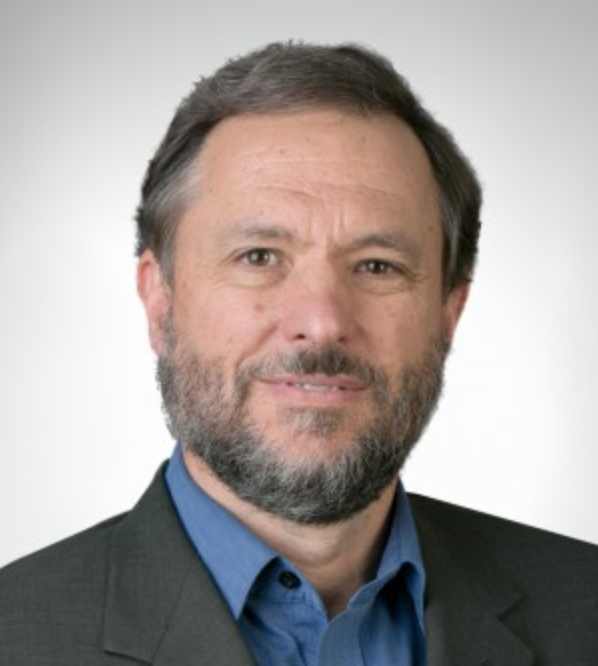
Stephen Zunes (born 1956) is an American international relations scholar specializing in the Middle Eastern politics, U.S. foreign policy, and strategic nonviolent action. He is known internationally as a leading critic of United States policy in the Middle East, particularly under the George W. Bush administration, and an analyst of nonviolent civil insurrections against autocratic regimes.
Stephen has been at the University of San Franscico since 1995, teaching courses on the politics of the Middle East and other regions, nonviolence, conflict resolution, U.S. foreign policy, and globalization. He served as the founder and first director of the Middle Eastern Studies Program.
A prominent specialist on U.S. Middle East policy, Professor Zunes has presented hundreds of public lectures and conference papers in both the United States and over a dozen foreign countries. He has traveled frequently to the Middle East and other conflict regions, meeting with prominent government officials, scholars, and dissidents. He has served as a political analyst for local, national, and international radio and television and as a columnist for several print and online publications, and has published hundreds of articles in academic journals, anthologies, magazines, and elsewhere on such topics as U.S. foreign policy, Middle Eastern politics, Latin American politics, African politics, human rights, arms control, social movements, and nonviolent action. He has served as a writer and senior analyst for Foreign Policy in Focus, an associate editor for Peace Review, and a contributing editor of Tikkun.
ZNetwork is funded solely through the generosity of its readers.
The Wind Cries Freedom, the new book from Z co-founder Michael Albert, is a sweeping oral history of a future American revolution.
Through thirty interconnected chapters, it draws out the strategies, failures, turning points, and hard-won wisdom of a movement that called itself the Revolutionary Participatory Society. These are not the polished memoirs of politicians: they are the unfiltered accounts of people who organized in neighborhoods, hospitals, universities, stadiums, courthouses, and places of worship, and kept a shared vision alive through cynicism and exhaustion.
The result is speculative political fiction that reads like history: messy, human, and quietly hopeful in the way that only real experience and long thought can produce.
Get your copy and peruse more features on the book’s website below.
“Read it, argue with it, but don’t look away. The future it recalls is one we must still fight to deserve.”
Yanis Varoufakis
“The most unusual and intriguing combination of prophecy, manifesto, and movement building manual that I have ever encountered.”
Bill Fletcher Junior
“This work fills a huge gap in our social movement literature.”
Cynthia Peters
You've just read your article on Z this month.
DOES Z'S SURVIVAL MATTER?
You keep coming back for a reason: serious political analysis, movement reporting, and debate beyond the priorities of corporate media. Today, Z is in a precarious financial position. If Z is part of how you understand the world, help keep it going. The readers who give monthly are the reason this work survives between fundraisers.
Z is in a precarious financial position. If it’s part of how you understand the world, help keep it going.
Your reading count is stored only in your browser and is never sent to us.
Sound is muted by default. Tap 🔊 for the full experience
CRITICAL ACTION
Critical Action is a longtime friend of Z and a music and storytelling project grounded in liberation, solidarity, and resistance to authoritarian power. Through music, narrative, and multimedia, the project engages the same political realities and movement traditions that guide and motivate Z’s work.
If this project resonates with you, you can learn more about it and find ways to support the work using the link below.
Z is in the most precarious financial position in its history.
Z is a place to think beyond the limits of the present.
For decades, Z has brought together political analysis, movement reporting, debate, and visions of a different future from writers and activists around the world. That work is more than journalism. It is movement infrastructure: movements need places to develop ideas, test arguments, learn from experience, and imagine what comes next.
In the first two days of this fundraiser, 19 donors and 8 new monthly sustainers stepped up. Help us reach 1,000 donors who keep Z independent, for everyone.
For decades, Z has published the analysis, debate, and visions movements need, free of paywalls, ads, and billionaire owners. If that work should continue, Z needs your support now.